
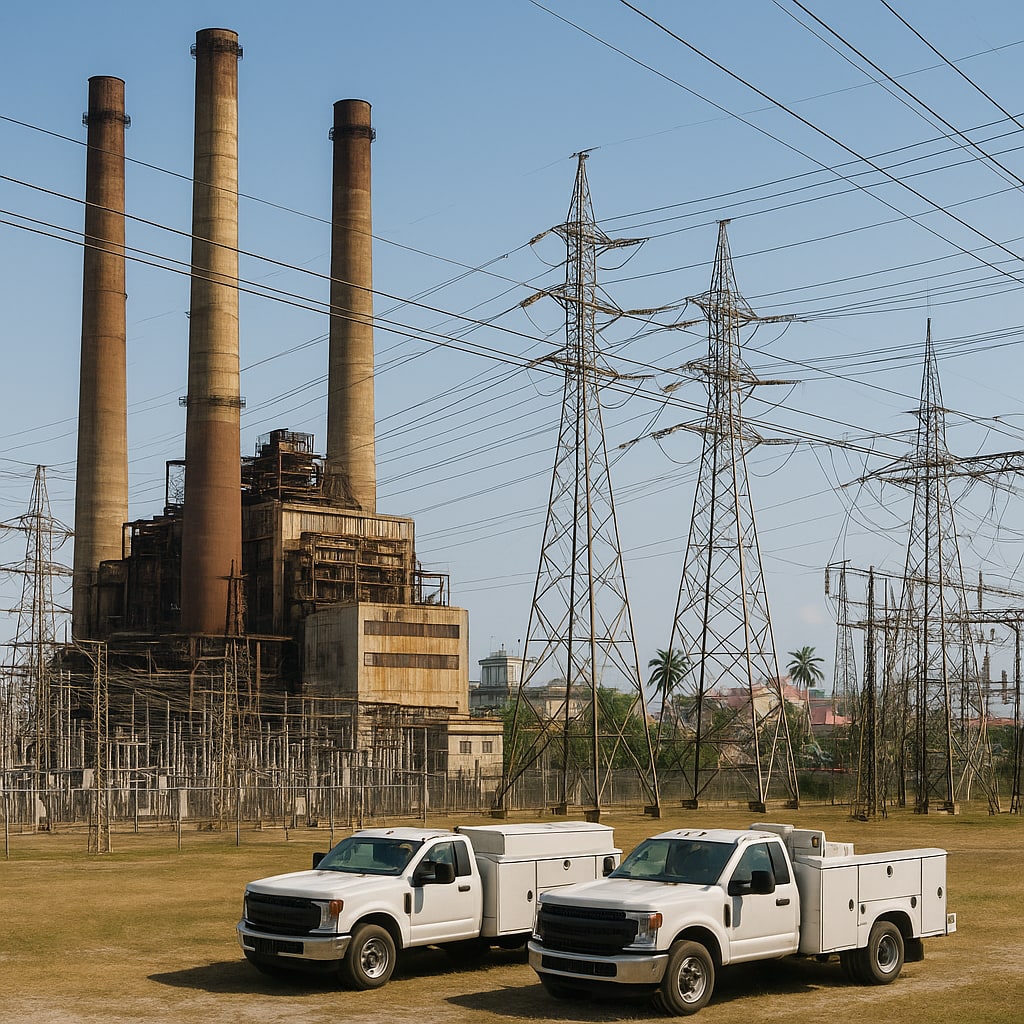
Cuba endures a second nationwide power outage in a week amid fuel squeeze and aging grid
Narrative Snapshot
Across outlets, coverage largely aligns on two interacting drivers: fuel scarcity linked to U.S. measures imposed in January and the fragility of Cuba’s outdated generation fleet and grid. Al Jazeera, CBC, the Toronto Star (AP), and Deutsche Welle emphasize the “oil” or “fuel” blockade as central to the current strain; DW and the Guardian also underline that system deterioration predated this year’s measures, framing sanctions as an acute stressor on a chronically weak base.
Spanish-language state-aligned and regional reporting adds an operational lens. Telesur and Serbia’s Politika foreground Union Eléctrica’s activation of recovery protocols after the second nationwide collapse within days, and they attribute maintenance constraints and economic losses to the long-standing U.S. embargo reinforced by this year’s energy squeeze.
Outlets differ in register more than facts. The Guardian and South China Morning Post focus on the recurrence earlier in the week as the third nationwide outage since January, while CBC tallies the subsequent collapse as the fourth this year. Fox News highlights UNE’s statement that the causes were under investigation during the earlier outage and situates the crisis in chronic shortages and grid decay. A contemporaneous AllAfrica item on Zimbabwe’s grid failure offers a counterpoint: another nationwide blackout framed as a technical fault rather than geopolitically induced scarcity.
What Happened
Cuba’s grid experienced two islandwide collapses in one week. On Monday, Union Eléctrica announced a “total disconnection” at midday, affecting the entire island, with the utility saying causes were under investigation as limited service began returning (South China Morning Post; Fox News). On Friday, a second nationwide outage struck, prompting UNE to initiate system recovery protocols to reenergize the network (Telesur; Politika). CBC characterizes Friday’s event as the fourth nationwide blackout this year, after the Guardian and SCMP had noted Monday’s as the third since January. Multiple outlets link the strain to fuel shortages following U.S. actions introduced in January—described as a de facto oil or fuel blockade and reinforced by threats of tariffs on suppliers—compounding an obsolete and dilapidated generation system (Al Jazeera; CBC; Deutsche Welle; Toronto Star/AP; Fox News). Reporting consistently describes full-island impact and gridwide collapse.
Why It Matters
The sequence underscores how energy sanctions can reshape supply chains and grid reliability, with extraterritorial effects on shippers and suppliers when threats of tariffs deter deliveries, as reported by several outlets (Al Jazeera; Fox News; SCMP). For Cuba, outages reveal the limits of operating aging thermal plants without steady inputs or preventive maintenance, which Telesur notes has been impeded by the broader embargo and this year’s energy squeeze. For policymakers, the case tests assumptions about resilience under sanctions: the interaction between constrained fuel access and legacy infrastructure can generate cascading, systemwide failures rather than manageable shortfalls. It also raises risk-management questions for third countries and firms weighing exposure to secondary pressure. More broadly, the disparity with Zimbabwe’s contemporaneous, technically driven nationwide outage highlights how similar system-level failures can stem from distinct drivers, shaping both diplomatic responses and operational remedies.
Diverging Narratives
Outlets differ on emphasis rather than the basic facts of repeated nationwide failures. Telesur and the Toronto Star/AP foreground the U.S. “energy” or “fuel” blockade as the primary constraint, arguing it prevents fuel arrivals and hampers maintenance. Al Jazeera characterizes a de facto blockade straining the grid. By contrast, DW and the Guardian stress that Cuba’s electricity system was already dilapidated and struggling before January’s measures, framing sanctions as an accelerant atop structural decay. Fox News centers UNE’s statement that causes were being investigated during the earlier outage and situates the crisis within chronic shortages and deteriorating infrastructure, while noting that additional U.S. sanctions and tariff threats worsened conditions this year. There is also a counting asymmetry shaped by timing: the Guardian and SCMP marked Monday’s collapse as the third since January; with Friday’s event, CBC records a fourth this year. Across coverage, the immediate technical trigger for the cascading failures remains unspecified.
What Happens Next
Three decision points emerge from the reporting. First, U.S. policy: whether the administration maintains, tightens, or adjusts the fuel squeeze and tariff threats on suppliers will shape Cuba’s near-term fuel access. Analysts should watch official announcements and enforcement signals, which outlets identify as constraining deliveries (Al Jazeera; Fox News; SCMP). Second, supplier behavior: countries and firms must decide if they will ship to Cuba under current conditions; reporting links recurrent outages to deterred fuel flows, so confirmation of arrivals or continued shortfalls will be decisive. Third, Cuban operations: UNE’s implementation of recovery protocols and any subsequent system stabilizations will indicate whether management can contain islandwide cascades under fuel scarcity, as highlighted by Telesur and Politika. The Zimbabwe case underscores a separate path—technical faults precipitating nationwide failures—so future Cuban statements clarifying proximate causes will help distinguish policy-induced scarcity from grid-level technical fragility.