
One killed, up to 29 injured near Berlin Pride; 21-year-old Islamist suspect shot dead after manhunt
Narrative Snapshot
Across outlets there is broad convergence that German authorities treated the Berlin incident as an Islamist terrorist attack and focused a nationwide manhunt on a 21-year-old identified by German media as “Abdul B.” and by several international outlets as Abdul Ballout. German public broadcasters and international reporting emphasize official confirmation of Islamist links, with references to the suspect’s prior attempt to join Islamic State in 2025, while German outlets typically withhold the full surname in keeping with local reporting conventions. Anglo- and Asia-based outlets more readily name the suspect and detail his background as a German citizen with Lebanese roots.
Casualty figures vary by source and update, with initial reporting citing at least 16 injured and later tallies rising to 25 or 29. Some Italian reporting adds that an accomplice was arrested and that more people might be at large, a thread not echoed consistently elsewhere. The Guardian alone emphasizes that a stabbing followed the vehicle ramming, while most other outlets restrict descriptions of knife use to the suspect’s confrontation with police during his arrest.
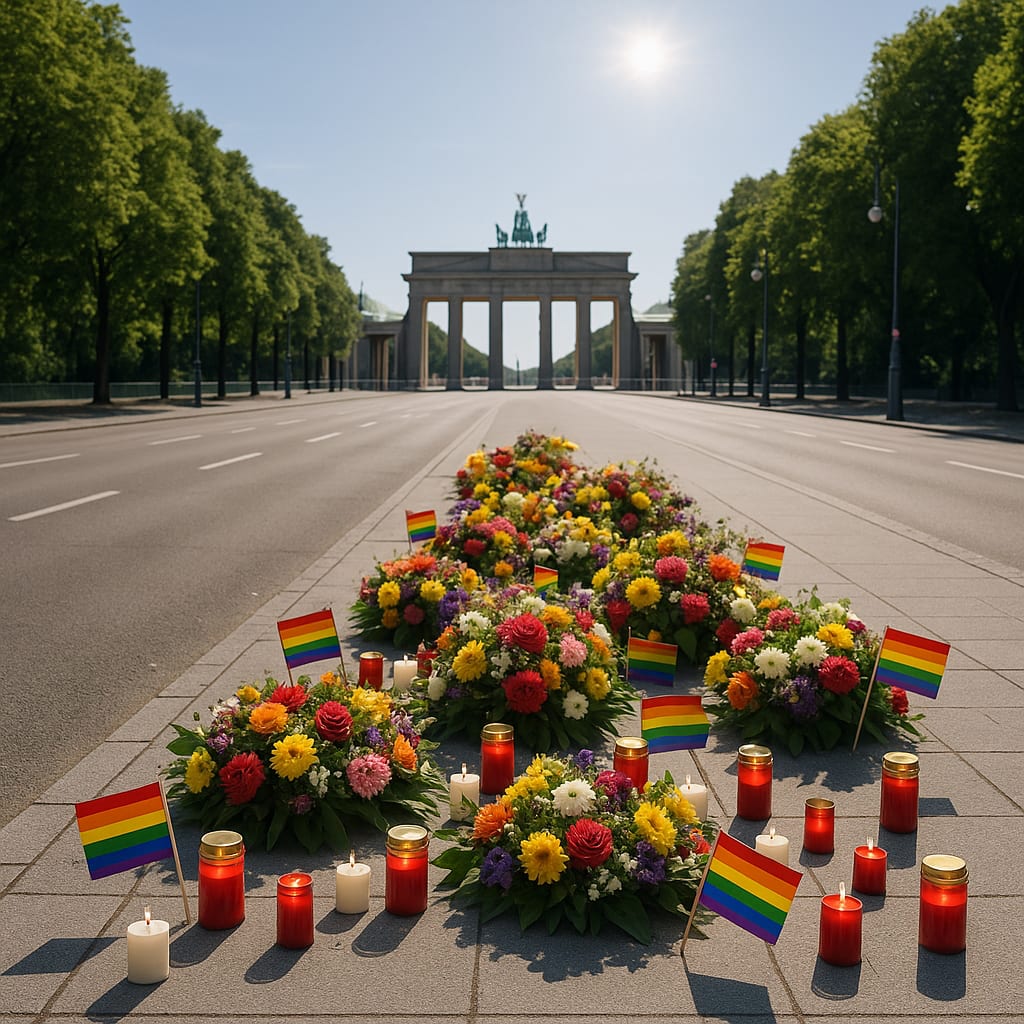
Framing diverges on symbolism and civic response versus operational detail. Several German and international outlets foreground the official “Islamist terrorist” designation and the use of a special police unit in the lethal arrest. Others highlight the LGBTQ+ context and solidarity gestures, including the rainbow illumination of the Brandenburg Gate and political statements that the attack targeted society at large, while noting that organizers canceled festivities after the incident.
What Happened
A vehicle struck pedestrians near Berlin’s Christopher Street Day celebrations by the Tiergarten and Brandenburg Gate on Saturday evening, killing one person and injuring between 16 and 29 others, prompting police to halt the event and cordon off the area. Authorities launched an intensive manhunt for a 21-year-old suspect with links to the Islamist scene, identified in German reporting as Abdul B. and by several international outlets as Abdul Ballout. Prosecutors and multiple outlets reported that he had previously attempted to join Islamic State in 2025. On Sunday, police located the suspect in a western Berlin suburb. During an arrest operation involving a special police unit, he rushed officers with a knife; police shot him dead. German authorities classified the incident as an Islamist terrorist attack. Some Italian reporting noted the arrest of another man and the possibility that more suspects could be at large.
Why It Matters
German authorities’ classification of the incident as an Islamist terrorist attack at a major LGBTQ+ gathering underscores the intersection of counterterrorism and the security of mass civic events. Reporting that the suspect had previously attempted to join Islamic State highlights the persistence of transnational extremist linkages that challenge domestic prevention and disruption efforts. The lethal end to the manhunt by a special police unit and the rapid cancellation of festivities illustrate the operational demands authorities face in high-density urban settings hosting internationally visible events. Political and civic responses—from calls by senior politicians to punish those responsible to the rainbow illumination of the Brandenburg Gate—signal how officials are framing the attack as both a security threat and an assault on social norms and community safety, setting the context for near-term debates over protective measures around public assemblies.
Diverging Narratives
Outlets differ on the casualty count, with initial figures of at least 16 injured later rising to 25 or 29 in several reports; one fatality is consistently reported. There is also a split on the attack’s modus: The Guardian reports a combined vehicle ramming and subsequent machete stabbing near the scene, while most other outlets describe a vehicle attack and limit knife use to the suspect’s rush at officers during his arrest on Sunday, which police say prompted the shooting. Identification practices vary: German and some European outlets use “Abdul B.” in line with local norms, while others name Abdul Ballout and add that he is a German citizen with Lebanese roots, and multiple sources state he had tried to join Islamic State in 2025. Italian outlets report the arrest of an accomplice and suggest more suspects could be on the run; other reporting focuses on the main suspect without corroborating additional arrests, leaving the scope of any network an open question in the public record.
What Happens Next
Two decision points emerge from official and media reporting. First is the scope of the investigation into potential accomplices or a broader network. Italian outlets cite an arrested accomplice and the possibility of additional suspects, while other reporting does not; clarity will hinge on forthcoming statements from Berlin police and prosecutors, who have led communications on the manhunt, the terror classification, and the suspect’s prior attempt to join Islamic State. Second is the consolidation of the factual record, including final casualty figures and a detailed chronology of the attack, given differing early counts and descriptions. Analysts should monitor official briefings that reconcile the casualty numbers, specify whether any stabbing occurred at the scene in addition to the arrest confrontation, and confirm whether anyone beyond the deceased suspect is implicated, as these determinations will shape subsequent security and prosecutorial actions.