
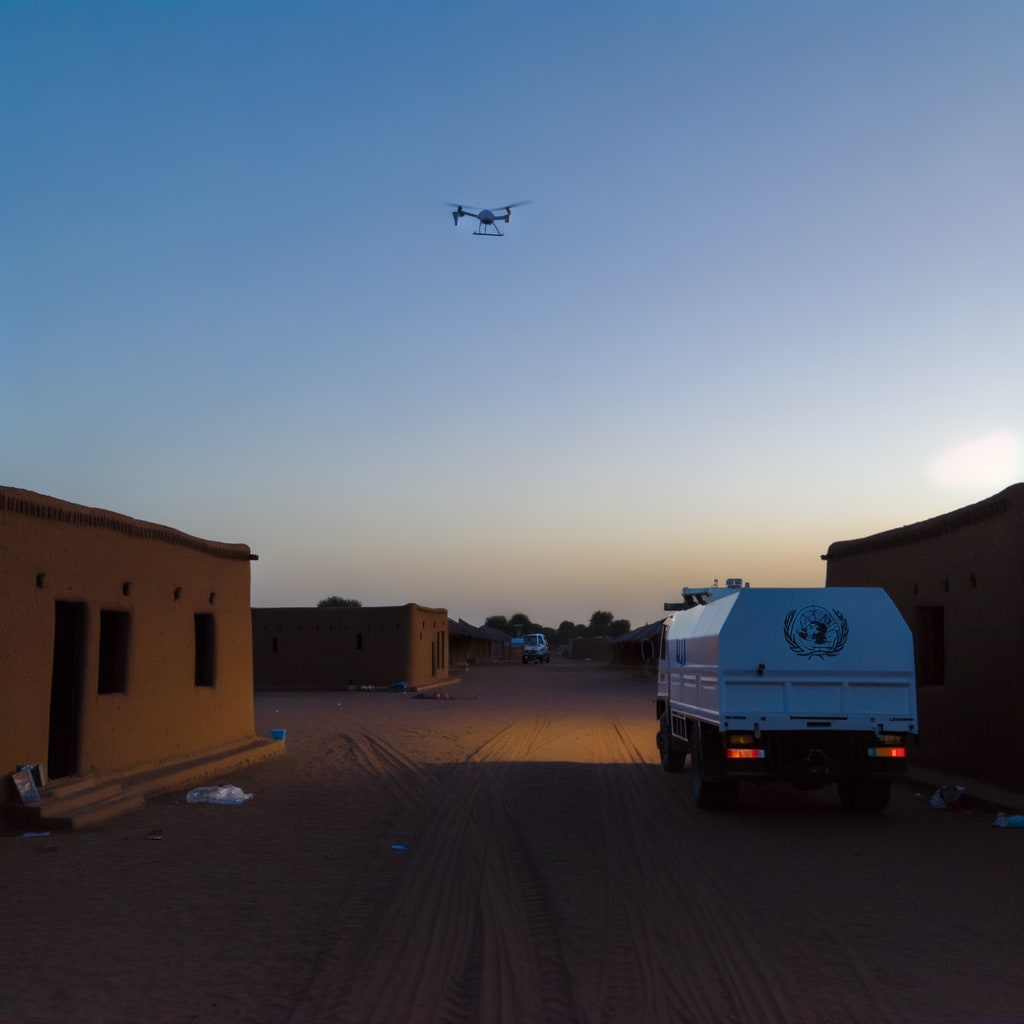
Drone Attacks in Sudan Claim Lives Amidst Rising Tensions
A series of drone attacks in Sudan's Kordofan region has resulted in the death of at least 24 individuals, including eight children, according to a doctors' group. The Rapid Support Forces (RSF) paramilitary group is suspected to be behind the attacks, which targeted civilians fleeing to safety. The strikes have drawn condemnation from various international quarters, even as suspicions about the involvement of foreign elements increase.
Rising Violence in Kordofan
The attacks occurred in the Kordofan region of Sudan, where nearly 40 people were killed and dozens injured in a single week. The victims included displaced individuals seeking refuge from ongoing conflicts. One attack hit a vehicle near El Rahad, southeast of El Obeid in North Kordofan, killing many civilians, including women and children. In another incident, an aid convoy en route to El Obeid was destroyed, resulting in further casualties.
The RSF paramilitary group, suspected to be behind the attacks, has categorically denied involvement, attributing the accusations to a disinformation campaign
that seeks to condemn RSF forces and cover up the crimes.
International Response
The recent escalations have drawn sharp rebukes from various international entities. Saudi Arabia, for instance, has condemned the RSF's actions in Kordofan, blaming the conflict on foreign fighters and weapons. Sudan's Ministry of Foreign Affairs and International Cooperation also voiced its disapproval over the international community's silence on the alleged war crimes and crimes against humanity committed by the RSF militia.
Turkey too expressed its condemnation of the attacks, describing them as a serious and blatant violation of international humanitarian law protecting civilians and civilian infrastructure during armed conflicts.
Drone Warfare in Sudan
These incidents underscore the escalating use of drones in warfare across Sudan and West Africa, with insurgents increasingly leveraging off-the-shelf drones for strikes on military positions. The drone attack on the vehicle carrying displaced families near the city of Er Rahad was particularly devastating, killing infants among others.
Notably, a report suggests that Egypt has been using a secretive airbase to carry out drone strikes on the RSF in Sudan. Evidence from satellite images, flight records, and videos, as well as official interviews, point to an ongoing operation for at least six months.
Implications and Reactions
The rising violence and the increasing use of drones in warfare in the region are likely to escalate tensions, with potential implications for the broader geopolitics of the region. The international community's response, or lack thereof, in the face of alleged war crimes, is also a point of contention.
As the situation continues to evolve, the need for a peaceful resolution to the conflict and protection of civilians becomes even more critical. However, the current state of affairs suggests a complex and fraught road ahead.