
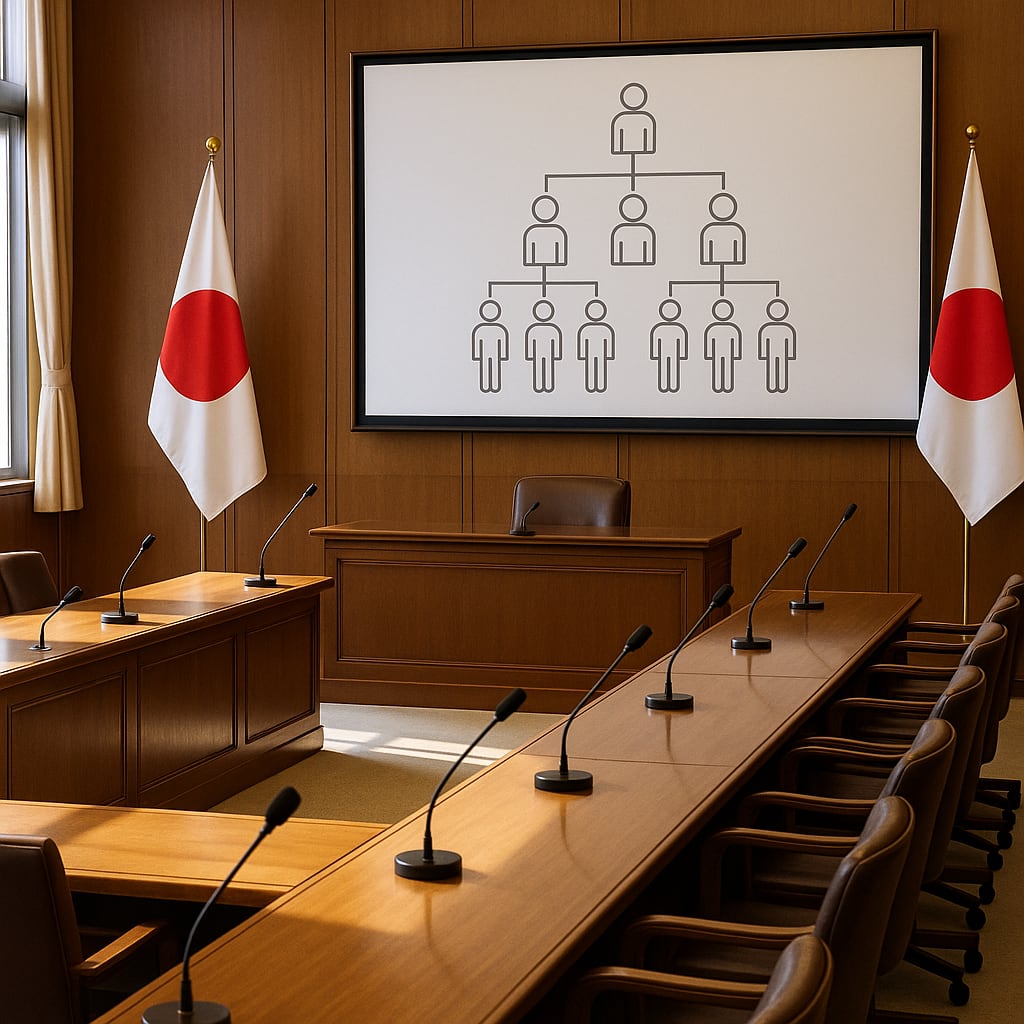
Japan revises Imperial House Law to expand the royal pool but keeps male-only succession
Narrative Snapshot
Across outlets there is consensus that the legal changes seek to shore up a shrinking imperial household while preserving male-line succession. Bangkok Post frames the reform as a sustainability measure for the “shrinking royal family,” while noting it leaves the male-only rule intact despite public backing for female emperors. Folha de S.Paulo likewise highlights polling that favors a woman on the throne but emphasizes that lawmakers declined to cross that line.
Where coverage diverges is in the granularity and framing of the fixes adopted. Le Monde details new pathways to enlarge the pool of royals—adopting back distant, unmarried male relatives over 15 and allowing women to retain royal status after marrying commoners—pointing out the latter merely equalizes rules that already applied to men. Fox News, citing the Associated Press, echoes those elements and foregrounds expert warnings that strict male-line limits could accelerate the institution’s demographic squeeze. Deutsche Welle personalizes the stakes by noting that Princess Aiko would be next in line if sex were not determinative, while Japan Times adds an international layer by reporting that the United Nations hailed women’s rights in response to the revision, even as the male-only rule remains. Serbia’s Politika casts the package as “historic” changes, underscoring the scale of institutional adjustment without challenging the succession principle.
What Happened
Japan’s Parliament on July 17 revised the Imperial House Law, introducing measures to address the shrinking number of imperial family members while maintaining male-only, male-line succession. According to Le Monde, the law allows the adoption back into the imperial family of distant, unmarried male relatives aged over 15, and permits women of the imperial family to retain royal status after marrying commoners, a status retention already available to men. Bangkok Post and Folha de S.Paulo report that legislators retained the bar on female emperors despite surveys showing broad public support for a woman on the throne. Fox News, citing the Associated Press, notes that the male-only succession is now reaffirmed in statute dating back to the 1800s and that the adoption mechanism is intended to increase the pool of potential fathers of future successors. Deutsche Welle confirms the continued exclusion of women from succession. Japan Times reports the United Nations hailed women’s rights in response to the revision.
Why It Matters
The package reflects how Japan’s institutions are adapting incrementally to demographic stress—expanding the active royal roster—while preserving an inheritance rule that multiple outlets note is at odds with public sentiment. Bangkok Post and Fox News describe the measures as a bid to ensure the imperial line endures, but Fox’s account of expert warnings underscores the structural risk that strict male-line succession creates for a small, aging dynasty. Le Monde’s emphasis on adoption and status-retention mechanisms shows the state opting for administrative solutions rather than altering the core rule of succession.
Internationally, Japan Times’ report that the United Nations hailed women’s rights in response to the revision suggests external normative scrutiny will continue to intersect with domestic institutional design, even as the succession rule remains unchanged. For decision-makers, the reform signals where political consensus currently lies: expanding capacity within existing constraints. It also creates a test of institutional efficacy—whether these tools can stabilize succession without further legal change amid sustained public support for a female emperor, as cited by Folha and Bangkok Post.
Diverging Narratives
Outlets align on the legal outcome but differ on interpretive emphasis. Le Monde focuses on the mechanics and guardrails of the new adoption track—age and marital status criteria—and on equalizing marital status rules for women, presenting the package as a technical recalibration. Bangkok Post foregrounds system “sustainability,” casting the steps as pragmatic responses to a shrinking family. In contrast, Fox News centers the reaffirmation of male-only succession and relays AP-cited expert concerns that the paternal-line restriction could hasten institutional decline, bringing the adequacy of the fix into question. Deutsche Welle and Fox News both highlight the salience of Princess Aiko—DW notes she would be next in line absent sex-based exclusion, while Fox reports public calls for her—making the popular legitimacy dimension explicit.
Folha de S.Paulo stresses the gap between legislative action and polling that favors female emperors. Japan Times is distinctive in introducing the UN’s favorable response on women’s rights following the revision, juxtaposed against the law’s continued bar on female succession. Politika’s characterization of “historic” changes underscores magnitude without adjudicating their sufficiency. Together, these framings surface an unresolved question present across reports: whether expanding the family’s size via adoption and status retention will be enough to secure succession under male-line rules, or whether demographic and legitimacy pressures will force further change.
What Happens Next
Implementation choices now carry most of the decision weight. Le Monde’s description of eligibility criteria for adopting distant male relatives implies administrative discretion over who is brought back into the imperial family; analysts should watch the Imperial Household Agency’s guidance and the number and profiles of adoptees actually named. The impact of allowing princesses to retain royal status after marrying commoners will hinge on how quickly those provisions translate into more working royals, as noted by Le Monde and Fox News.
Given Folha de S.Paulo, Bangkok Post, and Fox News’ references to strong public support for a female emperor and expert warnings about male-line constraints, a second axis is political: whether parliamentary leaders signal any openness to revisiting succession rules if the new measures do not stabilize the line. Internationally, Japan Times’ reporting on the UN response suggests continued external engagement on gender dimensions; statements from UN bodies will be a barometer of normative pressure. Monitoring these signals—not predicting outcomes—will indicate whether the current framework endures or reopens.