
Turkey tightens security and detains critics as Ankara prepares to host NATO summit
Narrative Snapshot
- DW and the Japan Times foreground pre-summit detentions, emphasizing journalists and other civic actors; DW cites raids across several provinces, while the Japan Times anchors the episode in a weeks-long contraction of space for dissent flagged by rights groups.
- La Repubblica stresses scale and political authorship, reporting “hundreds” of arrests of lawyers, opponents, students, and journalists “by order of President Erdogan,” a framing not echoed as explicitly elsewhere.
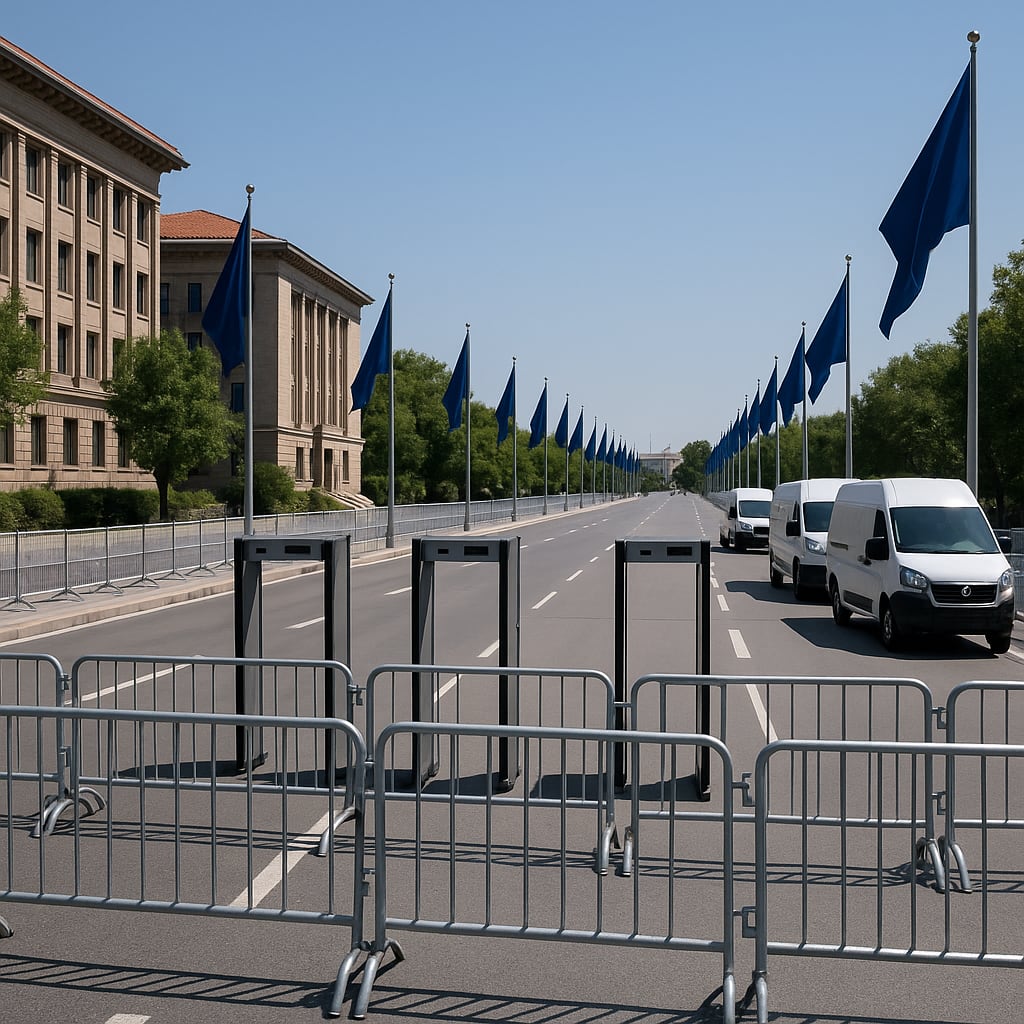
- Corriere della Sera prioritizes the security footprint in the capital—70,000 personnel, cordoned areas, and visible police presence—while Al Jazeera centers the hosting milestone and the July 7 leader arrivals, noting it is Turkey’s first NATO summit in 22 years.
- Balkan Insight connects external signaling and internal control, arguing the summit lets Ankara showcase strategic importance abroad while tightening domestic constraints.
What Happened
Police conducted raids across several Turkish provinces ahead of a NATO summit in Ankara, detaining journalists, academics and members of left-wing groups, according to DW. La Repubblica reports “hundreds” of arrests that included lawyers, opposition figures, students and journalists, describing Ankara as sealed off and attributing the operation to an order by President Recep Tayyip Erdogan. The Japan Times highlights complaints by human rights groups about a shrinking space for dissent in recent weeks as the summit approaches. Al Jazeera notes that leaders of NATO member states are expected in Turkey by July 7 and that this is the first NATO summit Turkey has hosted in 22 years. Corriere della Sera documents an expansive security operation in the capital, citing 70,000 personnel deployed and restricted zones.
Why It Matters
The episode underscores a dual track in Turkey’s approach to a high-visibility alliance gathering: consolidating control at home while leveraging the summit to underline strategic value to NATO, as analyzed by Balkan Insight. The measures described by DW, La Repubblica, and the Japan Times sharpen long-running questions inside the alliance about members’ adherence to democratic norms and media freedom. Hosting the first NATO summit in Turkey in over two decades (Al Jazeera) amplifies Ankara’s role in alliance optics and agenda-setting, even as the reported detentions risk complicating rights-centered dialogues with partners. The scale of the security posture in Ankara (Corriere della Sera) illustrates state capacity to harden public space around major events, potentially setting precedents for how domestic order and international diplomacy are balanced in future high-stakes summits.
Diverging Narratives
Coverage differences pivot on focus, attribution, and framing. DW and the Japan Times center on the detentions, with DW specifying multiple provinces and the Japan Times embedding the episode in a broader, recent contraction of civic space flagged by rights groups. La Repubblica emphasizes scale (“hundreds”) and personalizes command responsibility to Erdogan—an angle that other sources do not explicitly corroborate. Corriere della Sera sidelines causality and rights debates in favor of concrete security logistics (70,000 personnel, sealed areas). Al Jazeera presents the hosting milestone and timing without foregrounding the crackdown. Balkan Insight supplies an overt interpretive frame: the summit as a platform for Erdogan to project geopolitical weight while “tightening the screws” domestically. Unresolved in this set of reports are the precise legal grounds for arrests, the ultimate number of detainees, and whether those held are charged or released—gaps that shape how observers weigh security rationales against civil liberties concerns.
What Happens Next
- Security posture during the summit: If police raids and detentions continue during leader arrivals and official sessions (DW; Corriere della Sera), it would signal sustained priority on public-order controls. A visible de-escalation would point to a summit-focused, time-bound posture. Watch for updates on restricted zones, deployment levels, and additional raids.
- Treatment of detainees: Outcomes—charges, releases, or extended detentions—will indicate whether this is a short-term sweep or a longer tightening of civic space (Japan Times; DW; La Repubblica). Monitor court filings, bar association statements, and rights group reporting.
- Summit messaging and leverage: Balkan Insight’s framing suggests Ankara will highlight strategic centrality; analysts should track presidential speeches and readouts for themes that elevate Turkey’s role in NATO. Al Jazeera’s timing cue (leaders by July 7) sets the window for these signals.
- Allied responses: Any public or private expressions of concern about media freedom and dissent (Japan Times context) will shape post-summit bilateral engagement. Look for communiqués, leader statements, and follow-on diplomatic visits.