
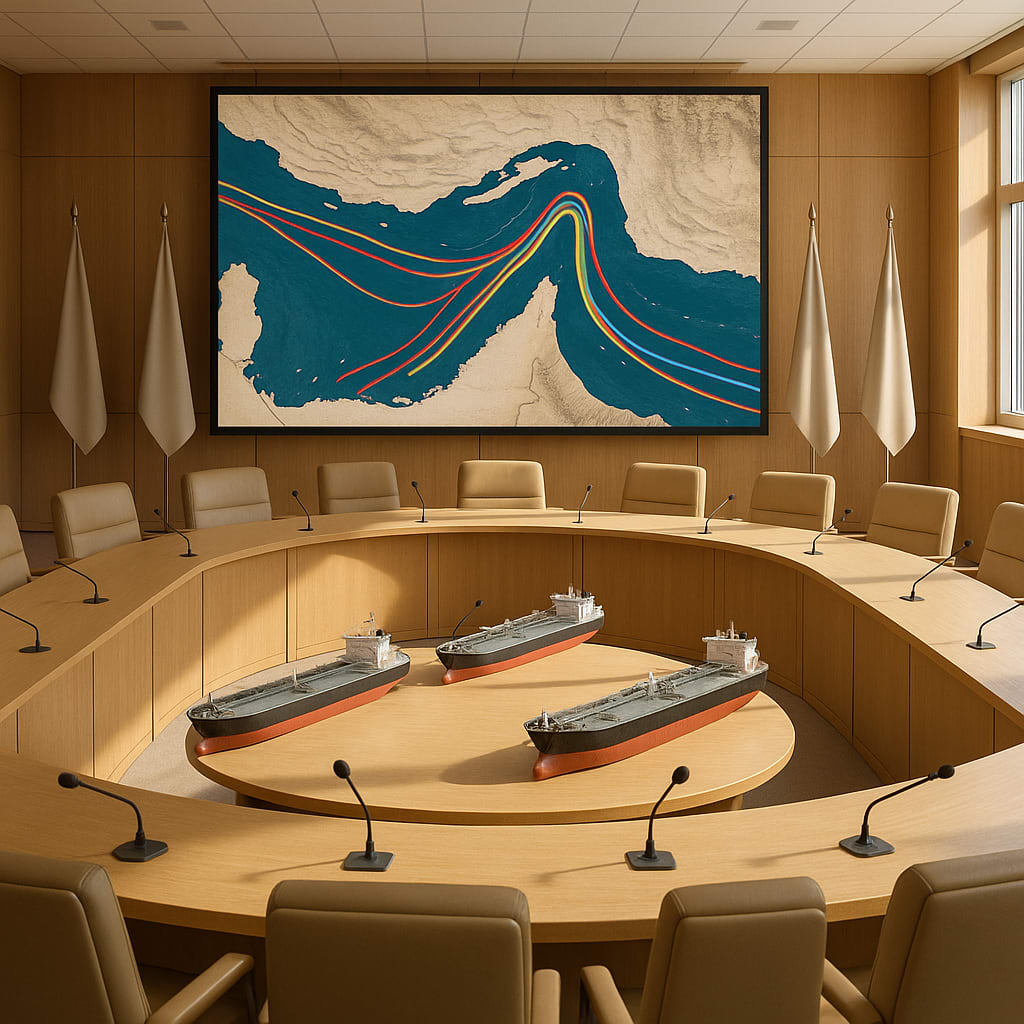
US reimposes Iran-only blockade and expands strikes as Tehran targets shipping and regional bases around the Strait of Hormuz
Narrative Snapshot
Across outlets with divergent editorial approaches, there is broad agreement that Washington has relaunched airstrikes on Iran and reinstated a maritime blockade focused on Iranian ports, while Iran has answered with missile and drone attacks on US facilities and partners and by pressuring commercial traffic through Hormuz. Where coverage diverges is on agency and control. Israeli and British reporting emphasizes Iran’s practical leverage over the waterway and the gap between US declarations and outcomes, while Iranian and Russian sources frame Tehran as the legitimate security guarantor accusing Washington of violating a prior understanding. Chinese and Arab outlets stress the widening regionalization of the confrontation, underscoring strikes beyond the Gulf and the reemergence of frontlines involving Saudi Arabia and the Houthis.
A second line of divergence lies in the treatment of the June memorandum/understanding: US- and Israel-focused analysis describes its vagueness and Iran’s willingness to jeopardize expected gains, while Iranian and Russian-linked outlets assert the United States broke its terms and that Iran has moved to create a temporary safe corridor under IMO notification. Finally, assessments of the waterway’s operational status vary: some describe paralysis or sharp slowdowns, others note partial transit continuing despite elevated risk—differences that reflect timing and vantage point rather than a stable baseline.
What Happened
Following a June 17 understanding that briefly lifted a US naval blockade, the United States resumed strikes on Iran beginning July 9, with CENTCOM confirming repeated waves against targets linked to threats on shipping in the Strait of Hormuz. President Donald Trump publicly vowed to “take over” the strait and keep it open “for all except Iran,” reimposing a blockade on Iranian ports; CENTCOM later said strikes continued at 6 a.m. ET on July 15. Iran retaliated with missile and drone attacks on US and allied sites across the region, including claims of strikes on bases in Jordan, Kuwait, and Bahrain, while the IRGC threatened to block Middle East energy exports. UKMTO kept the threat level at its highest; reports described tankers hit near Oman and sharp traffic drops, with GCC condemnation of attacks on Emirati vessels. Iran notified the IMO of a temporary safe corridor and accused Washington of violating a prior war-termination memorandum, as oil prices rose and US interdictions expanded to a ship accused of running the blockade.
Why It Matters
The confrontation is testing core norms on freedom of navigation and the use of coercive maritime blockades outside a UN mandate, with one of the world’s critical energy chokepoints at issue. The apparent breakdown of a recent US-Iran understanding underscores the fragility of ad hoc de-escalation mechanisms and the difficulty of converting military leverage into enforceable maritime security arrangements. Regional alignments are in play: GCC institutions publicly condemned attacks on Emirati tankers; Saudi and US leaders discussed maritime security; Qatar and Pakistan urged diplomacy; and India and Australia called for restraint—signals of both concern over spillover and limited collective capacity to stabilize the corridor. The IRGC’s explicit threat to block energy exports, combined with US talk of expanding target sets, raises the stakes for energy markets and for institutions such as the IMO that have been pulled into crisis management through corridor notifications rather than formal multilateral guarantees.
Diverging Narratives
US officials and aligned outlets frame the strikes as defensive and limited, aimed at capabilities Iran used to threaten shipping, coupled with a policy of keeping the strait open while interdicting Iran-bound or Iran-origin traffic. Trump’s rhetoric about “taking control” and reopening the waterway “for all except Iran” anchors this view, echoed in CENTCOM communiqués. By contrast, Iranian and Russian accounts contend the United States violated a ceasefire or memorandum, insist Tehran is the “sole guarantor” of Hormuz security, and highlight Iran’s notification of a temporary safe corridor to the IMO. A separate dispute concerns the status and efficacy of the June understanding: British and Israeli reporting describes it as vague and already eclipsed by Iranian coercion, while Iranian state media say Washington abandoned it, leaving Trump “without a clear path.”
There is also inconsistency across reports about operating conditions in the strait: some detail paralysis and missile damage to tankers near Oman with UKMTO’s highest threat level, while earlier regional coverage noted continued though risk-laden passage. Outlets differ on the geographic scope and targets of US strikes and Iranian responses, with Chinese and regional media emphasizing Iranian attacks on US installations in Jordan, Kuwait, and Bahrain and the resumption of Saudi-Houthi exchanges, and with one Venezuelan outlet highlighting claims of attacks near the Bushehr nuclear plant and prospective Iran-Oman management talks—assertions not widely corroborated elsewhere. These contrasts center less on whether escalation is occurring than on responsibility, control, and legality.
What Happens Next
Three decision points emerge from the reporting. First, the negotiating track: Trump has warned of widening strikes unless Tehran returns to talks, while Iran has publicly rejected claims it sought new negotiations. Movement here will likely be signaled through third-party diplomacy, including Saudi, Qatari, and Pakistani channels, and any recalibration of the US blockade timetable referenced by European outlets.
Second, maritime security posture: indicators include UKMTO’s threat level, observable shipping flows, further US interdictions like the disabling of a suspected blockade runner, and whether Iran operationalizes the IMO-notified corridor beyond declaratory steps. GCC statements and any UN Security Council engagement following condemnation of attacks on Emirati tankers would signal whether a broader multilateral framework is forming.
Third, escalation thresholds: US consideration of expanded target sets, IRGC vows to impede regional energy exports, and reported Iranian strikes on US bases in neighboring states define the bands of potential intensification. Analysts should watch CENTCOM strike profiles, IRGC target selection, and the Saudi-Houthi front, which Israeli and Chinese reporting link to the broader crisis.