
Houthis claim strikes on two Saudi oil tankers as Red Sea workaround for oil exports comes under pressure
Narrative Snapshot
Across outlets, there is broad agreement that Yemen’s Houthi movement announced a maritime embargo on Saudi vessels and then claimed missile-and-drone strikes against two Saudi oil tankers in the Red Sea. Where accounts diverge is over confirmation and scale. The New York Times noted Saudi authorities had not yet confirmed hits at the time of its reporting, while other coverage, citing Saudi state media, reported a fire aboard the Saudi-owned Encelia with the crew safe. Maritime incident reporting and visuals add partial corroboration: the UK Maritime Trade Operations center relayed a vessel fire after a projectile strike near Al Shuqaiq, and some outlets circulated video of a blaze at sea.
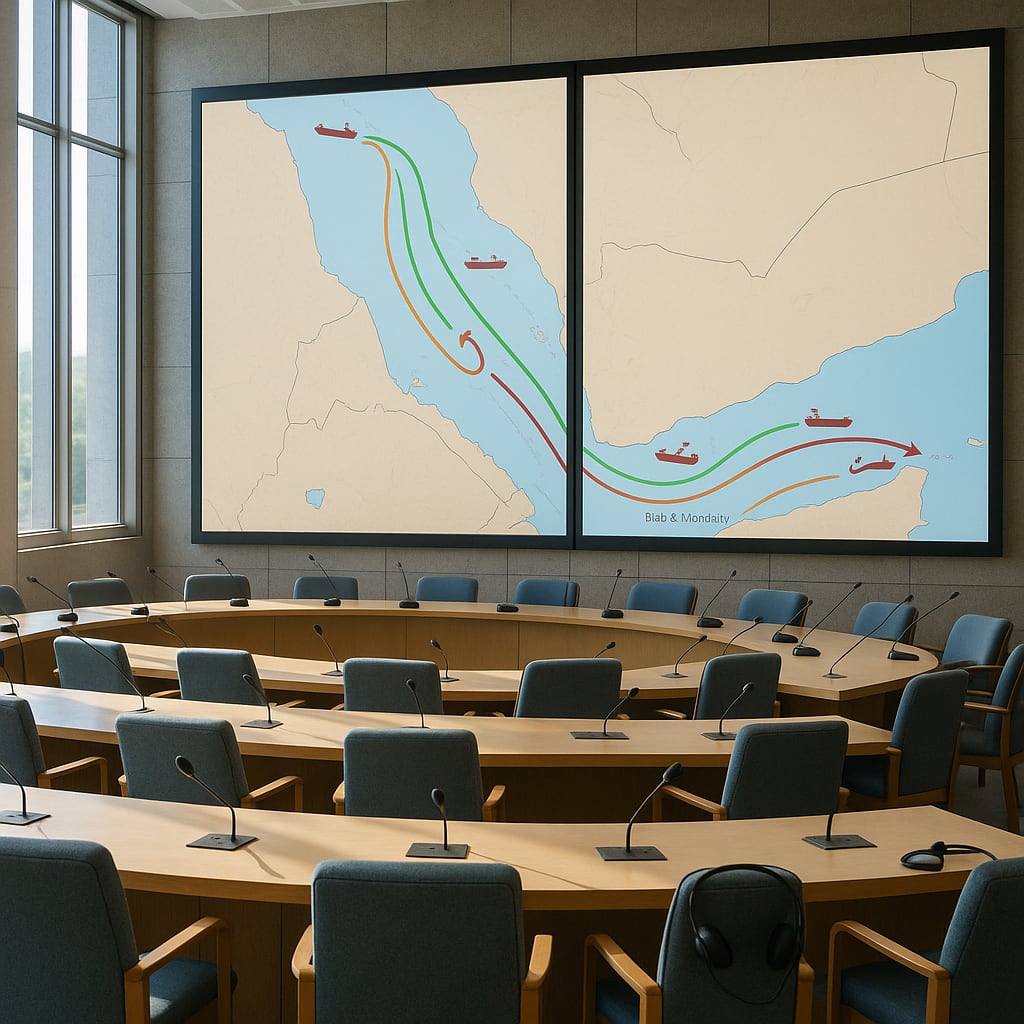
Energy-route exposure is a second line of emphasis. Reporting in the United States, Italy, and Japan ties the episode to Saudi Arabia’s large-scale diversion of crude exports to the Red Sea as a workaround after war-related disruptions at the Strait of Hormuz. European and Asian coverage underscores that this redundancy is now contested: ship-tracking data show tankers making sharp U-turns before or after Saudi ports, and Houthi statements assert they forced about ten vessels to reverse course. A Brazilian report highlights the operational mechanism behind the threat, citing a multinational naval force warning that the Houthis have emplaced missiles and drones to close Bab el-Mandeb.
A third through-line is geopolitical entanglement. The United States and Pakistan publicly condemned Houthi threats to shipping. Meanwhile, live updates from regional outlets situate the Red Sea claims amid concurrent U.S. strikes on Iran and an announcement by Iran’s Revolutionary Guards that they halted three oil tankers at Hormuz. Israeli media link the assaults and U.S.-Iran strikes to unfolding legislative moves in Washington on defense policy, offering a view of how maritime incidents intersect with broader security alignments.
What Happened
Earlier in the week, Yemen’s Houthis declared a maritime embargo on Saudi Arabia. On July 22, the group said it struck two Saudi oil tankers, naming Encelia and Layla, with missiles and drones in the Red Sea, and asserted it compelled about ten ships to turn back. Ship-tracking data showed multiple tankers making abrupt U-turns on routes to and from Saudi ports. A multinational naval force operating in the Red Sea warned mariners that Houthis had positioned missiles and drones to threaten Bab el-Mandeb. The UK Maritime Trade Operations center reported a vessel on fire after being hit by an unidentified projectile near Al Shuqaiq. Saudi state media later said a Saudi-owned vessel’s bow caught fire and the crew was safe, identifying Encelia. The United States and Pakistan condemned Houthi threats. Coverage placed the episode alongside ongoing U.S. strikes on Iran and Iranian actions at Hormuz, as Saudi Arabia had rerouted significant oil volumes to the Red Sea.
Why It Matters
The episode tests the resilience of an energy-security workaround that emerged after disruptions at the Strait of Hormuz. With Saudi exports rerouted to the Red Sea, Houthi attempts to enforce an embargo extend threat contours to Bab el-Mandeb, raising the prospect of simultaneous pressure on two chokepoints. Reporting from multiple regions frames this as both a maritime-security and geopolitical problem: multinational naval warnings, public condemnations from Washington and Islamabad, and concurrent U.S.-Iran strikes point to a widening arena in which state and nonstate actors shape freedom of navigation. The Houthis’ assertion of a “naval embargo” by a nonstate actor against a UN member state also highlights normative strain on shipping rules and state monopoly over blockades. For policymakers, the implications are operational—route management and vessel protection—and strategic, as decisions on maritime posture, alliances, and escalation management will reverberate across energy markets and regional deterrence dynamics.
Diverging Narratives
The factual core—Houthi claims to have attacked two Saudi tankers after announcing a maritime embargo—is consistent across sources. Key uncertainties lie in damage assessment and scope. Houthi channels and several international outlets report strikes on both Encelia and Layla, with claims of large fires; Saudi and maritime incident reporting, by contrast, confirm a fire and crew safety only for one Saudi-owned vessel, Encelia, without corroborating a second successful hit. Estimates of disruption also vary: Houthi statements cite about ten turn-backs, while independent ship-tracking highlights numerous U-turns without attributing intent. Framing diverges as well. Some coverage centers energy-route vulnerability and the Red Sea’s role as a vital workaround amid Hormuz disruptions, while others foreground the Houthis’ deployment of missiles and drones at Bab el-Mandeb. Regional outlets embed the incident within ongoing U.S. strikes on Iran and Iranian interdictions at Hormuz, stressing multi-theater escalation; North American reporting highlights official condemnations and the absence or timing of Saudi confirmation.
What Happens Next
Three decision points emerge. First, Riyadh’s shipping posture: whether Saudi authorities sustain current Red Sea flows or adjust routing and tempo in response to risk. Indicators include further course changes visible in ship-tracking, official maritime advisories, and statements like the Saudi agency’s emphasis on securing the vessel, crew, and marine environment after Encelia’s fire. Second, Houthi enforcement: the group has warned of large-scale operations if attacked and claims to have placed missiles and drones near Bab el-Mandeb; further claimed strikes or demonstrated interdictions, especially near the strait, will signal intent and capacity. Third, external security responses: a multinational naval force has already issued warnings, and the United States and Pakistan publicly condemned Houthi threats; additional maritime guidance, escort arrangements, or incident reports from centers like UKMTO will clarify whether protection measures expand. Concurrent U.S.-Iran hostilities and reported IRGC actions at Hormuz will shape the overall risk to dual chokepoints.