
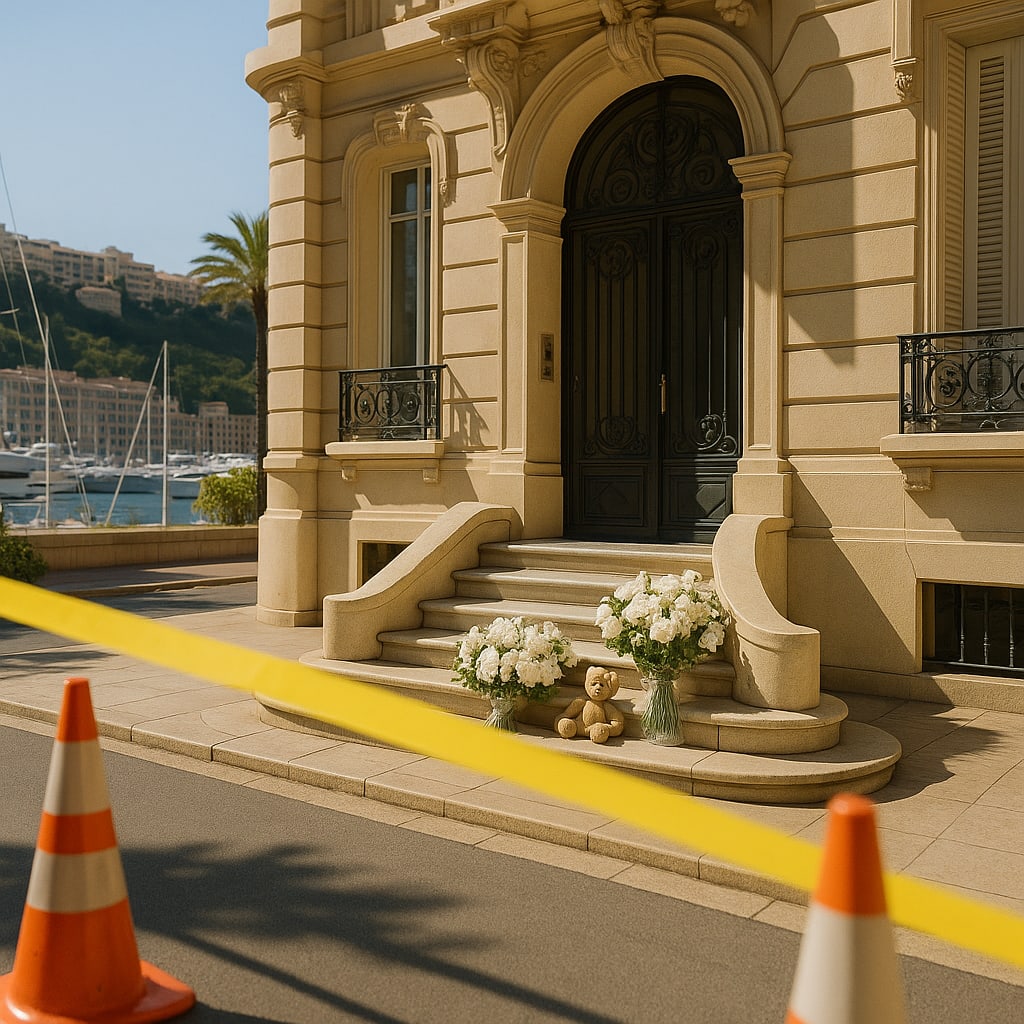
Monaco residential blast injures Ukrainian business figure’s family; prosecutors probe attempted assassination
Narrative Snapshot
- Broad alignment that a device was deliberately left in a building lobby and that three members of a Ukrainian family were wounded, with two adults in critical condition; a suspect is at large and terrorism has been ruled out by prosecutors (Le Monde; ANSA; Al Jazeera; South China Morning Post; Sky News; Fox News).
- Officials have not publicly confirmed the target’s identity, while multiple outlets name the injured businessman as Vadym/Vadim Yermolaiev/Ermolaev/Iermolaiev (Le Monde; Deutsche Welle; SCMP; The Guardian; ANSA; Folha de S.Paulo).
- Some coverage ties the case to Monaco’s community of Ukrainian elites and to the named businessman’s sanction status in Ukraine, adding political sensitivity (Corriere della Sera, 30 Jun; Deutsche Welle).
- Accounts differ on the teenager’s gender and on how strongly authorities initially framed the blast as an “attack” (Kyiv Independent; Corriere della Sera, 29 Jun; SCMP).
What Happened
Shortly before 9 p.m. local time on Monday, an explosive device concealed in a bag or parcel detonated in the lobby of a residential building in central Monaco, injuring three Ukrainians: two adults and a 13‑year‑old, with the adults in critical condition and the teenager less seriously hurt (The Guardian; ANSA; Corriere della Sera, 29 Jun). Surveillance footage reportedly showed a suspect leaving a backpack moments before the blast; a manhunt is underway in Monaco and neighboring France (Fox News; SCMP). Authorities described the blast as a deliberate act, with the prosecutor opening an investigation for attempted assassination and explicitly excluding terrorism (Le Monde; ANSA). Italian and international outlets report the adults as a Ukrainian business magnate and his partner, citing multiple media identifications, while officials have not confirmed the names (ANSA; The Guardian; DW; Le Monde). Prince Albert called the incident a shock (ANSA).
Why It Matters
Monaco’s first reported parcel-bomb–style attack in a residential setting tests the principality’s reputation for security and its operational reliance on cross-border coordination with France (Folha de S.Paulo; Fox News; SCMP). Prosecutors’ decision to treat the case as attempted assassination while excluding terrorism channels the response through ordinary criminal and judicial cooperation frameworks, rather than counterterrorism tools (Le Monde; ANSA). Multiple outlets’ identification of the injured businessman as a Ukrainian oligarch sanctioned by Kyiv for alleged business in Russia-occupied Crimea underscores the policy sensitivities around jurisdictions hosting high-net-worth foreign nationals caught up in wartime political economies (DW; Corriere della Sera, 30 Jun). For European authorities, the case highlights risks of targeted violence against politically exposed expatriates and the need to align protective, investigative, and extradition practices across borders in high-density urban microstates.
Diverging Narratives
- Identity confirmation: Monaco’s prosecutor declined to confirm who was targeted, even as many outlets named the injured businessman and family members (Le Monde; The Guardian; DW; ANSA; Folha de S.Paulo). This leaves an official-information gap filled by media attribution.
- Classification language: Coverage converges on “deliberate” and “attempted assassination,” but the Minister of State initially called it an “attack” before stepping back from that phrasing, reflecting caution in official framing (SCMP; Le Monde). Italian reports also use “atto doloso” (willful act) and reference a homicide probe, while prosecutors specify attempted assassination and exclude terrorism (ANSA; Le Monde).
- Victim details: Outlets agree the injured minor is 13, but differ on gender—some say girl; others say boy; several avoid specifying (Kyiv Independent; Corriere della Sera, 29 Jun; The Guardian).
- Modus operandi emphasis: Most describe a “parcel” or “makeshift” bomb left in a lobby; Italian reporting adds details about bolts and pellets as shrapnel, underscoring intent to maximize injury (Sky News; Fox News; Corriere della Sera, 29 Jun).
- Contextual framing: Some reporting foregrounds Monaco as an ultra-safe jurisdiction experiencing an unprecedented incident; others connect the case to the presence of Ukrainian elites on the Riviera, with distinct policy resonances (The Guardian; Folha de S.Paulo; Corriere della Sera, 30 Jun).
What Happens Next
- Suspect identification and arrest: Authorities in Monaco and France are conducting a manhunt; indicators to watch include release of suspect imagery, cross-border warrants, and any arrests announced by the prosecutor’s office (Fox News; SCMP; Al Jazeera).
- Legal framing and charges: Prosecutors have opened an attempted-assassination inquiry and excluded terrorism; subsequent charging decisions and any clarification of the intended target will shape investigative tools and international judicial cooperation (Le Monde; ANSA).
- Official confirmation of victims’ identities: While multiple outlets have named the businessman, confirmation—or continued refusal—by Monaco’s prosecutor will influence diplomatic handling and potential engagement by Ukrainian authorities (Le Monde; DW; The Guardian).
- Security posture in Monaco: Given official descriptions of a deliberate, unprecedented incident, watch for government communications on protective measures in residential settings and liaison protocols with French services, which would signal policy adjustments without invoking counterterrorism frameworks (Folha de S.Paulo; ANSA; SCMP).