
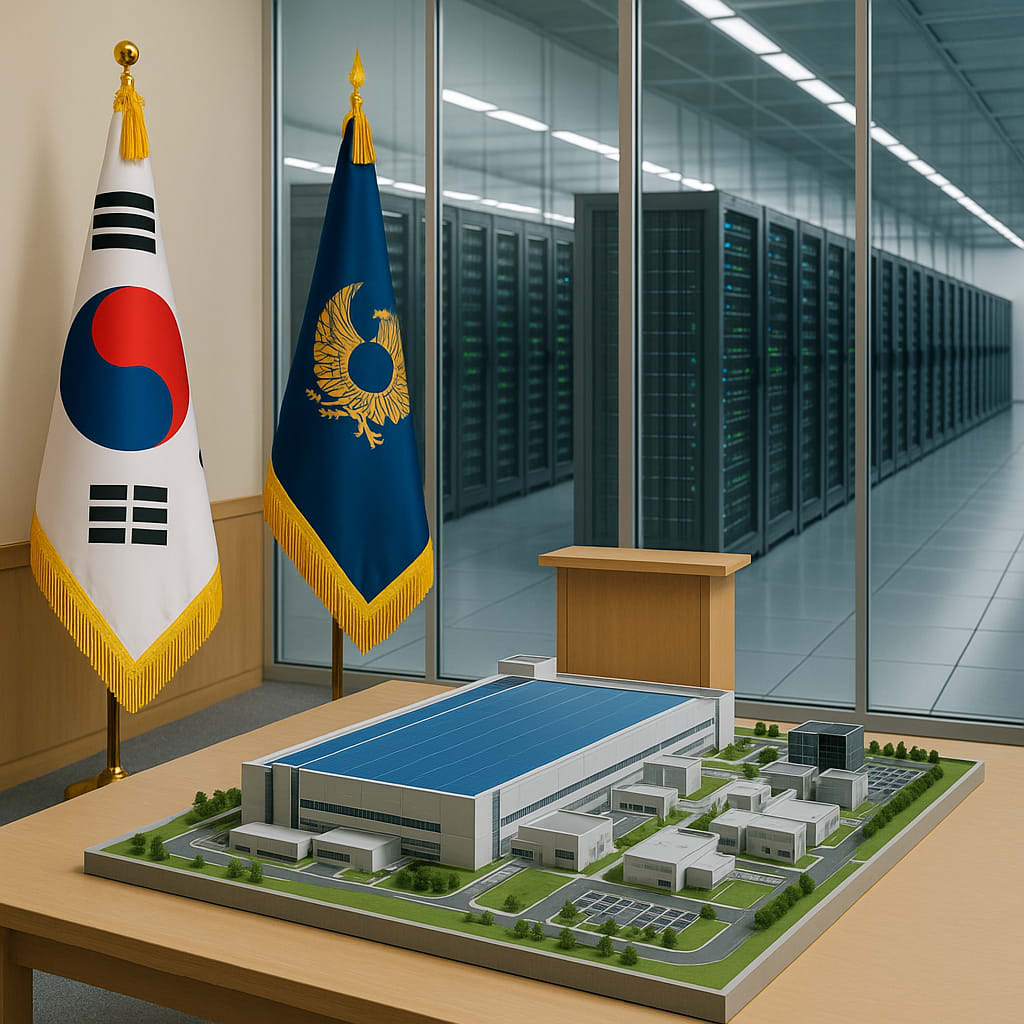
South Korea unveils multi-year AI and semiconductor investment plan; reported scale ranges from $576 billion to over €1 trillion
Narrative Snapshot
- Scale and scope diverge across outlets: figures range from $576 billion (The Hindu) and US$650 billion (South China Morning Post) to more than $1 trillion (Al Jazeera) and over €1 trillion spread over 10 years (Le Monde), with the latter specifying advanced fabs and AI data centers.
- Framing differs: Japan Times and SCMP emphasize President Lee Jae Myung’s push to reduce regional disparities by steering activity beyond the Seoul area; Al Jazeera stresses a “race against time” to dominate the AI boom; Le Monde highlights a renewed domestic debate over how sector profits should be redistributed.
- Institutional configuration is consistent: SCMP reports Lee appeared with Samsung Electronics and SK Hynix leaders; The Hindu underscores commitments by those firms alongside local governments, signaling public–private coordination.
- Global demand context anchors the stakes: Fox News notes Apple price increases tied to surging DRAM/HBM costs from AI data center demand, situating South Korea’s expansion against a tight memory market.
What Happened
On Monday, June 29, 2026, President Lee Jae Myung announced sweeping AI and semiconductor megaprojects, joined by the leaders of Samsung Electronics and SK Hynix (South China Morning Post). Reported totals vary: US$650 billion (SCMP), $576 billion for chip investments by Samsung, SK Hynix, and local governments (The Hindu), and more than $1 trillion (Al Jazeera). Le Monde reports the plan extends over ten years, including construction of advanced semiconductor plants and AI data centers, and says it has reignited debate over how the sector’s profits should be shared. Multiple outlets note Lee’s intent to align the initiative with his pledge to reduce regional disparities and stimulate economies outside the Seoul metropolitan area (Japan Times; SCMP). The package is framed as an effort to consolidate overwhelming industrial strength in chips and AI (SCMP; The Hindu).
Why It Matters
The initiative targets chokepoints central to the AI era—advanced fabrication and data infrastructure—at a moment of intense global demand for memory and high‑bandwidth chips, which Fox News links to downstream consumer price increases at Apple. If executed at the scales reported, South Korea is positioning to entrench leadership in AI‑relevant semiconductors while using industrial policy to rebalance domestic growth away from the capital region (Japan Times; SCMP). The plan’s design—spanning central government priorities, local government participation, and commitments by Samsung and SK Hynix (The Hindu; SCMP)—signals significant institutional coordination capacity. Le Monde’s note that the announcement revives debates on profit redistribution underscores that distributional questions will track alongside capacity expansion. For decision-makers, the intersection of industrial strategy with regional development and social compacts will shape implementation, while global consumers and firms are already exposed to memory-market tightness.
Diverging Narratives
Outlets differ most clearly on magnitude and cadence. The Hindu cites $576 billion in chip investments by Samsung, SK Hynix and local governments; SCMP reports US$650 billion across AI and chips; Al Jazeera and Le Monde put the figure above $1 trillion and €1 trillion respectively, with Le Monde specifying a ten‑year horizon and concrete project classes (fabs, AI data centers). Framing also splits: SCMP and The Hindu emphasize “overwhelming” industrial strength and leadership ambition; Japan Times and SCMP highlight regional rebalancing as a core policy link; Al Jazeera stresses urgency as a “race against time.” Le Monde surfaces a social-policy lens by noting renewed debate over how sector profits should be redistributed—an issue absent from the other accounts. Across reports, the presence of Samsung and SK Hynix leadership and mention of local governments (SCMP; The Hindu) point to coordinated execution, but the precise public–private funding breakdown and allocation across regions are not detailed in these sources.
What Happens Next
Analysts should watch four decision points supported by the reporting:
- Scope and financing clarity: Government releases and corporate capex guidance that reconcile the divergent totals and specify public versus private shares (SCMP; The Hindu).
- Project siting and regional distribution: Site announcements for fabs and AI data centers that operationalize Lee’s pledge to stimulate economies beyond Seoul (Japan Times; SCMP; Le Monde).
- Social compact design: Any concrete policy moves that follow Le Monde’s reported debate on redistributing sector profits, which would shape who captures the gains from expansion.
- Market pressure indicators: Memory pricing and device-maker responses—Fox News reports Apple price hikes tied to DRAM/HBM constraints—plus capacity plans from Samsung and SK Hynix (SCMP; The Hindu) as signals of how supply–demand dynamics evolve alongside Korea’s buildout.
Each of these will determine the plan’s industrial impact, regional footprint, and distributional outcomes within the bounds described by the sources.