
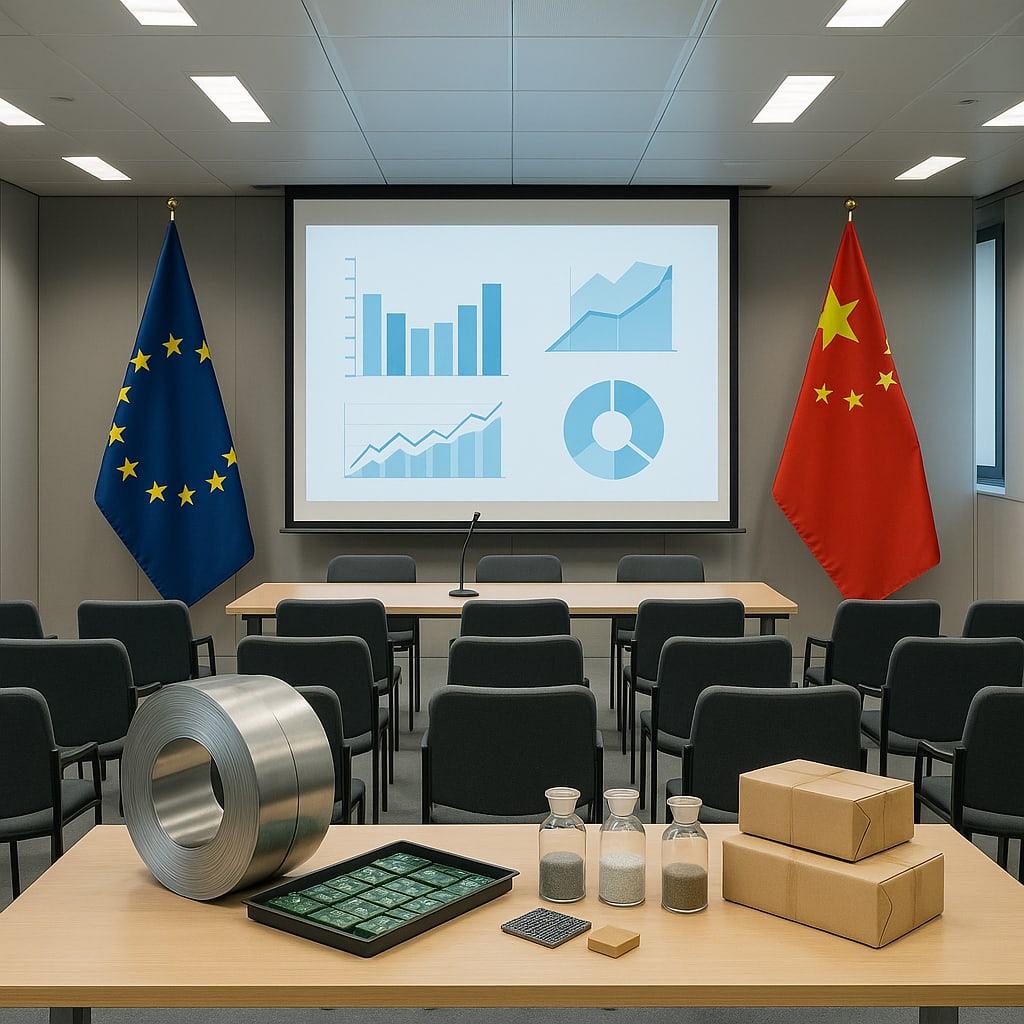
EU tightens trade controls with small-parcel levy and tougher steel limits amid talks with China
Narrative Snapshot
- Convergence on measures: European outlets (Le Monde, Deutsche Welle) and Latin American and Spanish sources (Folha, Clarín) align on two immediate instruments taking effect around July 1—raising barriers on steel and ending the small‑parcel exemption—while differing in emphasis and rationale.
- Strategic framing varies: Le Monde and Al Jazeera place the moves inside Europe’s response to Chinese competition and a broader US–China squeeze; Folha anchors them in EU industrial targets (notably an 80% steel capacity‑use goal).
- Negotiation vs. coercion: DW and the South China Morning Post spotlight parallel EU‑China talks (monitoring trade flows, rare earths access, potential Chinese purchases/tariff adjustments), whereas the Japan Times underscores elite skepticism and retaliation risks given China’s grip on critical inputs.
- Implementation lens: Clarín’s focus on a flat €3 “tasa Shein” reframes the de minimis change as a mass e‑commerce measure aimed at cheap Chinese parcels, not only high‑level geoeconomics.
What Happened
The European Commission moved to curb steel imports and low‑value e‑commerce shipments. Folha de S.Paulo reports new EU steel import quotas that reduce annual limits and introduce a 50% tariff as part of a protection push targeting 80% capacity utilization in the bloc’s steel sector. Le Monde adds that, from July 1, the EU is increasing steel duties and taxing small parcels. Clarín specifies a €3 fee that ends the previous exemption for parcels below €150, colloquially dubbed the “tasa Shein.” Deutsche Welle notes Brussels has ended the customs exemption for low‑value imports from China and, in parallel talks, agreed with Beijing to monitor trade flows and improve access to rare earth materials. According to the South China Morning Post, China signaled openness to reduce its large EU trade surplus, considering purchase agreements for European goods and discussing lower tariffs on EU‑made products. The Japan Times highlights EU officials’ skepticism amid fears of Chinese retaliation and dependence on Chinese minerals and chips. Al Jazeera frames the steps within Europe’s effort to remain competitive while balancing ties with the US and China.
Why It Matters
The measures link trade defense to industrial policy. Folha’s reporting of an 80% steel capacity target positions tariffs and quotas as tools to lift EU utilization, while Le Monde’s account situates them in a slow‑building European response to Chinese competition. Clarín and DW show the EU is also recalibrating e‑commerce rules by ending the de minimis exemption, signaling a shift from facilitating cheap direct‑to‑consumer imports to protecting internal market dynamics. DW’s account of arrangements with Beijing to monitor trade flows and improve rare earth access points to nascent mechanisms for managing a structurally imbalanced relationship. Yet the Japan Times underscores structural vulnerabilities—China’s hold over minerals and chips critical to EU defense and autos—limiting Brussels’ room for maneuver and reinforcing retaliation risks. Al Jazeera’s framing suggests the EU’s choices reverberate across transatlantic and Sino‑European equilibria, with competitiveness and supply security at stake for policymakers.
Diverging Narratives
- Defensive mobilization vs. limited efficacy: Le Monde depicts a Europe slowly strengthening defenses against Chinese competition, while Folha centers a concrete industrial benchmark (80% steel capacity use) as the policy yardstick. The Japan Times tempers both by stressing skepticism and the risk that Chinese dominance in critical inputs blunts EU leverage and invites retaliation.
- Barrier‑raising vs. managed engagement: DW and the SCMP document parallel engagement—monitoring trade flows, rare earth access, and Chinese openness to purchase agreements and lower tariffs on EU goods—alongside enforcement steps. This contrasts with coverage focused more squarely on restrictions (Le Monde, Clarín, Folha).
- Retail channel vs. geoeconomic front: Clarín foregrounds a consumer‑facing instrument—the €3 per‑parcel fee—and the colloquial “tasa Shein,” while DW frames the same change as part of a broader move specifically targeting low‑value imports from China. The emphasis diverges: mass‑market leakage in e‑commerce versus a targeted geopolitical adjustment.
- Competitiveness balancing: Al Jazeera situates these actions within Europe’s need to remain competitive amid US–China tensions, a frame that complements but expands beyond the primarily China‑focused lens in Le Monde and DW, and the sector‑specific focus in Folha.
What Happens Next
- EU‑China trade management: Watch for concrete follow‑through on DW’s reported mechanisms (trade‑flow monitoring, steps to improve rare earth access) and the SCMP’s signals (Chinese purchase agreements for EU goods, any tariff adjustments on EU products). Announcements or pilot arrangements would indicate whether dialogue is operationalizing.
- Steel policy calibration: Monitor EU steel capacity utilization against Folha’s 80% target and any Commission updates to quotas or the reported 50% tariff framework. Utilization trends will shape the policy debate over maintaining, tightening, or easing measures.
- E‑commerce inflows: Track changes in volumes and declared values of small parcels from China after the end of the de minimis exemption (DW) and the €3 levy (Clarín). This will reveal whether the measure curbs low‑value import surges.
- Retaliation and dependencies: Following the Japan Times’ reporting, watch for Chinese countersteps affecting EU industries, minerals, or chips, as well as EU contingency measures. Signals here will test the durability of Brussels’ emerging mix of enforcement and engagement.
- Strategic alignment: As Al Jazeera notes Europe’s balancing act between the US and China, look for signs of coordination or divergence with US trade actions, which could influence EU leverage and Beijing’s calculus.