
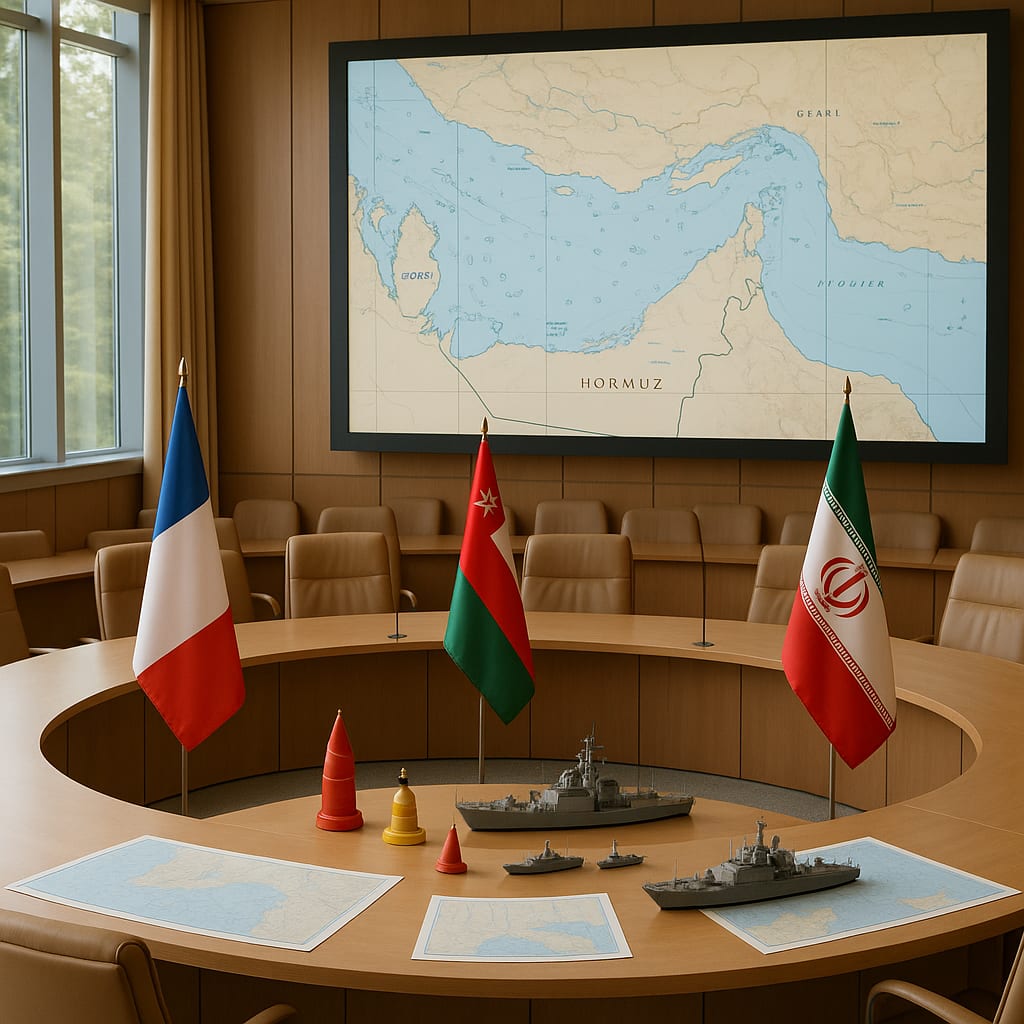
France and Oman signal joint Hormuz demining; Iran asserts it alone will clear mines and control the strait
Narrative Snapshot
- European and Omani messaging centers on “free, unconditional” navigation and de-escalation, with demining framed as a collective security task alongside partners (Le Monde; Middle East Eye; TASS).
- Iranian officials cast the issue as one of sovereignty and law: only Iran may clear mines, citing the Islamabad MoU, and foreign involvement would “complicate” the situation; some lawmakers add that U.S. influence is over (IRNA; Middle East Eye; Le Monde).
- Coverage splits on the Iran–Oman dynamic: analysis highlights competition over who decides how the strait reopens (The Guardian), while Iranian outlets foreground a new bilateral Hormuz Committee with Oman for long-term administration (IRNA; Tehran Times).
- Regional and global stakes surface differently: Japan Times links Tehran’s posture to upcoming talks in Qatar; Corriere della Sera flags arguments that the era of free navigation may give way to fee-based “services”; Pakistan publicly elevates freedom of navigation as a global necessity (Japan Times; Corriere della Sera; Middle East Eye).
What Happened
French President Emmanuel Macron said France and Oman will work with partners to clear mines in the Strait of Hormuz and secure maritime routes, coupled with a joint call for “free, unconditional” navigation (Middle East Eye; Le Monde; TASS). Iran quickly rejected any external role: Deputy Foreign Minister Kazem Gharibabadi said demining “will be carried out only by Iran,” invoking the Islamabad MoU, and Tehran urged Paris not to “complicate” the situation (IRNA; Middle East Eye; Le Monde). This unfolds alongside a new Iran–Oman “Strait of Hormuz Committee,” agreed on June 23 and convened for its first session to discuss long-term administration (IRNA; Tehran Times). Japan Times reports Tehran has intensified rhetoric on controlling Hormuz ahead of U.S.-linked talks in Qatar, as an Iranian lawmaker declared the U.S. role in the region “over” (Japan Times; Middle East Eye). Pakistan, for its part, publicly underscored freedom of navigation’s economic centrality (Middle East Eye).
Why It Matters
The dispute tests how regional sovereignty claims interact with freedom-of-navigation commitments and maritime security practices. Paris and Muscat’s emphasis on collective demining and “unconditional” navigation signals an external-security provision approach, while Tehran’s legal framing and the Iran–Oman committee point to regionalized governance of a global chokepoint (Le Monde; IRNA; Tehran Times). Japan Times’ linkage to U.S.–Iran talks places Hormuz within a broader bargaining context, potentially affecting negotiation bandwidth and leverage. Corriere della Sera’s reporting on arguments for charging “service” fees suggests a shift toward monetized passage that, if pursued, could alter cost structures and precedents for chokepoint management. Pakistan’s statement highlights the systemic exposure of supply chains to governance outcomes in Hormuz (Middle East Eye). For governments and multilateral bodies, the contours of any demining and management regime will shape operational access, legal justifications, and crisis-response options in a critical corridor.
Diverging Narratives
- Who leads and under what authority: France and Oman present demining as a partner-enabled security measure to guarantee free navigation (Middle East Eye; TASS; Le Monde). Iran asserts exclusive competence to clear mines and manage the strait, referencing the Islamabad MoU and warning external actors against involvement (IRNA; Middle East Eye; Le Monde).
- Bilateral coordination vs. rivalry: Iranian and pro-government outlets spotlight the new Iran–Oman committee and its first session on long-term administration (IRNA; Tehran Times). The Guardian, by contrast, underscores a competitive dynamic, arguing Tehran seeks to preserve leverage from Hormuz while Oman advances its own reopening plans.
- Role of extra-regional powers: An Iranian lawmaker’s claim that the U.S. era in the region has ended contrasts with Macron’s multilateral framing and the Japan Times’ note that Tehran’s stance intensifies ahead of talks the U.S. says will occur in Qatar (Middle East Eye; Japan Times).
- Economic regime of passage: Corriere della Sera reports arguments that the “era of free navigation” could give way to fees for “services provided,” while Le Monde and Middle East Eye emphasize calls for navigation “without conditions or restrictions.” These frames point to unresolved questions over costs, governance, and legal basis.
What Happens Next
- Authority over demining: Watch whether the Iran–Oman Hormuz Committee articulates procedures that either incorporate external technical support or reaffirm Iran-only clearance (IRNA; Tehran Times). Signals include joint communiqués, protocols, or explicit accept/reject language toward partner participation (Middle East Eye; TASS).
- Linkage to diplomacy: Monitor if Hormuz governance enters the agenda or rhetoric around the Qatar talks noted by Japan Times. Indicators include Iranian public statements tying control or clearance to negotiating demands, and U.S./European references to maritime security.
- Governance model: Track whether Oman’s role is formalized through the committee in ways that align with The Guardian’s portrayal of competing decision-making or with Iranian narratives of coordinated bilateral administration (IRNA; Tehran Times; The Guardian).
- Economic terms of passage: Look for official announcements from Tehran or Muscat on charging for “services,” as referenced by Corriere della Sera, and for any friction with calls for navigation “without conditions or restrictions” (Le Monde). Such moves would clarify the cost and legal architecture facing shippers.
- Regional signaling: Statements like Pakistan’s on freedom of navigation provide a barometer of broader regional tolerance for restrictive regimes versus collective security approaches (Middle East Eye).