
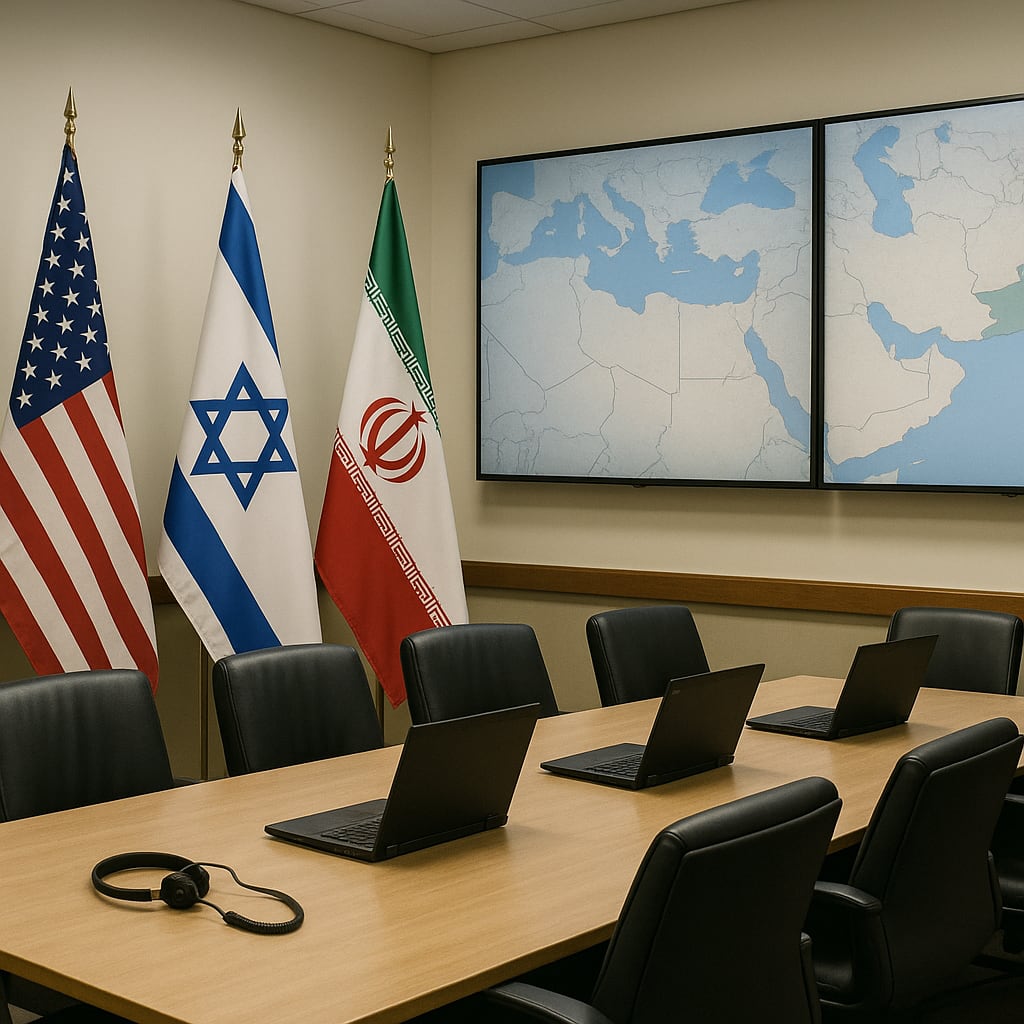
Israeli intelligence warned Washington of alleged new Iranian plot to assassinate President Trump, multiple outlets report
Narrative Snapshot
- Most outlets (Folha de S.Paulo, La Repubblica, ANSA, Fox News, Middle East Eye, TASS, France24, The Hindu) relay the Wall Street Journal’s account that Israel shared intelligence on a “new” or “specific” Iranian plan; The Times of Israel adds a counterpoint from unnamed US officials that the warning was more general and appeared tied to smoothing Trump–Netanyahu ties.
- Coverage differs on operational detail and linkage: France24 and The Hindu connect the reports to Trump’s unexpected plane switch after the NATO summit in Türkiye, while others only note Trump’s public allusions to threats in Ankara.
- Contextual frames diverge: TASS and The Hindu emphasize escalation risks with Iran; Fox News and Middle East Eye foreground Trump–Netanyahu coordination and imminent engagement; Politika and SCMP situate the threat in Tehran’s vow of revenge since Soleimani’s 2020 killing and recent hardline rhetoric at Khamenei’s funeral.
What Happened
According to multiple outlets citing the Wall Street Journal, Israeli intelligence recently provided the United States with information indicating Iran had developed a new plan to assassinate US President Donald Trump (Folha de S.Paulo; La Repubblica; ANSA; Fox News; Middle East Eye; TASS; France24; The Hindu). The White House referred inquiries to Trump’s remarks in Ankara on Wednesday, where he said there were threats against his life (Middle East Eye). Several reports noted Trump’s switch to an older aircraft when departing Türkiye after the NATO summit, which some linked to the intelligence warning (The Hindu; France24). The Times of Israel, citing US officials speaking to Israel’s Channel 12, reported the warning was more general and may have aimed to improve Trump–Netanyahu relations. Background cited includes Iran’s public vows of revenge for the 2020 US strike on Qassem Soleimani (Politika) and inflammatory calls at Khamenei’s funeral (SCMP).
Why It Matters
The episode sits at the intersection of security protection for a sitting US president and the fraught US–Iran–Israel triangle. Reports arrive amid renewed US–Iran hostilities that, according to The Hindu, have raised fears of broader war, and as rhetoric inside Iran remains hardline despite ongoing contacts with Washington (SCMP). Israel’s alert underscores tight intelligence coordination with Washington, while TASS notes it could harden the US stance and escalate confrontation. It may also affect policy sequencing: Fox News reports Washington is pursuing broader nuclear talks even as Netanyahu insists “deal or no deal” Iran will not obtain a nuclear weapon, signaling potential strain over approach, not objectives. With Trump and Netanyahu preparing to meet soon in the United States (Al Jazeera English; Middle East Eye; Fox News), how both leaders frame this intelligence could influence near-term deterrence signals, alliance management, and the trajectory of any US–Iran engagement.
Diverging Narratives
- Specificity and intent: Many outlets echo the WSJ characterization of a “new” or “specific” plot (France24; The Hindu; Fox News). The Times of Israel, however, cites US officials who described the warning as more general and suggested it appeared designed to ease friction between Trump and Netanyahu. This introduces uncertainty over whether the core value of the alert is operational or diplomatic.
- Link to security measures: France24 and The Hindu report that the intelligence may explain Trump’s aircraft switch from Türkiye; other coverage mentions only Trump’s statement about threats (Middle East Eye), leaving the connection between intelligence and travel choices unconfirmed outside those attributions.
- Strategic framing: TASS emphasizes potential US escalation against Iran flowing from the intel, while Fox News and Middle East Eye focus on Trump–Netanyahu alignment and imminent engagement. Politika and SCMP stress continuity from Tehran’s vows since Soleimani’s killing and recent funeral rhetoric, framing the threat as part of a persistent Iranian posture rather than a discrete inflection.
What Happens Next
- US posture toward Iran: If Washington treats the warning as “specific,” expect stronger protective measures and potentially tougher rhetoric or actions, as anticipated by TASS. If it aligns with the “general warning” view reported by The Times of Israel, watch for continuity in existing policy tracks and calibrated public messaging.
- Trump–Netanyahu engagement: Multiple outlets report a planned meeting soon (Al Jazeera English; Middle East Eye; Fox News). If the meeting is scheduled promptly and framed around shared Iran concerns, that would support the alliance-management reading. Delays or muted readouts could indicate a more cautious approach.
- Negotiations vs. pressure: Fox News reports Washington is pursuing broader nuclear talks with Tehran while Netanyahu insists on preventing an Iranian bomb regardless of any deal. Signals to watch include any US statements affirming the talks’ pace or scope versus announcements of additional pressure tools.
- Intelligence disclosures and protective signals: Further declassification or briefings would clarify the threat’s specificity. Operational indicators include changes in presidential travel patterns and continued public references by Trump to threats (The Hindu; France24; Middle East Eye).