
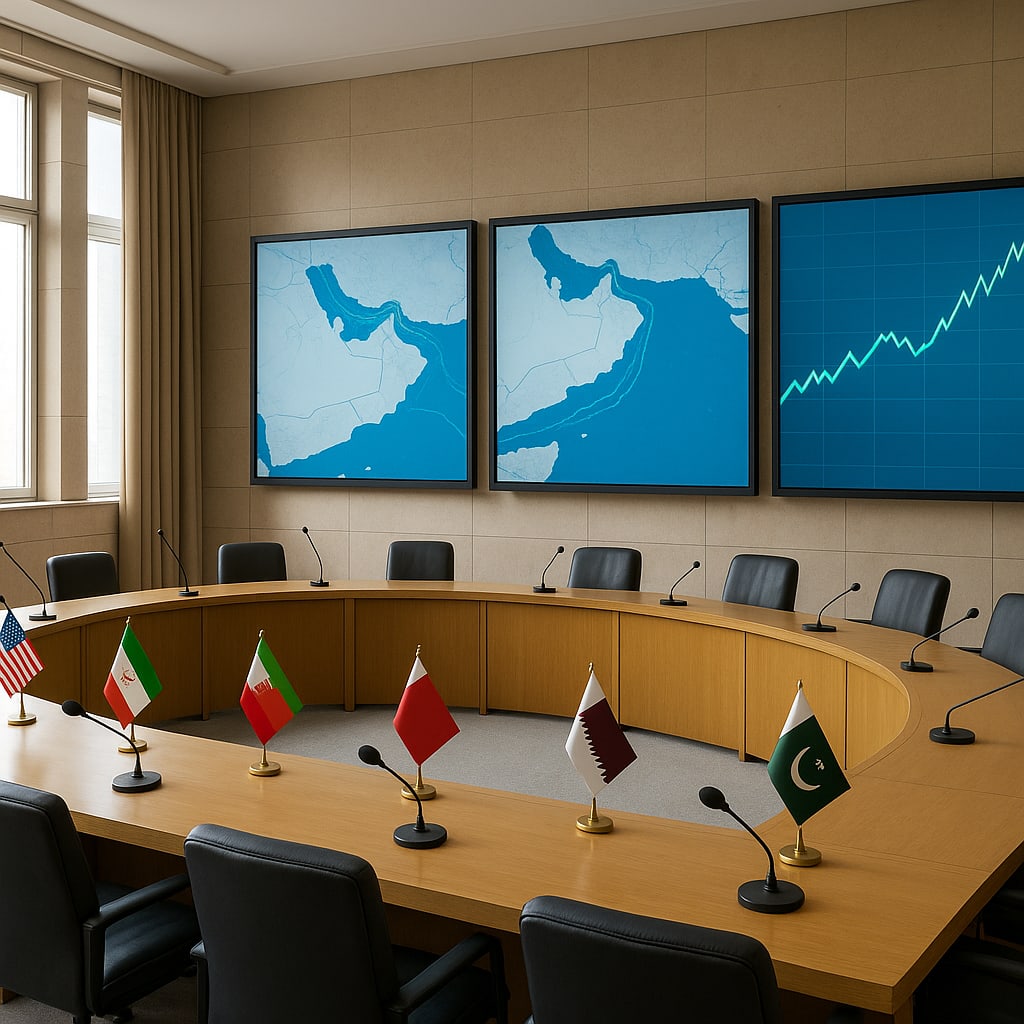
US and Iran pause strikes for talks as Trump threatens rapid return to force
Narrative Snapshot
Across outlets, there is broad agreement that military activity subsided as Washington and Tehran signaled room for diplomacy, even as both sides stressed readiness to resume operations. US officials framed the lull as deliberate space for talks, with the US ambassador to the UN saying forces remain “locked and loaded” while President Donald Trump gives negotiations “a little bit of room,” according to South China Morning Post. Iranian messaging emphasized a conditional halt to retaliatory fire tied to the US pause, per CGTN, while BBC and the New York Times report that Tehran denies any direct talks.
Coverage diverges on whether resource constraints influenced the pause. The New York Times and Wall Street Journal reported US concerns over interceptor stocks; RT highlighted Trump’s pushback that the US has “far more munitions than anyone in the world,” and BBC examined depletion risks after “thousands” of hard-to-replace missiles were fired. CGTN cited advisers warning of “depleting US weapons stockpiles” and “running out of targets.”
What is most at stake in regional reporting is maritime security and energy flows. Multiple outlets track an active US naval blockade around Iran during the lull, with boardings and diversions reported by CENTCOM via CGTN. Parallel attention centers on Houthi claims against Saudi targets and threats to Bab el-Mandeb, with the Guardian and Middle East Eye noting claimed attacks and Saudi interceptions, and Fox News amplifying US warnings to the group. Oil benchmarks moved back above $100 as supply risks rose, the Guardian and France24 reported.
A second through-line is mediation architecture. Times of Israel cites “significant” progress via Pakistani and Qatari channels toward restoring an interim arrangement; SCMP, Telesur and Middle East Eye point to Oman- and Qatar-led de-escalation efforts, including discussions on managing the Strait of Hormuz and reference to a US–Iran memorandum. Iran’s warning that states aiding the US could become “legitimate targets,” carried by RT and France24, underscores the risks for regional intermediaries and partners.
What Happened
Trump said the US had paused strikes to allow talks to proceed, warning in an Axios interview that “very strong military action” would resume if talks fail and that diplomacy would get “not much time,” reported the Guardian, CGTN and ANSA. Iran said it halted retaliatory attacks so long as US bombing remained paused, per SCMP and CGTN, while BBC and the New York Times noted Tehran’s denial of direct negotiations or trading a pause for talks. CENTCOM kept a naval blockade in force, diverting and boarding tankers in the Arabian Sea and Gulf of Oman, CGTN reported. Regional spillovers continued: Yemen’s Houthis claimed strikes on Saudi oil infrastructure and threatened shipping, with Saudi interceptions reported by the Guardian and blockade threats highlighted by Fox News. Oil prices climbed above $100, according to the Guardian and France24. A Reuters/Ipsos poll cited by Middle East Eye and TASS found only about one-third of Americans support strikes on Iran, with most saying US objectives are unclear. The New York Times said Israel’s prime minister was due at the White House.
Why It Matters
The pause and parallel naval enforcement shift the conflict’s center of gravity to maritime chokepoints that underpin global energy security. CENTCOM’s continued interdictions during the lull, reported by CGTN, and Egypt’s call to preserve freedom of navigation in Hormuz and the Red Sea, also via CGTN, highlight how coercive measures at sea are now instruments of leverage. Oil’s move above $100, covered by the Guardian and France24, signals global exposure to any breakdown in the pause, especially with Bab el-Mandeb under renewed threat from Houthi action.
Diplomatic signaling suggests crisis management is increasingly regionalized. Oman- and Qatar-facilitated channels on Hormuz management and a referenced US–Iran memorandum, reported by SCMP, Telesur and Middle East Eye, and Pakistani and Qatari mediation cited by Times of Israel, indicate states on the periphery are shaping de-escalation options. Domestic consent is a constraint: Reuters/Ipsos polling, relayed by Middle East Eye and TASS, shows limited US public support and uncertainty about goals, shaping decision-makers’ tolerance for risk and timelines.
Diverging Narratives
Two fault lines recur. First, the rationale for the pause: US officials publicly frame it as diplomatic space (SCMP, CGTN), but US press reporting points to potential capacity limits. The New York Times and Wall Street Journal cited concern over interceptor stocks; BBC analyzed whether the US has expended “thousands” of hard-to-replace munitions; CGTN reported advisers warning about both target depletion and stockpiles. Trump’s denial of any shortage, carried by RT, leaves an unresolved question about how logistics factored into timing.
Second, the status and substance of talks: Trump described “very deep” and “good” talks with a short fuse for results (the Guardian, Middle East Eye, BBC), while Iran denied direct negotiations or any quid pro quo linking a bombing pause to talks (New York Times, BBC). Times of Israel reported “significant” progress via Pakistani and Qatari mediators to revive an interim deal, whereas Tehran’s public line remains that it is not bargaining under pressure. Parallel Oman-led discussions on managing Hormuz (SCMP, Telesur) suggest practical deconfliction even absent formal talks.
A third tension concerns escalation pathways outside Iran. Houthis publicly claimed attacks on Saudi energy targets and threatened Red Sea shipping (Guardian, Middle East Eye), prompting US warnings (Fox News). Simultaneously, Iran warned that states aiding the US would be treated as “legitimate targets” (RT; France24 summarized Tehran’s warning), raising stakes for regional partners and mediators operating in proximity to contested waterways.
What Happens Next
Three decision points are explicit in the reporting. First, the duration of the military pause: Trump’s “not much time” warning (the Guardian, CGTN, ANSA) and Iran’s conditional halt “if [the] US bombing pause holds” (CGTN) set a narrow window. Indicators include any renewed CENTCOM strike notifications or IRGC claims of retaliation, and whether the naval blockade posture changes from interdiction to kinetic action (CGTN).
Second, the mediation track: Times of Israel’s account of Pakistani/Qatari efforts to restore an interim deal and SCMP/Telesur/Middle East Eye coverage of Oman- and Qatar-led channels on Hormuz and a referenced memorandum point to possible incremental arrangements. Watch for joint communiqués from Doha, Muscat or Islamabad, references to implementing a “US–Iran memorandum,” and practical steps on shipping deconfliction.
Third, spillover management around Bab el-Mandeb and Saudi infrastructure: further Houthi claims or Saudi interceptions (Guardian, Middle East Eye), US statements about Red Sea security (Fox News), and energy price reactions (the Guardian, France24) will signal whether maritime risks are stabilizing or widening. Domestic constraint is an additional marker: polling that sustains low support for strikes and uncertainty over objectives (Middle East Eye, TASS) could influence how quickly Washington reverts to force or leans on blockade and diplomacy.