
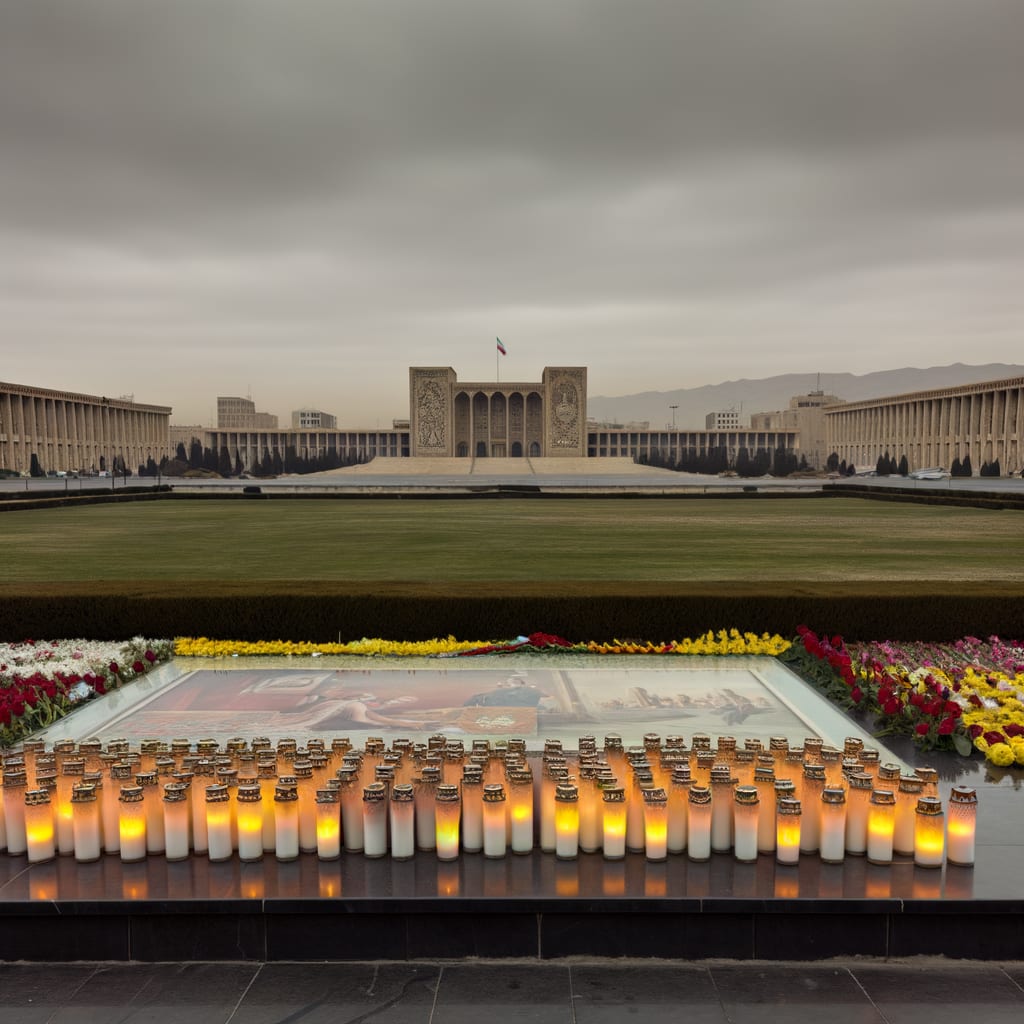
Iran Mourns Death of Top Officials in US-Israel Strikes
Tehran witnessed massive funeral processions on Wednesday for senior Iranian officials, Ali Larijani, the Secretary of Iran’s Supreme National Security Council, Basij commander Major General Gholamreza Soleimani, and sailors from the Dena destroyer, who were killed in recent Israeli strikes amidst the ongoing Israel-US war on Iran123.
Background and Context
Ali Larijani, a key figure in Iran's politics, was assassinated along with his son in an Israeli airstrike on 17 March14. Major General Gholam Reza Soleimani, commander of Iran's paramilitary Basij force, was also confirmed killed in the US-Israel attacks5. The Dena destroyer, part of Iran's navy, was struck by a US Navy torpedo off Sri Lanka earlier this month1.
Key Developments
Iran's state TV broadcasted the entire funeral function, showcasing the vast crowd gathered to pay their respects3. The Iranian Culture minister expressed condolences for the martyrdom of Ali Larijani6.
Israel claimed responsibility for the strikes, with Defence Minister Israel Katz stating that a separate strike killed the Basij commander along with other senior Basij figures7. This was later confirmed by Iranian state media5.
Russia and China have both condemned the killings, with Kremlin spokesman Dmitry Peskov strongly criticizing the actions aimed at causing harm to the leadership of sovereign Iran89.
Implications and Reactions
Iran's new supreme leader, Mojtaba Khamenei, promised revenge for the deaths, stating that every drop of blood has a price that the assassins will soon have to pay10. However, there are reports suggesting that Khamenei is not in control of the regime11.
The assassinations have sparked conversations about the selective fragility of the post-1945 international legal order12. There are also concerns about the impact on Iran's leadership and the country's security following the killings13.
US President Donald Trump vowed to hit Iran 'very hard', claiming to have obliterated nearly '90 percent' of the regime's missiles11. However, Chinese analysts suggest that Iran’s missile and drone stockpiles will last another two or three months as US-Israeli strikes continue14.
Current Status
Despite the assassinations, Iran's Foreign Minister, Araghchi, stated that these killings would not destabilize Iran15. He mentioned that the presence or absence of a single individual does not impact this structure.
However, reports suggest Ali Larijani's death may be a greater loss to Iran than the earlier loss of the supreme leader Ali Khamenei16. Larijani had considerable influence not just in Iran but with foreign states including China and Russia16.
The situation remains tense as the US-Israel war on Iran continues, with the focus now shifting to the implications of these assassinations on the stability of Iran's leadership and the overall security situation in the Middle East.