
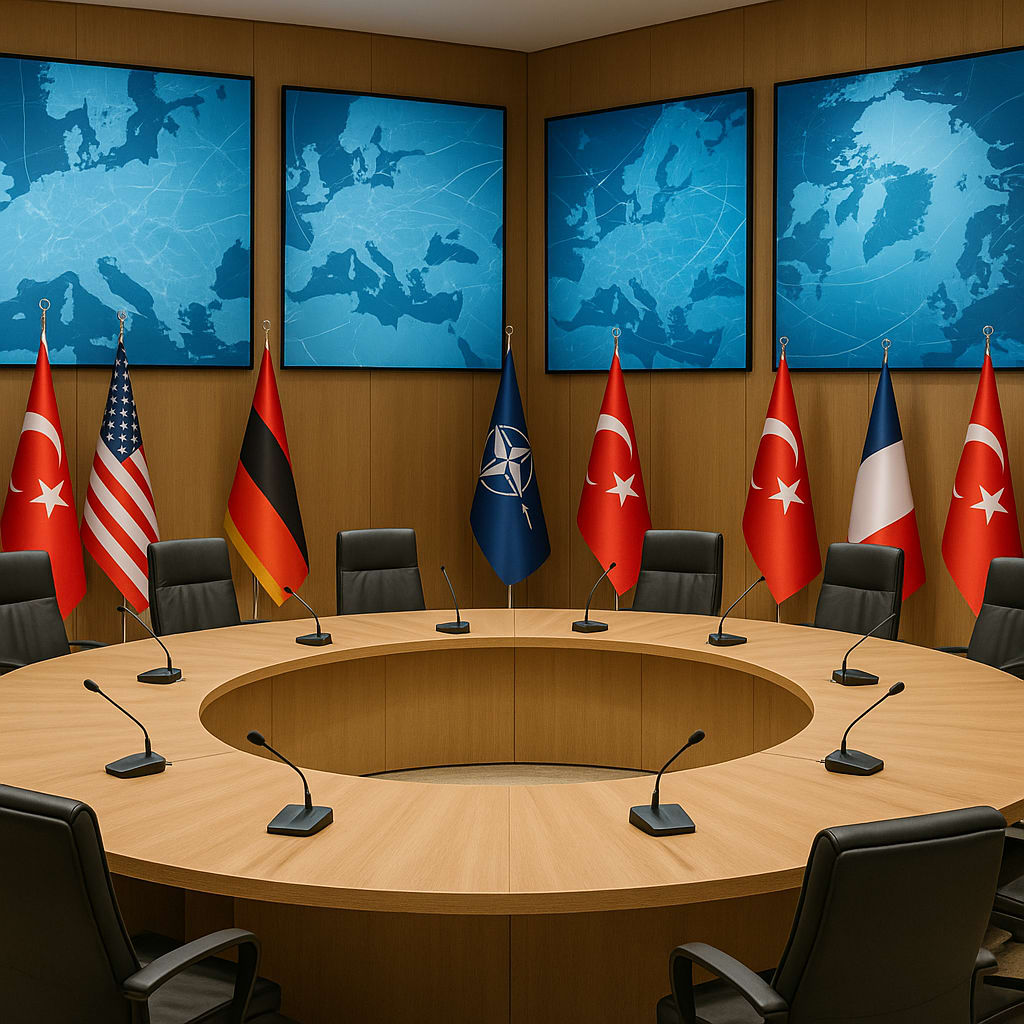
Trump dominates Ankara NATO summit with threats against Spain, warnings to Europe, and overtures to Turkey on F-35s
Narrative Snapshot
- Across mainstream European and U.S. outlets (BBC, New York Times, Guardian, DW), coverage emphasizes how Trump’s interventions over Iran, defense spending, and Greenland overshadow formal alliance business; German Defense Minister Boris Pistorius counters that such criticism had “absolutely no effect” inside negotiations (Middle East Eye).
- Reporting converges that Turkey sits at the summit’s center of gravity: from Le Monde’s “indispensable ally” framing to Fox News’ portrayal of a strategic bet on Ankara, alongside scrutiny of Erdogan’s domestic clampdown (Japan Times) and anti-NATO protests (Middle East Eye).
- On Spain, U.S. and international outlets record Trump’s call to halt trade; Madrid projects calm and continuity (Le Monde, South China Morning Post), while Spanish coverage highlights communities invested in U.S. basing (Clarín).
- The F-35 question for Turkey is reported as live but encumbered: Trump signals willingness (New York Times, Fox News); Israeli objections are explicit (Fox News, Middle East Eye); and multiple layers of procedural and political resistance are flagged (Middle East Eye), including the unresolved S-400 issue (TASS).
What Happened
At the NATO summit in Ankara (7–8 July), Trump arrived to high-profile bilateral meetings with Turkish President Recep Tayyip Erdogan (DW, Corriere della Sera, New York Times). He publicly criticized allies for not backing U.S. actions against Iran, singling out major Europeans and warning of potential U.S. troop withdrawals from Europe (ANSA, TASS, The Hindu). He revived the demand that the U.S. should control Greenland (Guardian, CBC, South China Morning Post) and threatened to “cut off” all trade with Spain, which Madrid downplayed (Le Monde, Fox News, Folha de S.Paulo, South China Morning Post). Trump said he would lift U.S. sanctions on Turkey and consider restoring access to F-35s despite Ankara’s S-400s (New York Times, Fox News, TASS), a move Israel urged him to block (Fox News, Middle East Eye). NATO discussions on defense spending, procurement, Ukraine, and Iran proceeded amid this backdrop (DW, Al Jazeera, RT). Germany’s Pistorius said Trump’s barbs had no impact in the talks (Middle East Eye). Italy’s Meloni termed ties “cordial,” and Defense Minister Crosetto pledged NATO commitments (ANSA, La Repubblica).
Why It Matters
The episode tests NATO’s cohesion, deterrence posture, and burden-sharing equilibrium. Trump’s threat spectrum—from troop withdrawals (ANSA, TASS) to a trade halt with Spain (Le Monde, Fox News)—directly implicates basing access and host-nation politics (Clarín), and intersects with alliance plans to ramp defense spending that already strain European budgets (Japan Times). Ankara’s bid to reenter the F-35 ecosystem while retaining Russia’s S-400 would set a consequential precedent for technology security, sanctions enforcement, and alliance interoperability (New York Times, Middle East Eye, TASS). Israel’s resistance underscores how U.S.-Turkey defense normalization would reshape regional airpower balances (Fox News, Middle East Eye, RT). Indo-Pacific outreach appears deprioritized (South China Morning Post), even as the summit narrative reveals Europe’s search for a greater leading role as Washington signals it will do less and demand more (New York Times). The Greenland remarks touch Arctic governance where U.S.-Danish arrangements already enable U.S. basing (La Repubblica).
Diverging Narratives
European and U.S. mainstream outlets describe Trump’s rhetoric as dominating or puncturing an image of unity (BBC, New York Times, Guardian), whereas Germany’s defense minister insists it had “absolutely no effect” on negotiations (Middle East Eye). Russian and Iranian outlets frame the proceedings as exposing NATO’s decay or division (RT, Tehran Times), while DW and Al Jazeera highlight ongoing defense deals and budget pledges proceeding regardless. On Spain, Fox News ties Trump’s threat to Madrid’s stance on a new NATO spending target; Al Jazeera links his ire to Spain’s posture during U.S.-Iran hostilities; Spanish and French reporting stresses a calm official response and continued positive ties (Fox News, Al Jazeera, South China Morning Post, Le Monde). On Turkey’s F-35s, Trump signals openness (New York Times, Fox News), TASS reports S-400s are “no problem” or could be disabled, while Middle East Eye details legal and bureaucratic obstacles and Israeli objections (TASS, Middle East Eye, Fox News). Regarding Europe’s role, the New York Times and BBC stress a push to rearm and assume more leadership, while Japan Times underscores the fiscal strain of higher spending targets.
What Happens Next
- U.S.–Turkey F-35 pathway: Watch for formal U.S. moves to lift sanctions and any conditions on Turkey’s S-400s (TASS reports possible disabling) alongside export-licensing steps and congressional signals flagged as hurdles (Middle East Eye). Israeli lobbying and the on–off visit planning by U.S. Defense Secretary Pete Hegseth are additional indicators (Middle East Eye).
- Spain trade threat: Indicators include any executive directives or regulatory actions operationalizing a trade cutoff versus backchannel de-escalation implied by Madrid’s “no tension” stance (Le Monde, South China Morning Post). Spain’s alignment on NATO spending targets will be closely scrutinized (Fox News, Japan Times).
- U.S. force posture in Europe: Monitor Pentagon planning cues or presidential guidance following the “we’ll see” formulation on withdrawals (ANSA) and TASS’s readout on possible full pullout, alongside alliance procurement follow-through touted in Ankara (DW, Al Jazeera, RT).
- Iran and alliance coordination: Track whether NATO communiqués or member statements reflect any collective position on the U.S.–Iran flare-up (The Hindu) and whether Germany’s assertion of “no effect” holds in subsequent policy steps (Middle East Eye). Ukraine support pledges and deliveries remain a test of sustained unity (Fox News, Al Jazeera).