
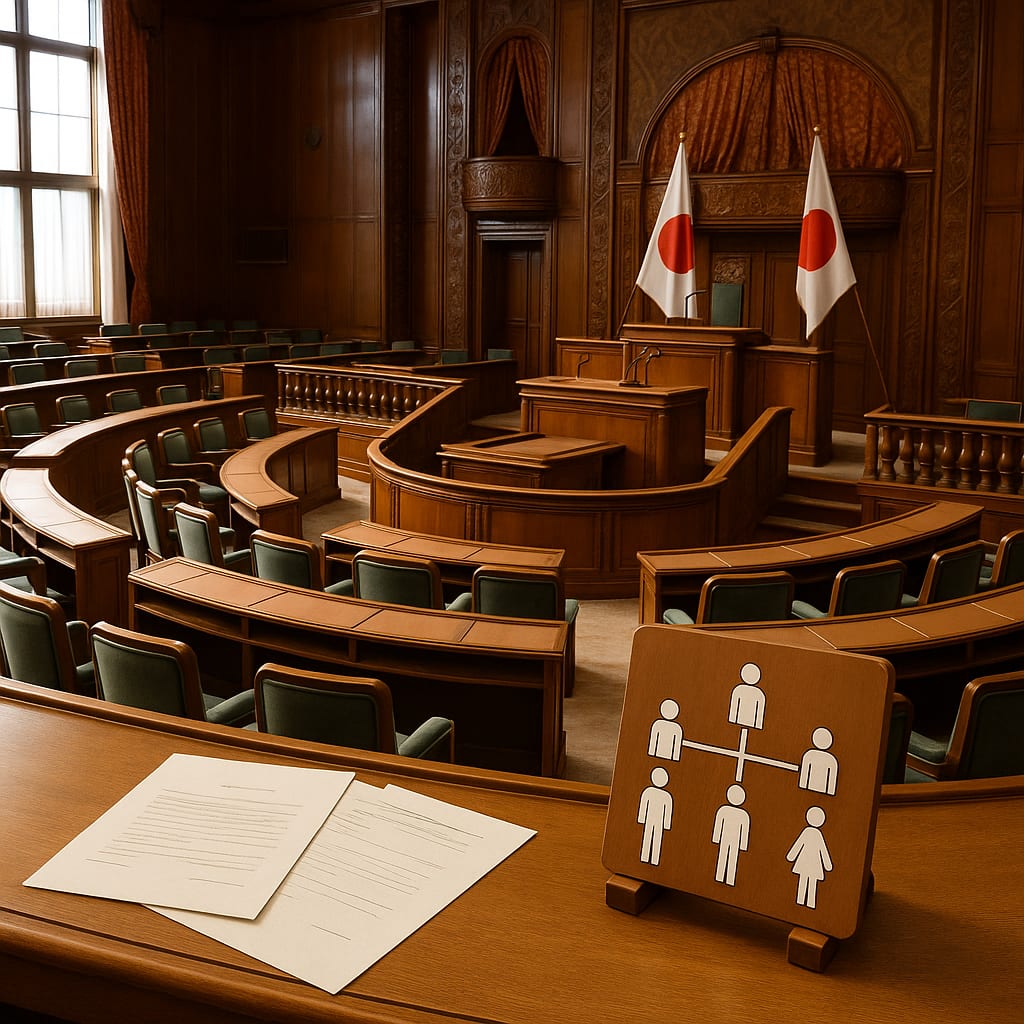
Japan enacts first major Imperial House Law revision since 1947, retaining male-only succession while widening family membership
Narrative Snapshot
Across international outlets, coverage converges on two structural adjustments and one continuity. South China Morning Post and BBC describe the core revisions as permitting the adoption of male relatives aged 15 and over from former male-line collateral branches and allowing female members to retain imperial status after marrying commoners, while underscoring that the male-only succession rule remains in place. France24 makes the same point and ties it to opinion polling that shows broad public support for female emperors, sharpening the contrast between public preferences and the enacted framework. The Toronto Star, via AP, casts the choice to entrench paternal-line succession as a risk to the institution’s long-term viability.
Domestic reporting adds the coalition-building and policy-design angles that international pieces mostly leave aside. The Japan Times notes that the bills mark the first major revision since 1947 and emphasizes how Diet passage intersected with opposition-party maneuvering. A separate Japan Times piece details an intra-opposition split: the Constitutional Democratic Party of Japan opposes a clause allowing future male offspring of newly reinstated members to become heirs, a stance that complicates prospects for an opposition merger. The Jiji poll cited by the Japan Times (39% support, 26.9% opposition, 33.6% undecided on succession by sons of adoptees) situates this design choice within a divided public.
Corriere della Sera frames the move as a historic turn that “saves” princesses who marry for love and presents the reform as readmitting eleven cadet branches cut in 1947, a broader characterization than Anglophone outlets, which emphasize case-by-case adoption and the option for distant male relatives to rejoin rather than a wholesale reinstatement. The Hindu anchors the implications in the line of succession, highlighting Prince Hisahito as the likely future heir under the male-only rule, crystallizing the practical stakes of the legal architecture.
What Happened
Japan’s parliament approved revisions to the Imperial House Law on July 17, enacting the first substantive changes since 1947. According to South China Morning Post and BBC, the law introduces two main changes: it permits adoption into the imperial family of males aged 15 and over from former collateral families descended through the male line, and it allows female members to retain imperial status after marrying commoners. France24 notes that the reform retains the male-only succession system, despite opinion polls indicating broad public support for female emperors. The Japan Times reports the bills cleared the Upper House, completing Diet passage and paving the way for implementation. The Hindu underscores that, given the male-only rule, Prince Hisahito, the emperor’s teenage nephew and second in line, is positioned as the probable future heir. The Toronto Star characterizes the revision as entrenching paternal-line succession amid concerns over a shrinking imperial family.
Why It Matters
The reform addresses the imperial family’s shrinking roster by creating two pressure valves: preserving women’s royal status after marriage to commoners and enabling the re-entry of male-line relatives through adoption or rejoining, as reported by South China Morning Post, BBC, and France24. Yet it leaves the succession pool bound to male-only descent, a constraint that The Hindu illustrates through the prominence of Prince Hisahito and that France24 and the Toronto Star present as running counter to public opinion favoring female emperors. Institutional significance lies in the Diet’s willingness to revise a foundational postwar statute for the first time since 1947, as the Japan Times notes, signaling capacity to recalibrate constitutional-monarchical arrangements without touching the succession principle itself. For policymakers and party strategists, the Jiji poll figures cited by the Japan Times reveal a public split over whether sons of adoptees should be eligible to succeed, shaping the feasibility of further technical adjustments within the male-only framework.
Diverging Narratives
Outlets differ on whether the reform represents stabilization or missed modernization. France24 and South China Morning Post stress that the ban on female emperors persists despite broad public support to lift it, while the Toronto Star warns that insisting on paternal-line men could worsen demographic strain. By contrast, the Japan Times emphasizes the legislative milestone—the first major change since 1947—and the mechanics intended to preserve the institution’s functioning.
There is also divergence on scope. Corriere della Sera describes the move as readmitting eleven cadet branches eliminated in 1947, whereas BBC and South China Morning Post depict a narrower mechanism—adoption of eligible male relatives and provisions for distant relatives to rejoin—without asserting a blanket reinstatement of all former branches. That difference bears on expectations about how quickly and extensively the pool of potential male heirs might expand.
Domestic political framing further distinguishes accounts. The Japan Times reports that the Constitutional Democratic Party of Japan opposes allowing future male offspring of newly reinstated members to enter the line of succession, a point intertwined with opposition merger calculus. A Jiji poll, cited by the Japan Times, shows 39% support and 26.9% opposition to succession by sons of adoptees, with a sizable undecided share, indicating contested public backing for that specific provision even as the broader law has passed.
What Happens Next
Two decision points emerge from the reporting. First is implementation: BBC, France24, and South China Morning Post indicate that male distant relatives can now be adopted or rejoin, and women can retain status after marriage. Analysts should watch how many eligible male-line relatives are actually brought in under the new rules and whether any adoptions occur, as this will determine whether the heir pool meaningfully broadens or whether demographic pressure persists within a male-only system.
Second is the political codification of succession eligibility for the offspring of adoptees or reinstated members. The Japan Times reports the CDP’s opposition to such eligibility and notes that this disagreement clouds prospects for an opposition merger. Observers should track party negotiations and any follow-on legislative proposals clarifying succession rights for newly incorporated lines. Public sentiment is a relevant indicator: the Jiji poll figures reported by the Japan Times suggest that changes touching the sons of adoptees face a divided electorate, which could shape parties’ willingness to revisit technical aspects of the succession framework.