
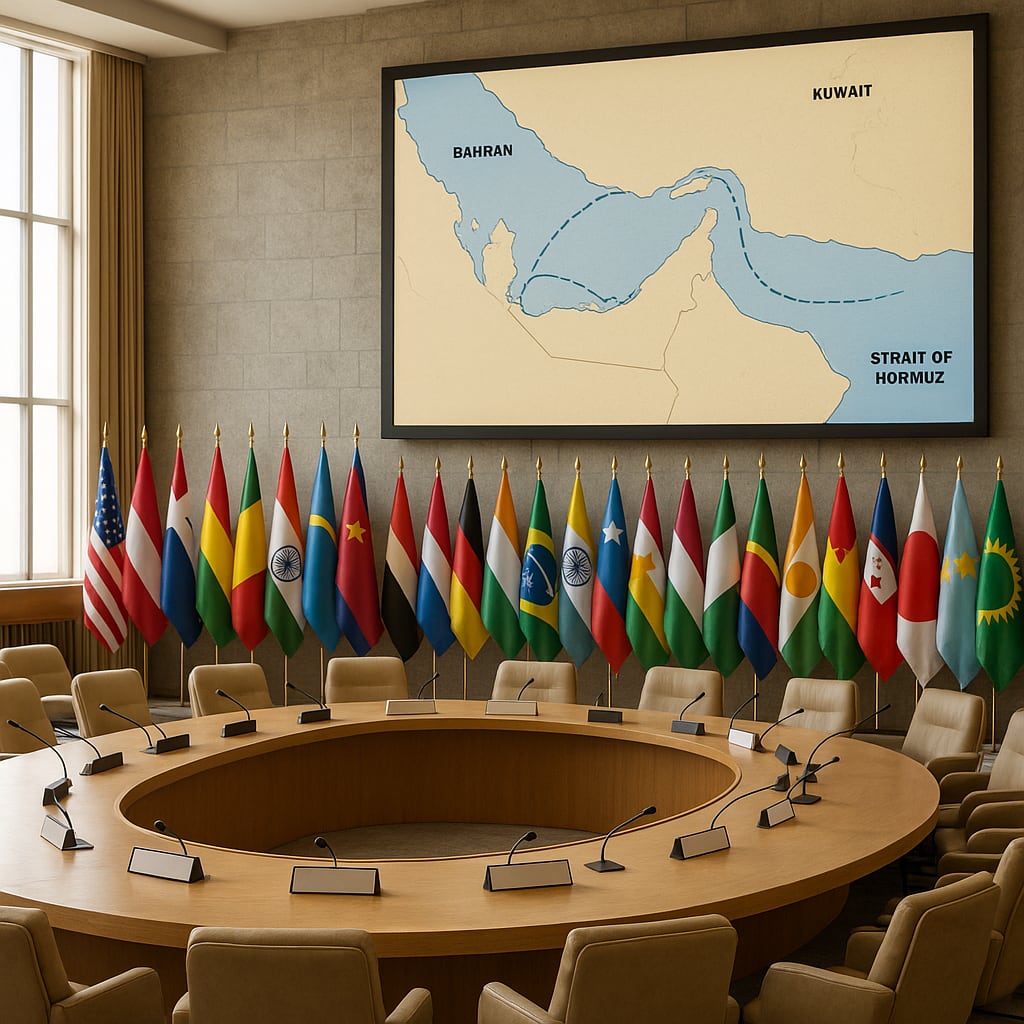
US and Iran trade strikes as interim deal frays; Iran targets Bahrain and Kuwait amid renewed Hormuz tensions
Narrative Snapshot
- Points of agreement: Multiple outlets report US strikes on Iranian military infrastructure after an attack on a cargo ship near the Strait of Hormuz, and subsequent Iranian attacks on targets in Bahrain and Kuwait (BBC; Guardian; Japan Times; NYT; Le Monde; Al Jazeera; CBC). Regional authorities report limited damage and no casualties to US personnel (Middle East Eye citing Reuters; TASS; Bahrain’s statements via MEE).
- Framing diverges on who violated the accord: US statements emphasize “continued Iranian aggression against commercial shipping” to justify strikes (Guardian/BBC). Iranian officials and aligned media call US actions a “flagrant” breach of the memorandum and evidence Washington is “bombing diplomacy” (Folha; Tehran Times; Al Jazeera).
- Regional stakes and sovereignty: Bahrain and Kuwait frame Iranian actions as violations of sovereignty and seek international recourse, including a UN Security Council emergency meeting (MEE; TASS). Gulf capitals and Canada condemn Tehran’s strikes (MEE; Fox News).
- Maritime governance is contested: While the interim deal sought to restore safe transits, one account highlights a route “approved by Tehran” and claims the targeted ship was outside it (RT), while others focus on the broader threat to freedom of navigation and the risk of reclosure of Hormuz (Le Monde; The Hindu; SCMP).
What Happened
After a drone strike on a cargo vessel in or near the Strait of Hormuz on Thursday, US Central Command said it conducted strikes in Iran on Friday against missile and drone storage sites and coastal radars, then hit additional targets Saturday in response to “continued Iranian aggression against commercial shipping” (BBC; Guardian; Japan Times; NYT; Le Monde; Corriere). Iran said it retaliated by striking US-linked targets around the region, without specifying locations (SCMP; CBC; Al Jazeera). Bahrain reported a wave of Iranian drones with damage to a residential building but no casualties, and requested a UN Security Council emergency meeting (Guardian; MEE; TASS). Kuwait’s defense ministry reported intercepting two ballistic missiles (TASS). A US official told Reuters there were no American casualties or major damage to US facilities in Bahrain or Kuwait (MEE). The IRGC warned it would respond “more strongly” to any further US attacks (MEE).
Why It Matters
The exchanges directly test the viability of the June 17 US–Iran interim memorandum intended to end months of conflict and restore maritime traffic through the Strait of Hormuz (The Hindu; RT; Al Jazeera). The incident highlights thin enforcement and dispute-resolution mechanisms: Washington asserts it is protecting freedom of navigation, while Tehran claims policing authority over agreed shipping routes and portrays US actions as violating the accord (Guardian; RT; Folha; Tehran Times). For Gulf host nations that house critical US facilities—the Fifth Fleet in Bahrain and Ali Al Salem Air Base in Kuwait—the strikes re-elevate sovereignty, air-defense, and escalation risks (Guardian; Fox News; MEE; TASS). Bahrain’s call for a UN Security Council meeting tests multilateral capacity to constrain further escalation (MEE). Rhetoric from senior US officials and the IRGC signals deterrence postures hardening on both sides, raising the odds that localized incidents will reverberate into the broader ceasefire architecture (Times of Israel; MEE; Clarin).
Diverging Narratives
US officials frame their actions as proportionate self-defense tied to maritime security, specifying Iranian “surveillance infrastructure, communication systems, air defense sites, drone storage facilities, and minelayer capabilities” as targets (Guardian; BBC). Vice President JD Vance said “violence will be met with violence,” arguing Washington has honored the ceasefire and Tehran should resolve disputes via the accord’s channels (MEE; Times of Israel). Iranian officials contend the US strikes are a “flagrant” breach of the peace agreement and proof that Washington is “deceitful” and “cannot be trusted,” with the IRGC warning of stronger retaliation (Folha; MEE; Tehran Times). Regional reporting also diverges on scope and impact: the IRGC claimed strikes on US bases in Bahrain and Kuwait, but a US official reported no American casualties or major damage (MEE). Maritime accounts vary: one narrative holds the attacked vessel traversed outside a route “approved by Tehran” (RT), while others emphasize resumed transits envisioned by the deal and renewed risks to shipping (The Hindu; SCMP; Le Monde). Bahrain and Kuwait stress sovereignty violations and minimal physical damage, shaping calls for UN action and regional solidarity (MEE; TASS; Fox News).
What Happens Next
- MoU remediation or rupture: US messaging invites Tehran to use dispute channels (“pick up the phone”), while Iran warns talks could end and promises stronger retaliation (MEE; The Hindu). Watch for explicit recommitments to the MoU, activation of deconfliction lines, or formal suspension notices.
- UN Security Council dynamics: Bahrain’s request for an emergency session could produce statements urging restraint or formal censure (MEE). Monitor scheduling, draft texts, and positions from permanent members on maritime security and cross-border strikes.
- Maritime operating picture: The interim deal aimed to restore safe transits; reporting now points to renewed targeting and possible restrictions (The Hindu; Guardian; SCMP; RT). Track navigational advisories, reported incidents against commercial vessels, and whether agreed shipping corridors are reaffirmed or contested.
- Regional military posture: Kuwait’s interceptions and Bahrain’s damage reports signal active defense but limited escalation (TASS; MEE). Indicators include further IRGC-claimed strikes on US or host-nation facilities, US casualty reports, additional US target sets in Iran, and whether GCC condemnations translate into coordinated security measures (Fox News; MEE).