
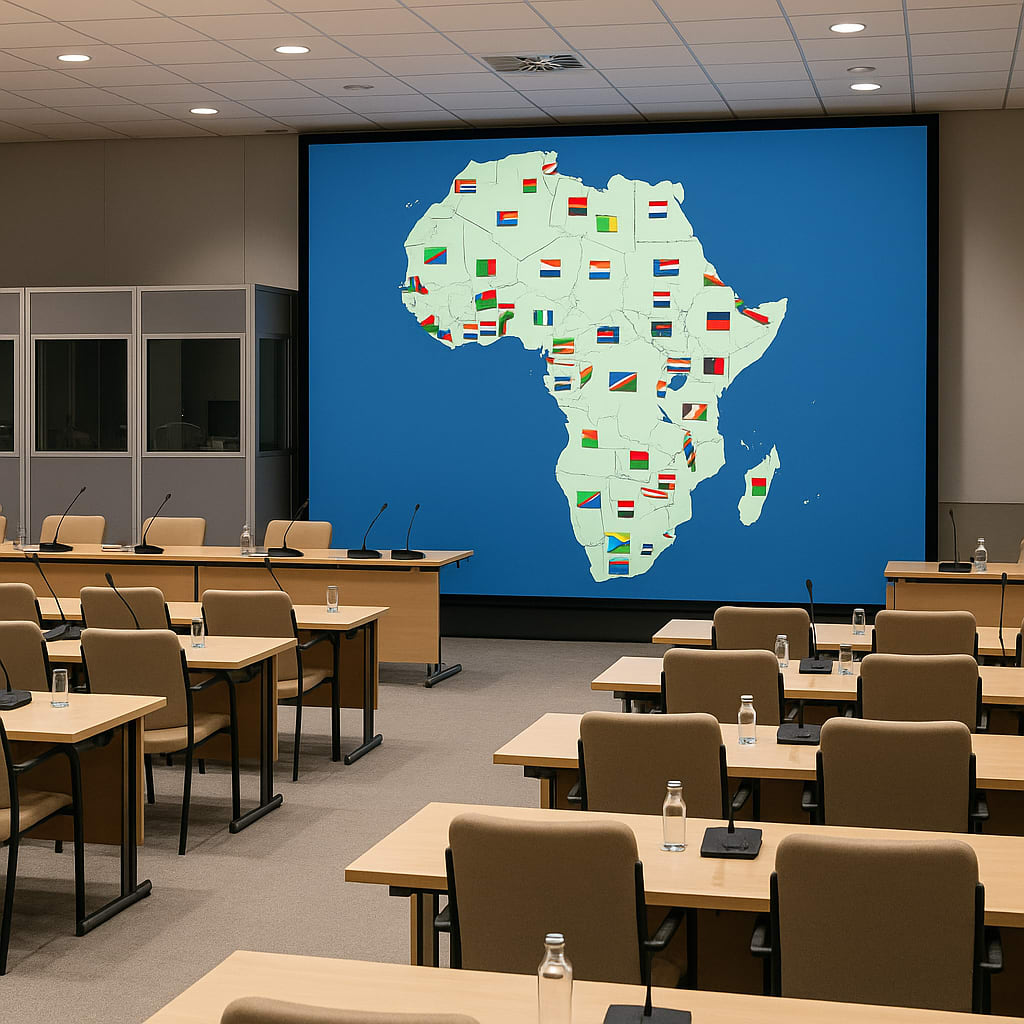
US State Department apologizes after Africa map mislabels every country at AIDS 2026 conference
Narrative Snapshot
Across outlets that relied on Reuters reporting, the core facts are consistent: a State Department slide at the AIDS 2026 conference in Rio de Janeiro displayed a map of Africa with every country mislabeled, screenshots circulated among attendees, and the department apologized. The Guardian, South China Morning Post, and Bangkok Post emphasize the video verification by Reuters and the setting within a presentation on new US health agreements. Brazil’s Folha de S.Paulo anchors the story in the host-country context.
Other outlets add distinct angles. The New York Times provides concrete detail and attribution from the department, citing a “hastily altered” map and noting Nigeria was shown as landlocked in the Sahara. Al Jazeera highlights the department’s characterization of an “unfortunate error,” while TeleSUR stresses the uproar among attendees. Kenya’s Daily Nation reports the image bore an artificial intelligence watermark, a data point absent in the Reuters-driven coverage. Middle East Eye diverges in framing by attributing the incident to the “Trump administration,” whereas others refer to the US government or State Department without tying it to a specific administration.
What is most at stake across the coverage is not the cartographic mistake itself but the credibility cost in a global health forum and the process failures it implies—especially if, as one outlet reports, AI-generated content was involved. The combination of diplomatic venue, Africa-focused content, and US messaging on new health agreements heightens the significance attributed by several sources.
What Happened
During the AIDS 2026 conference in Rio de Janeiro, a US State Department presentation displayed a map of Africa that mislabeled every country. Attendees captured and shared screenshots, and Reuters reviewed video of the presentation, which occurred midway through remarks about new US health agreements. The State Department apologized, with The Guardian quoting it as taking “full responsibility,” and Al Jazeera reporting it called the episode “an unfortunate error.” The New York Times adds the department said the map had been “hastily altered” and notes an example of the severity of the mistakes: Nigeria was depicted as landlocked in the Sahara. TeleSUR reports the apology was issued on Thursday and describes a strong reaction among attendees. The Daily Nation reports the image included an artificial intelligence watermark. Brazilian outlet Folha de S.Paulo underscores that all African countries were incorrectly labeled.
Why It Matters
The incident intersects directly with US public diplomacy and global health engagement in a forum where Washington was presenting new health agreements. As several Reuters-derived accounts highlight, the episode unfolded in front of international health stakeholders, inviting questions about the reliability of US-provided materials in multilateral settings. The New York Times’ reporting that the map was “hastily altered” underscores potential process weaknesses in vetting official content. If, as the Daily Nation reports, the slide contained an AI watermark, the episode also touches on emerging governance challenges around the use of AI-generated visuals in government communications.
For decision-makers, the stakes are institutional rather than rhetorical: maintaining credibility with African partners and conference participants, ensuring quality control in externally facing materials, and, where applicable, setting clear standards for AI use in official products. The optics are especially sensitive given the Africa-focused content and the Brazilian venue, both salient for broader US engagement with the Global South.
Diverging Narratives
Outlets align on the core facts of the error and apology but diverge in attribution, detail, and inferred process. Middle East Eye uniquely attributes the incident to the “Trump administration,” while other sources refer to the State Department or US government without specifying an administration. The New York Times offers the most granular description of both the error’s nature—citing Nigeria’s misplacement—and the department’s rationale that the image had been “hastily altered,” suggesting a procedural lapse rather than an intentional design choice. Al Jazeera and The Guardian focus on the official apology language, framing it as responsibility-taking and an “unfortunate error.”
A second divergence concerns the production of the image. Only the Daily Nation reports that the slide contained an AI watermark, introducing a possible dimension of AI involvement not corroborated by the Reuters-based stories or the other outlets. TeleSUR’s emphasis on the intensity of attendee reaction contrasts with the more procedural tone in Reuters-derived pieces that center on verification of the video and the universal mislabeling. Brazilian coverage in Folha de S.Paulo anchors the significance locally and underscores the comprehensiveness of the labeling errors.
What Happens Next
The State Department’s apology and the New York Times’ report that the image was “hastily altered” point to a process issue that may prompt clarification of how the slide was produced and vetted. Analysts should watch for any formal explanation from the department about production workflows for external presentations and whether new review steps are introduced before public display. If the Daily Nation’s report of an AI watermark is acknowledged or addressed, a second decision point would be whether the department issues guidance on the use or prohibition of AI-generated visuals in official materials.
A third indicator is whether the department reissues corrected materials from the Rio presentation on new health agreements, signaling an effort to contain reputational impact. None of the sources report subsequent sanctions or procedural changes, so any public update on content standards, sourcing of imagery, or conference follow-up would clarify whether this remains an isolated error or triggers institutional adjustments.