
Lead
The European Union has hit Temu, the Chinese-owned online shopping platform, with a €200 million fine after regulators concluded that consumers in the bloc faced a high likelihood of encountering illegal, unsafe, or non-compliant products on the site. At the center of the decision is the EU’s judgment that Temu did not properly identify and mitigate “systemic” risks tied to goods sold via its marketplace—an approach that signals the EU’s intention to use its digital rulebook not just to police online content, but to curb dangerous physical products circulating through cross-border e-commerce.
What Happened
EU regulators imposed a €200 million penalty on Temu over the sale of illegal and hazardous items to European consumers. Multiple outlets converge on the core finding: the European Commission determined that Temu failed to adequately assess and address the risks posed by products offered on its platform, allowing items that do not meet EU safety requirements to remain discoverable and purchasable.
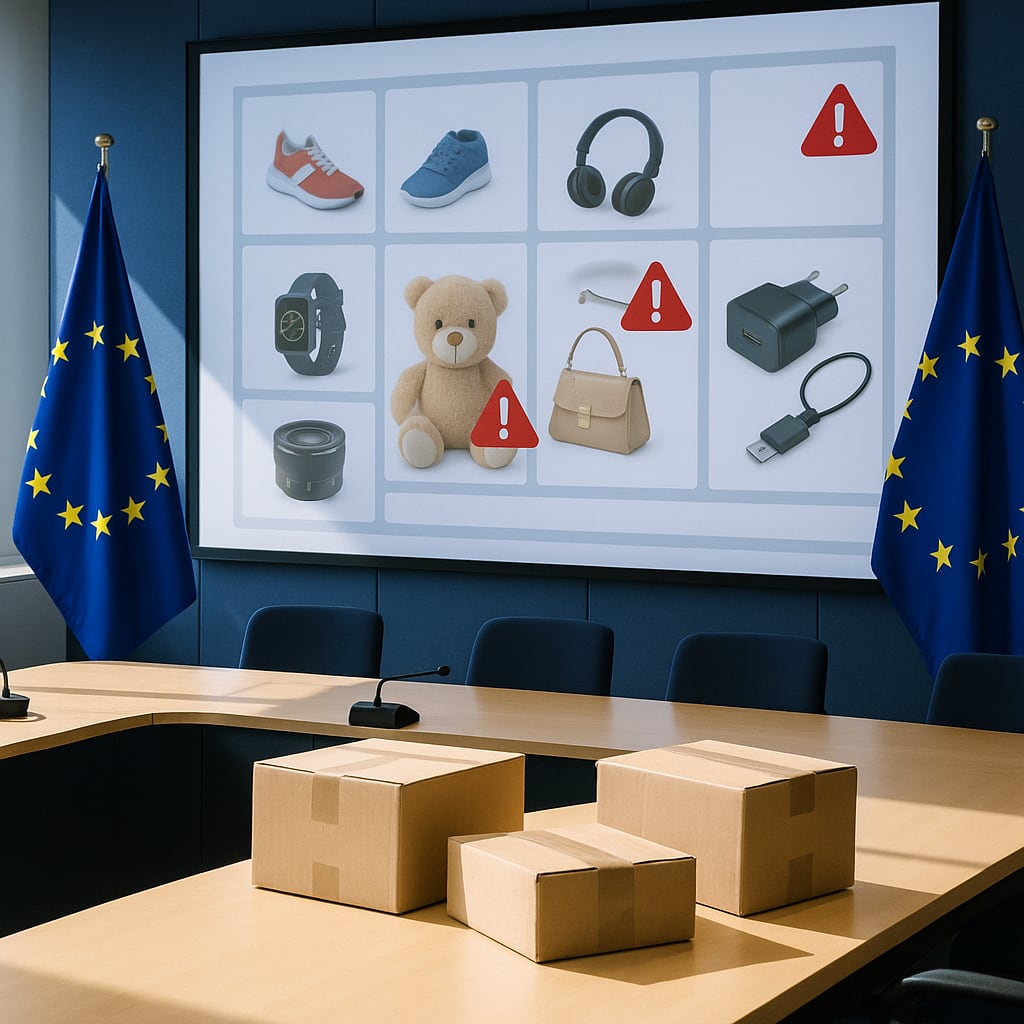
To substantiate the breach, the Commission relied in part on its own test purchases—described across coverage as “mystery shopper” work in which officials bought products while posing as ordinary customers. That exercise is repeatedly presented as crucial evidence because it speaks to the consumer’s real experience: not a theoretical compliance gap, but a marketplace where problematic goods could be found through normal browsing and purchasing.
The types of goods cited in reporting are broadly consistent, even if the lists vary by outlet. Consumer safety risks appear prominently, including unsafe baby toys and faulty chargers. Other descriptions broaden the scope to items with high levels of chemical substances or products that were simply non-compliant with European standards. Across accounts, the Commission’s underlying concern is less about a single offending product and more about the platform’s systems—how it evaluates risk, monitors listings, and prevents illegal or dangerous items from spreading at scale.
Several sources link the enforcement action directly to the EU’s Digital Services Act (DSA), the bloc’s flagship legislation governing platform responsibilities. The Commission’s conclusion, as reflected across coverage, is that Temu violated the DSA by failing to identify, assess, and mitigate systemic risks associated with illegal products and the harm they can pose to consumers.
Beyond the fine itself, the EU’s decision also comes with an operational requirement. Temu is expected to submit a plan aimed at improving consumer protection, with at least one outlet specifying a deadline of 28 August for presenting that plan. This adds a compliance dimension to the case: the penalty is punitive, but the Commission also appears focused on forcing structural changes in how the platform operates in Europe.
Why It Matters
This case sits at the intersection of consumer safety, platform governance, and Europe’s strategy for regulating global tech and e-commerce actors. The fine is significant not only in monetary terms, but because it applies the EU’s digital enforcement model to the physical world of goods—baby products, chargers, and household items—sold through online marketplaces that span borders and supply chains.
For years, European authorities have struggled with the speed and volume of low-cost cross-border parcels tied to fast-growing marketplaces. Temu’s business model—rapid product turnover, aggressive pricing, and an enormous catalog—has amplified long-standing regulatory dilemmas: how to ensure that product safety rules are meaningful when the point of sale is an app and the seller may be thousands of kilometers away, hard to identify, or changing constantly.
By leaning on the DSA’s “systemic risk” framework, the Commission is effectively arguing that platform design and governance can be a consumer safety issue. The implication is that marketplaces cannot treat safety as a downstream problem to be handled only after harm occurs or after authorities identify a product. They are expected to build preventative controls—risk assessments, monitoring, and mitigation that match the scale of their operations.
The move also carries diplomatic and economic resonance. Temu is repeatedly characterized as Chinese-owned, and the EU’s action reinforces a broader European pattern: asserting regulatory sovereignty over non-European digital companies that serve EU consumers. While the decision is framed as consumer protection, its ripple effects may reach trade tensions and corporate strategy, as global platforms weigh the compliance costs of operating in the EU.
Diverging Narratives
While the underlying facts align across coverage—€200 million fine, illegal/unsafe goods, Commission test purchases, and a failure in risk assessment—outlets diverge in what they foreground and how they define the offense.
Safety hazards vs. illegality as the headline. Some accounts lead with “illegal products” as the primary charge, emphasizing rule-breaking and the presence of items that should not be on the market at all. Others foreground “dangerous” or “unsafe” items, depicting the story as a direct threat to consumers, with vivid examples such as baby toys and faulty chargers. A third emphasis highlights “non-compliant” products—framing the issue as failure to meet EU standards rather than the sale of inherently illicit goods.
System design vs. specific product examples. Several reports concentrate on the Commission’s claim that Temu’s “risk assessment” systems were deficient, using the language of systemic failures and obligations under the DSA. Other reports use the Commission’s product examples more prominently, suggesting a narrative built around concrete hazards (chemical substances, unsafe toys) that make the regulatory action feel more immediate and relatable.
Probability and discoverability. Some coverage stresses the Commission’s conclusion that shoppers were “very likely” to find unsafe items, which implies an ecosystem-level problem: dangerous goods are not rare anomalies but sufficiently common to be encountered through normal use. Other outlets place less weight on this probability framing and instead focus on the platform’s formal obligations, the evidence-gathering method, and the enforcement mechanism.
The role of the Commission’s “mystery shopping.” Across countries, the same investigative tactic is described using slightly different tones. In some narratives it is a standout detail—regulators acting like everyday buyers to demonstrate how easily unsafe goods can be obtained. In others, it is treated more as one element in a broader compliance case. The difference matters because it shapes public perception: either as a hands-on consumer protection intervention or as a technical enforcement action grounded in regulatory procedures.
Remedy and next steps. Not all coverage gives equal visibility to the compliance pathway that follows the fine. Some reporting emphasizes the requirement to produce a plan to protect consumers, including a clear deadline, which frames the story as an ongoing regulatory process rather than a single-day sanction. Other accounts prioritize the fine amount and the finding of failure, leaving the remedial timeline less prominent.
These variations do not amount to a dispute over the key facts, but they do reveal different editorial instincts: consumer hazard storytelling, legal-regulatory framing, or geopolitical context around a Chinese-owned platform under EU scrutiny.
Current Situation
Temu faces a €200 million penalty from the European Commission and is under pressure to demonstrate rapid improvements in how it evaluates and mitigates risks linked to products sold to EU consumers. The Commission’s investigation model—combining systemic risk analysis with hands-on test purchases—has now produced a high-profile enforcement outcome that other large marketplaces will be watching closely.
In the immediate term, the focus is on compliance: Temu is expected to present a consumer-protection plan, with reporting pointing to a 28 August deadline, and to address the deficiencies regulators identified in its risk assessment and mitigation measures. The broader outlook is that EU regulators are prepared to treat product safety in online marketplaces as a central test case for the DSA’s ability to govern platform behavior at scale—turning what might once have been handled as scattered product recalls or customs seizures into a structured regime of platform accountability.