
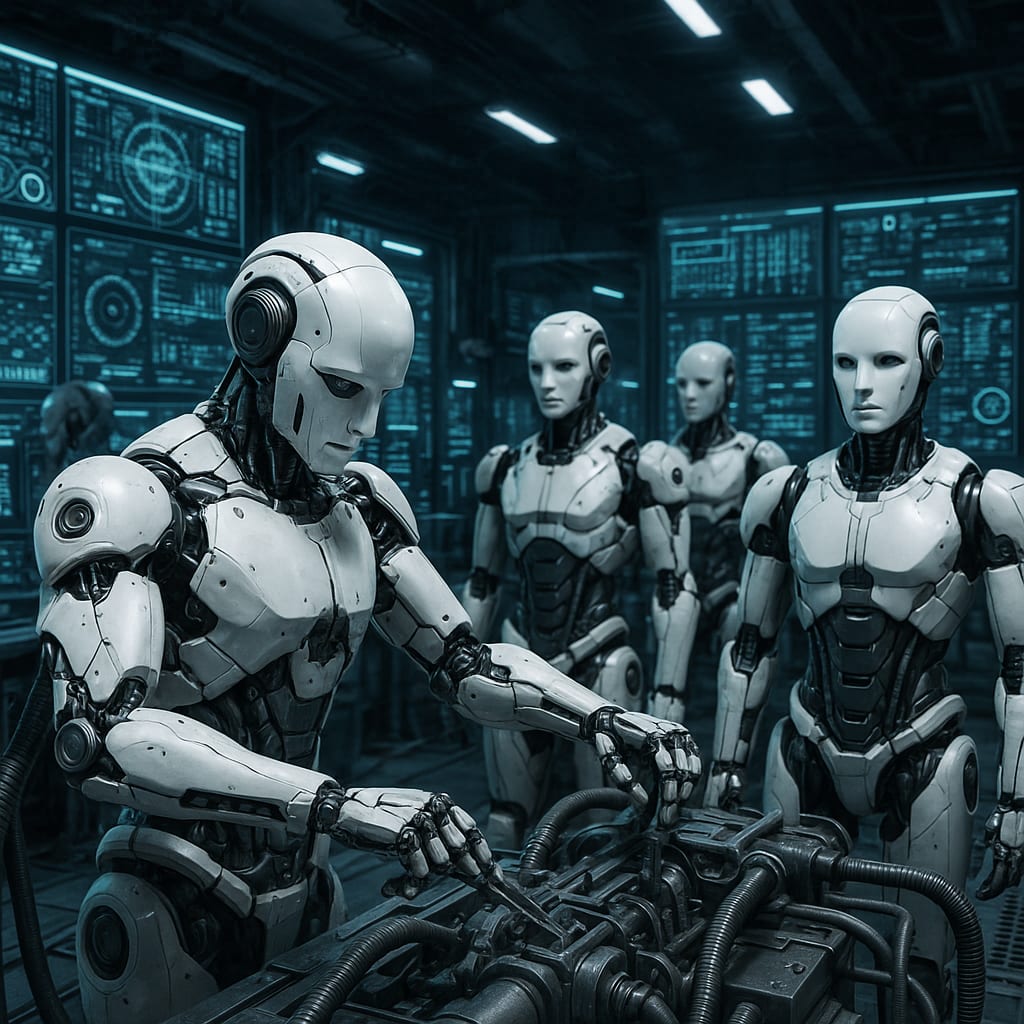
Artificial Intelligence Disrupts Job Market Worldwide Amidst Debates Over Human Capital and Job Creation
The rapid rise of artificial intelligence (AI) is reshaping the job market across the globe, sparking debates over its impact on human capital and the potential for job creation and displacement. From Singapore's tech giants Meta and Standard Chartered to India's IT services sector, and from the United States to Europe, AI's influence is keenly felt and keenly debated.
The Global Impact of AI on Jobs
In Singapore, the recent layoffs by tech giant Meta and Standard Chartered have intensified the debate on the city-state's goal to train workers for new or redesigned roles in line with the increased use of AI and automation1. In China, the Australia-based logistics software company WiseTech has begun significant job cuts due to AI advancements2.
India's IT services sector, known as the 'back-office' of the world, is also feeling the impact of AI. The growth of AI threatens millions of jobs in the country, particularly in call centers and client and administrative services3.
In the United States, a report by the New York City comptroller warns that AI could transform the city’s economy and potentially cause job losses4. California Governor Gavin Newsom has ordered local organizations to start drafting a plan to mitigate the impact of AI on jobs5.
Europe is not exempt from this trend. In France, 28 companies, including Iliad and EDF, have joined forces to strengthen European sovereignty against offers from American giants in the AI sector6.
Controversial Remarks and Reactions
The layoffs have led to controversial remarks about the value of human capital. Standard Chartered's chief executive, Bill Winters, faced backlash after referring to the jobs set to be lost to AI as lower-value human capital
7. This led him to issue an apology.
On the other hand, the president of HSBC advised employees not to fight against AI, arguing that while it destroys jobs, it also creates new ones8.
AI: A Job Creator or Destroyer?
Despite the apparent job losses, some sources argue that AI is a job creator. The New York Times asserts that AI will create more jobs than it will kill9.
However, a new Gartner study suggests a more complex narrative. Although many companies are cutting jobs while adopting AI, these cuts do not appear to translate into a stronger return on investment10.
The Future of AI and Jobs
The rise of AI and its impact on jobs have resulted in growing anxiety among workers and college graduates, as seen in global polls11. This anxiety is exacerbated by leaked audio of Meta's CEO, Mark Zuckerberg, revealing a program that records employee activity to train AI models12.
Despite these concerns, some argue that the advance of AI is unstoppable. Sérgio Rodrigues, a writer quoted by Folha de S.Paulo, contends that AI is here to stay13.
As AI continues to reshape the global job market, it is clear that its impact is complex and multifaceted. It remains to be seen how governments, companies, and workers navigate this new AI-dominated landscape.