
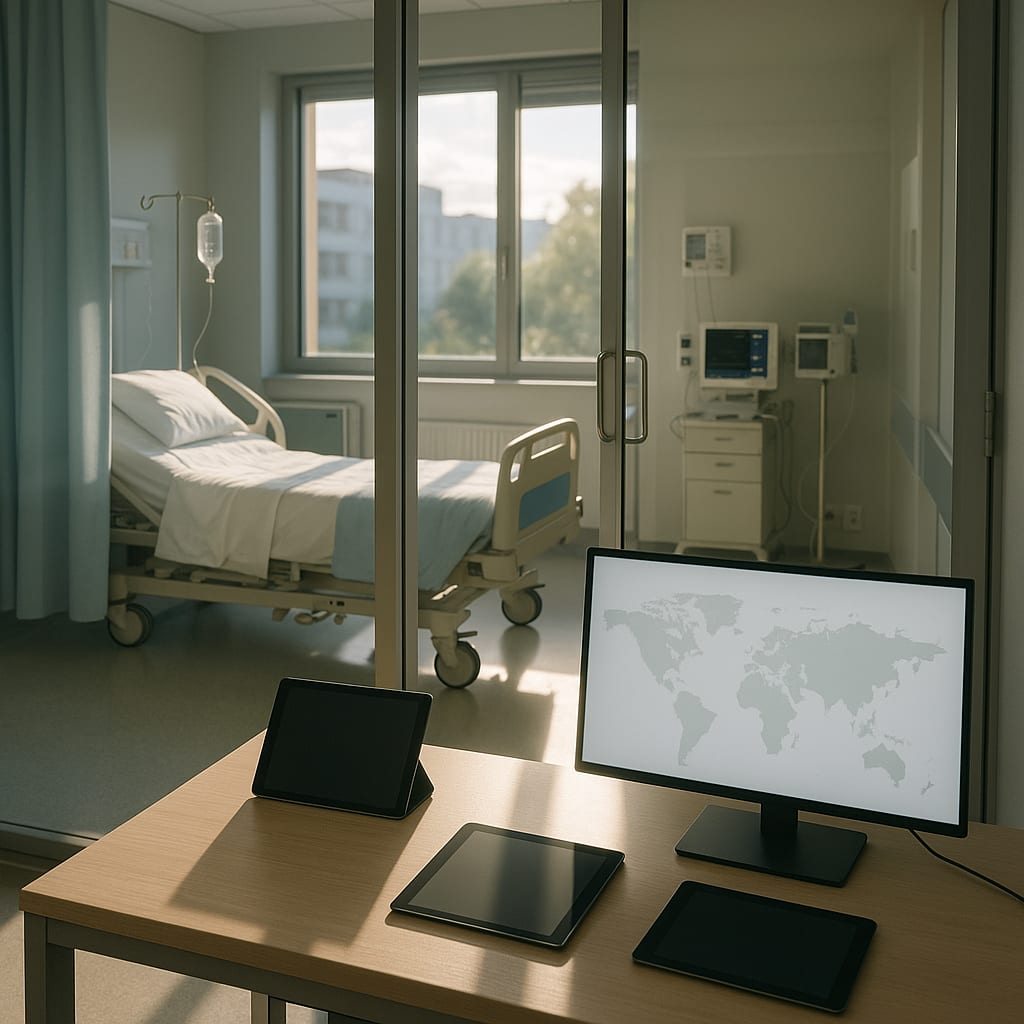
France confirms first Ebola case linked to DR Congo outbreak; patient isolated, contacts traced
Narrative Snapshot
- Risk framing converges on containment: France isolated the patient under strict biosafety protocols (Al Jazeera, Guardian, Clarin), reports a stable condition (ANSA, SCMP), and is tracing contacts (NYT, Guardian). Several outlets underscore “very low” risk to the European public (Guardian) and a “global risk [that] remains low,” per WHO (Japan Times).
- Coverage splits in emphasis: French reporting highlights high-level political attention (Le Monde), while international outlets pair France’s case with outbreak metrics in DR Congo—deaths (BBC) and confirmed caseloads (SCMP)—to foreground upstream dynamics.
- Policy track runs in parallel to clinical control: WHO is initiating a therapeutic trial in Ituri (Folha), while UNICEF and Gavi move to accelerate Bundibugyo vaccine development with new financing and an EOI to manufacturers (AllAfrica).
- Scientific uncertainty remains part of the context: reporting on the still-unidentified animal reservoir of the Bundibugyo virus (NYT, science) introduces medium-term risk management questions beyond immediate containment.
What Happened
France’s Health Ministry confirmed on 24 June its first Ebola case on national territory in the current outbreak: a doctor who returned from a humanitarian mission in a transmission zone of the Democratic Republic of Congo (The Hindu, Guardian). The patient was isolated upon arrival and transferred under secure conditions to a specialist facility; condition reported as stable (Guardian, ANSA, SCMP). Authorities launched contact tracing (NYT, Guardian). Prime Minister Sébastien Lecornu is following the situation closely, according to his office (Le Monde). The DR Congo outbreak has caused more than 260 deaths (BBC) and is attributed to the rare Bundibugyo strain (Folha). The case comes weeks after European health authorities reported no active Ebola cases in the EU (DW). Following France’s announcement, the WHO maintained that global Ebola risk remains low (Japan Times).
Why It Matters
France’s importation underscores how outbreaks centered in DR Congo can intersect with European health security even when assessed risk is low (Guardian, Japan Times). The response—rapid isolation, transfer under secure conditions, and contact tracing—tests national and cross-border readiness to prevent secondary transmission (Guardian, NYT). Strategically, the Bundibugyo strain’s absence of a licensed vaccine or specific therapy elevates the role of accelerated R&D and procurement pathways: WHO’s imminent clinical trial in Ituri on two treatments with a target enrollment of 500–1,000 (contingent on efficacy signals) (Folha), and UNICEF/Gavi’s financing and request for expressions of interest to speed vaccine development and scale-up, backed by Gavi’s $40 million commitment (AllAfrica). Persistent uncertainty about the virus’s animal reservoir (NYT, science) complicates longer-term prevention strategies, reinforcing the need for sustained surveillance, research, and manufacturing readiness tied to this specific lineage.
Diverging Narratives
- Risk and reassurance: French and UK coverage emphasizes stringent precautions and a “very low” risk to the European public (Guardian) and continued isolation (Al Jazeera), while Le Monde’s note that the prime minister is monitoring “very closely” conveys heightened domestic vigilance. The Japan Times cites WHO’s “global risk remains low,” situating the event within a wider risk calculus.
- Metrics and proximity: European and global outlets pair France’s case with outbreak indicators in DR Congo, but they cite different facets—deaths (BBC) versus confirmed counts referenced to Congo’s health ministry (SCMP). The mix shapes perceptions of severity without a single consolidated metric in this packet.
- Causality vs. capability: Science-focused reporting highlights the unresolved reservoir question for Bundibugyo (NYT, science), whereas policy and operational pieces stress near-term countermeasures—contact tracing, clinical trials, and vaccine market-shaping (NYT; Folha; AllAfrica).
- Continental context: DW underscores that this confirmation follows weeks after EU authorities reported no active Ebola cases, framing the French case as a shift from a clean epidemiological slate to managed importation risk.
What Happens Next
- Secondary transmission or not in France: Health ministry updates on contact tracing outcomes (NYT, Guardian) will indicate whether the case remains contained. Signals to watch: identification and monitoring of close contacts, any additional confirmed cases, continuity of “very low” risk messaging (Guardian).
- Therapeutics in DRC: WHO’s trial in Ituri is slated to begin next week, with enrollment between 500–1,000 depending on efficacy (Folha). Indicators: trial initiation, recruitment pace, interim analyses, and any protocol adaptations tied to performance.
- Vaccines for Bundibugyo: Manufacturer responses to UNICEF/Gavi’s EOI and allocation of Gavi’s $40 million toward scale-up will shape timelines for candidate development and potential emergency use pathways (AllAfrica).
- Risk assessments: WHO’s posture that global risk remains low (Japan Times) and any subsequent European public health communications following the EU’s previously “no active cases” status (DW) will signal whether the incident is treated as contained importation or prompts adjusted surveillance priorities.
- Outbreak trajectory: Shifts in DR Congo’s mortality and confirmed caseloads (BBC; SCMP) and cross-border spillover to Uganda (Folha) will influence both trial feasibility and international preparedness thresholds.