
US and Iran pause strikes as Washington weighs air-defense limits and Gulf diplomacy
Narrative Snapshot
Across outlets, reporting converges on a fragile pause in direct US-Iran strikes paired with parallel diplomatic activity, but explanations for Washington’s restraint diverge. The New York Times and follow-on coverage in Haaretz, France 24, ANSA, and Le Monde attribute the pause in part to concerns over dwindling stocks of air-defense interceptors, a point Haaretz develops into a broader assessment that missile defenses are being consumed faster than they can be replenished. By contrast, US Ambassador to the UN Mike Waltz told NBC that the United States has “everything that it needs” and framed the lull as space for talks, a line echoed in regional and international summaries that quote him emphasizing diplomacy.
An operational rationale also features prominently: the Guardian, citing senior military advice, and RT summarizing an Axios report, say US Central Command warned that designated targets around Hormuz had been largely exhausted without shifting Iran’s calculus. That narrative sits alongside Tehran’s conditional de-escalation—statements to Reuters relayed by Middle East Eye, Haaretz, RFE/RL, and Al Jazeera that Iran halted retaliatory operations as long as US strikes remain paused, coupled with warnings from Iran’s army that the war could expand if attacks resume.
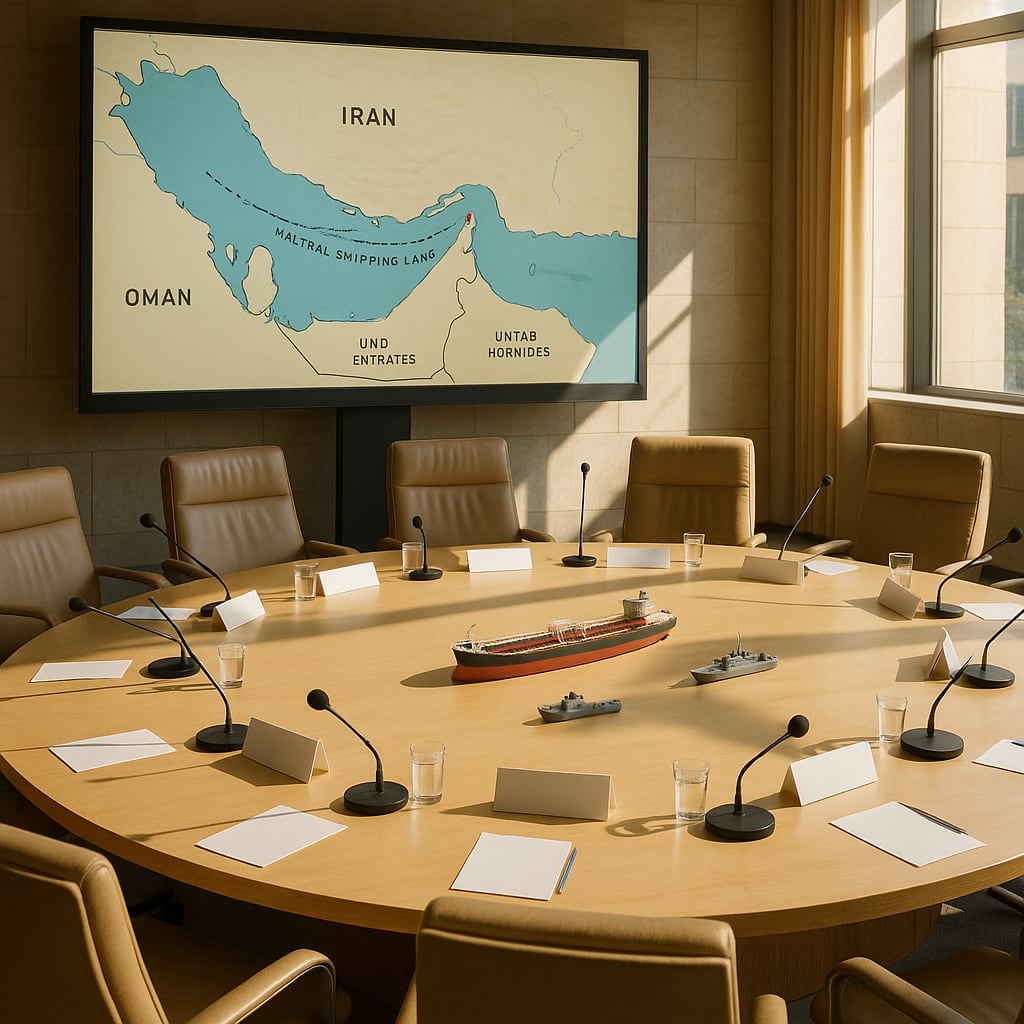
A second fault line runs through the prospective management of the Strait of Hormuz. Iranian officials touted progress in Oman-facilitated talks on reopening or managing the waterway, reported by the South China Morning Post and Telesur, while a US official told Middle East Eye that Washington and Oman rejected what they called “unreasonable” Iranian demands, including fees, insisting there would be no tolls for passage. Simultaneously, CGTN reported the US naval blockade remained in force with boardings and vessel interdictions, underscoring coercive leverage during negotiations.
Public signaling cut against the lull: multiple outlets, including Middle East Eye, the Times of Israel, and Serbia’s Politika, noted President Donald Trump shared AI-generated images threatening strikes on Kharg Island and the seizure of Iranian ships. Israeli political pressure also features in coverage, with the Guardian noting Prime Minister Benjamin Netanyahu’s Washington visit and the Times of Israel quoting his assertion that the war ends only with regime change or an Iranian nuclear retreat. Oil markets reflected the pause, with France 24 reporting price declines and the Times of Israel noting a modest rebound on truce hopes.
What Happened
After nearly two weeks of nightly US strikes on Iran, attacks paused for at least two consecutive nights, with multiple outlets extending that calm to a third day. A senior Iranian official told Reuters, as relayed by Middle East Eye and Haaretz, that Tehran halted retaliatory operations so long as the US held fire. Waltz said on NBC and Fox, reported by NBC and Middle East Eye, that the president paused strikes to give talks “a little bit of room,” while denying any weapons shortage. In parallel, the New York Times reported Trump delayed escalation amid concerns over depleting air-defense interceptors, a point amplified by Haaretz and France 24, and quantified by Le Monde citing CSIS estimates that at least 1,500 Patriot interceptors had been used, leaving fewer than 1,000 in US stocks. Oman-mediated discussions on Hormuz advanced per the South China Morning Post and Telesur, though a US official told Middle East Eye Iran sought unacceptable fees. The US naval blockade continued, CGTN reported. On July 29, France 24 reported Jordan intercepting five Iranian missiles as strikes resumed, with Iran’s Revolutionary Guards confirming an attack in response to US actions.
Why It Matters
The pause and its stated rationales foreground structural constraints on US and allied air-defense capacity and the sustainability of high-tempo missile-defense operations. Haaretz highlights the strategic cost of interceptor consumption, while Le Monde’s CSIS-cited figures underscore industrial base and replenishment challenges that shape escalation choices. The dispute over Hormuz management implicates core maritime and energy norms: whether Iran can assert enhanced control or levy fees, as reported and rejected in Middle East Eye’s account, directly affects a chokepoint where Japan Times notes roughly a fifth of global oil once transited. Continued blockade operations, per CGTN, show coercion accompanying diplomacy. Regionally, allied postures—from Israeli advocacy for continued strikes (the Guardian; Times of Israel) to Gulf air-defense moves reported by Corriere and Jordan’s interceptions noted by France 24—raise entanglement risks. In Washington, the Senate’s failure to curtail war powers, per RT, narrows institutional brakes on executive decision-making while public signaling via AI-generated imagery complicates crisis management.
Diverging Narratives
Media and officials split on why Washington paused. The New York Times, France 24, ANSA, and TASS cite concern over dwindling air-defense stocks—contextualized by Le Monde’s CSIS-based estimate of fewer than 1,000 Patriot interceptors remaining—while Waltz told NBC the United States has what it needs and blamed any earlier depletion on transfers under the previous administration, as TASS also reported. An operational track complements or competes with the stockpile thesis: the Guardian and RT summarizing Axios say CENTCOM assessed target sets near Hormuz were largely exhausted and further strikes would be ineffective without a move to major combat operations.
Negotiation framing also diverges. Waltz characterized pauses as room for talks; Al Jazeera and Middle East Eye detailed mediation by Qatar, Pakistan, and Oman. RT quoted Trump describing “very friendly” negotiations, while noting Iran denied direct talks and pointed to Oman’s role. On Hormuz, SCMP and Telesur cite Iranian claims of progress, whereas Middle East Eye quotes a US official rejecting Iranian fee proposals and greater Iranian control. Iran’s military warned the war could expand if US strikes resume (Al Jazeera), yet Iranian officials told Reuters they would halt attacks if the US holds fire (Middle East Eye; Haaretz; RFE/RL). Israeli leadership pushed for continued pressure, with the Times of Israel quoting Netanyahu’s maximalist end-state. The subsequent reported interception of Iranian missiles by Jordan on July 29 (France 24) demonstrates how quickly the lull can unwind, even as some parties still reference ongoing ceasefire talks.
What Happens Next
Three decision points emerge. First is strike tempo: if Washington resumes sustained attacks, watch for renewed CENTCOM assessments on target availability and effect, and any public disclosures or allied reporting on interceptor usage and resupply, which Le Monde and Haaretz identified as central constraints. A reversion to nightly strikes would likely trigger reciprocal Iranian fire, as suggested by France 24’s account of July 29 interceptions, while a restored pause would align with Waltz’s stated aim to give talks space.
Second is Hormuz governance. Indicators include mediator communiqués from Oman, Qatar, or Pakistan (Al Jazeera; SCMP; Telesur), US reiterations that transit will not involve fees (Middle East Eye), and any Iranian parliamentary action to tighten control (Telesur). Concrete terms on inspections, lanes, and revenue will signal whether a managed reopening is viable.
Third is coercive pressure outside direct strikes. The persistence or easing of the US naval blockade, including boardings and interdictions reported by CGTN, will shape bargaining leverage. Regional ally signals—from Israeli advocacy during Netanyahu’s Washington engagement (the Guardian; Times of Israel) to air-defense postures in Jordan, Kuwait, and Bahrain (France 24; Corriere)—will indicate tolerance for risk and potential escalation thresholds.