
At least five dead after earthquakes strike Peru’s Junín region as reports diverge on magnitude, toll, and damage
Narrative Snapshot
Across outlets there is broad agreement that a Saturday-night earthquake in Peru’s central highlands caused multiple deaths, injuries, building collapses, and left several hundred people without homes. Where coverage diverges is on the scale and technical parameters. Some reports describe a single event of magnitude 5.5 near Sicaya in Huancayo province, citing the US Geological Survey, while others report two quakes of magnitudes 5.1 and 3.7 in Chupaca province based on Peru’s seismological authorities. Depth estimates vary accordingly. Casualty and impact figures likewise range from five to six dead, roughly 20 to 32 injured, and between about 200 and 300 people affected or displaced.
Outlets also emphasize different facets of impact and response. The Guardian, CBC, and Fox News foreground displacement, missing persons, and the collapse of community structures including a church and convent, while TASS quantifies housing losses in detail. Folha de S.Paulo and Clarín focus on official tallies from Peru’s civil defense, and Politika highlights the early arrival of rescue crews. Telesur English centers Peru’s national emergency institutions and notes aftershocks. The South China Morning Post and Al Jazeera stress that two quakes were involved, drawing on Peru’s seismological center.
A second thread situates Peru’s event within a month of devastating Venezuelan earthquakes. The Japan Times explicitly frames Peru’s quake “weeks after Venezuela,” while a large tranche of Telesur coverage chronicles Venezuela’s reconstruction financing, foreign aid flows from Mexico, Russia, CARICOM and Colombian Red Cross teams, coordination with UNESCO and the EU, and environmental and housing-recovery measures. That parallel sets the stakes around regional disaster readiness, cross-border assistance, and the transition from emergency to recovery.
What Happened
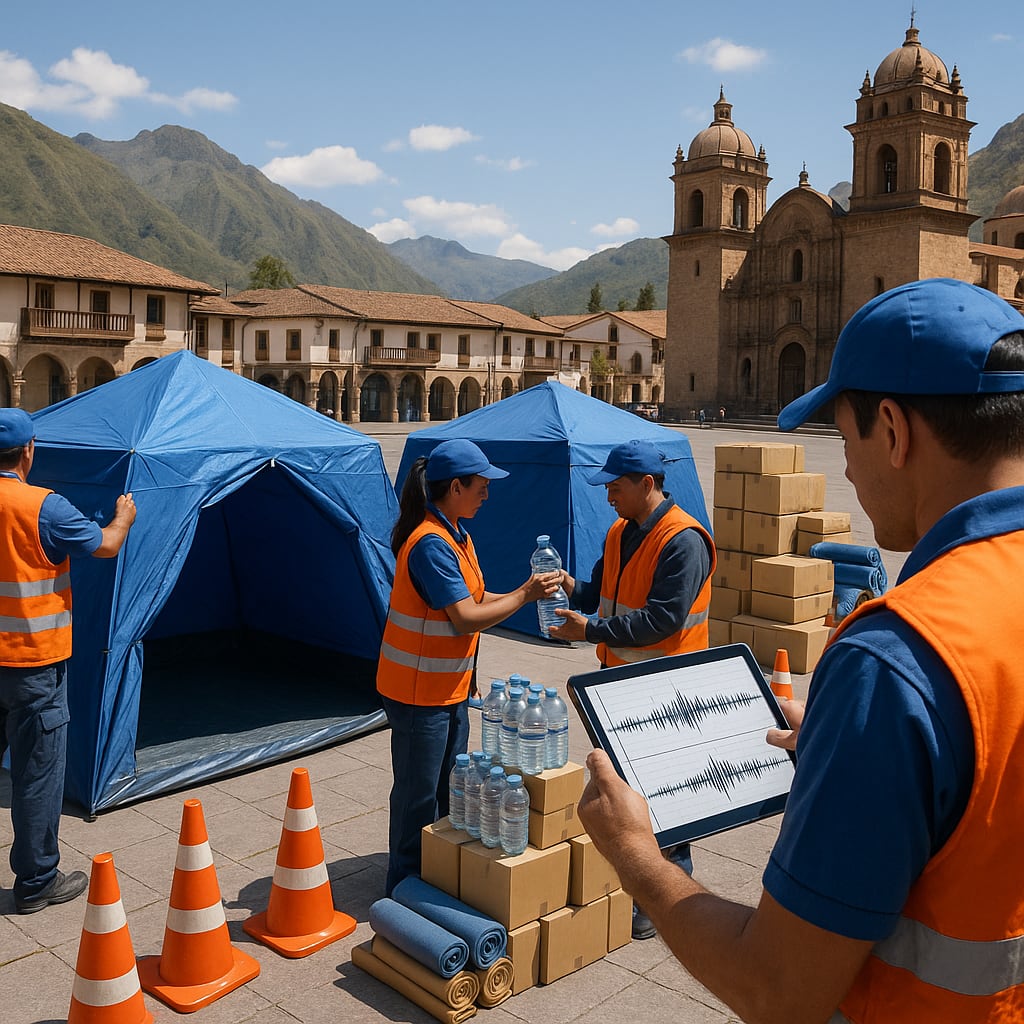
On Saturday night, earthquakes struck Peru’s Junín region east of Lima, with reporting split between a single magnitude 5.5 event near Sicaya in Huancayo province at about 9:24 p.m. and a pair of quakes measuring 5.1 and 3.7 in Chupaca province. The US Geological Survey placed the epicenter roughly 2 km west-south-west of Sicaya at a depth of about 10 km, while Peru’s National Seismological Centre reported depths of 24 km and 18 km for two events. Authorities confirmed at least five fatalities, with several outlets citing six, and more than 20 injured, with counts ranging from 21 to 32. Around 200 to 300 people were reported affected or displaced. Structural damage included collapsed homes and, per Fox News, a church and convent. Peru’s civil defense and emergency bodies mobilized rescue teams and firefighters in the early hours as aftershocks and damage assessments continued.
Why It Matters
The coverage illuminates two policy layers: immediate emergency capacity in a seismically active Andean corridor, and the regional architecture for recovery financing and cross-border support. For Peru, the role of INDECI/COEN and alignment between national and international seismological data bear on operational decisions in search, shelter, and structural assessments. For the region, Venezuela’s ongoing post-quake response is a live demonstration of available tools and partners: government use of $346 million from its IMF reserve tranche for reconstruction, large-scale aid shipments from Mexico and Russia, CARICOM’s delivery of 88 containers of relief, a Colombian Red Cross mission, and coordination with UNESCO and EU representatives. Environmental safeguards around debris and coastal monitoring in La Guaira, and the scale-up of housing recovery brigades, point to norms and practices that multilateral actors and neighboring governments may look to when calibrating disaster diplomacy, financing, and standards for debris and cultural-heritage protection.
Diverging Narratives
Discrepancies cluster around three factual axes. First, the event count and magnitude: USGS-based reports describe a single 5.5 quake near Sicaya, while Peru’s National Seismological Centre data cited by the South China Morning Post and Al Jazeera describe twin quakes of 5.1 and 3.7 in Chupaca. Second, depth and epicenter: The Guardian cites a 10 km depth and an epicenter just outside Sicaya; Peruvian sources referenced by SCMP put the depths at 24 km and 18 km, with the focus on Chupaca. Third, human impact: fatality counts vary between at least five (Telesur English, The Guardian, CBC, Fox News, Al Jazeera, Folha, Clarín, Politika) and six (SCMP, TASS), injuries range from about 20 to 32 (Folha at 21; Clarín at 20; Japan Times at 32), and the affected/displaced population is reported as roughly 200 (Japan Times) or 300 (The Guardian, Fox News, Clarín).
Framing also diverges. Some outlets concentrate on immediate humanitarian dimensions, including missing persons and faith-based structures among damaged buildings (Fox News), while TASS details housing damage totals. Latin American and European outlets foreground official tallies and rescue mobilization, with Politika underscoring early deployment of responders. The Japan Times explicitly links Peru’s quake to Venezuela’s recent disasters, whereas Telesur’s extensive Venezuela coverage emphasizes state-led coordination with multilateral and regional partners, relief logistics, environmental controls, and housing recovery, complemented by a Fox News opinion piece highlighting civil-society relief efforts on the ground. These emphases shape how readers interpret both the scale of Peru’s emergency and the menu of responses visible in neighboring Venezuela.
What Happens Next
Two decision tracks are salient. In Peru, authorities will continue reconciling casualty and damage figures and clarifying the seismological record. Updates from INDECI/COEN and Peru’s seismological center will determine whether the official toll aligns with the lower five-death figures or the higher six cited by some outlets, whether injuries stabilize closer to 20 or 30, and whether the “single 5.5” or “twin 5.1/3.7” characterization prevails. These determinations will inform the scale of sheltering for the roughly 200–300 displaced, priorities for structural assessments in Junín, and whether reports of missing persons narrow as search operations conclude.
In parallel, Venezuela’s recovery choices continue to set reference points. Government statements that $346 million from its IMF reserve tranche will finance reconstruction, the opening of 11 debris sites and launch of coastal monitoring in La Guaira, and active aid channels from Mexico, Russia, CARICOM, and the Colombian Red Cross create concrete indicators to watch: disbursement timing, procurement and targeting of funds, environmental compliance in debris handling, and the durability of international coordination with UNESCO and EU interlocutors.