
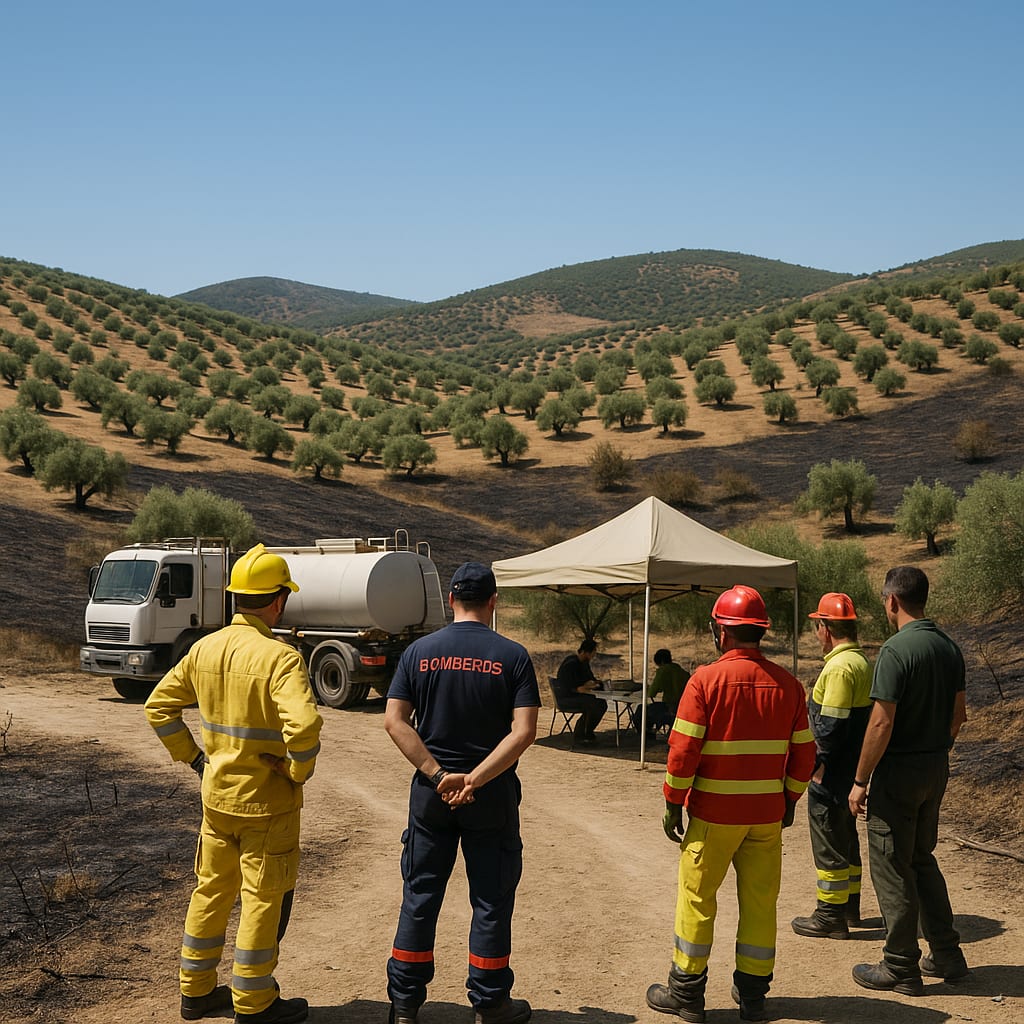
Twelve killed in Andalusia wildfire near Los Gallardos amid intense heatwave
Narrative Snapshot
- Headline figures diverge: several outlets report 12 dead (The Hindu, New York Times, France 24, The Guardian, Corriere della Sera, Al Jazeera), while others still cite 11 (ANSA, BBC, Folha de S.Paulo, Sky News), reflecting a moving toll and reporting lags.
- Victim profiles are treated differently: BBC and Sky News foreground that some victims may be British, and Folha notes authorities’ indications that many could be foreign; other outlets do not emphasize nationality.
- Cause versus conditions: most coverage links the blaze’s severity to Spain’s heatwave and Europe-wide risks (New York Times, Deutsche Welle, France 24, Toronto Star), while none reports an ignition cause.
- Response framing varies: Deutsche Welle highlights deployment of Spain’s military emergency units; The Guardian quantifies about 150 firefighters; ANSA amplifies an “unprecedented tragedy” quote from Minister Sanz; Corriere della Sera centers on visual evidence.
What Happened
A fast-moving wildfire broke out Thursday near Los Gallardos in Almería, Andalusia, resulting in heavy loss of life. The regional government said the toll rose to 12 after additional fatalities were confirmed (The Hindu; The Guardian; New York Times; France 24; Corriere della Sera; Al Jazeera). Earlier reports put the number at 11 (ANSA; BBC; Folha de S.Paulo; Sky News). Several outlets report that some bodies were found in vehicles, suggesting victims were overtaken while fleeing (ANSA; France 24; Al Jazeera). Folha cites regional authorities saying at least eight were injured. Spain mobilized military emergency units to support regional firefighters (Deutsche Welle), with about 150 firefighters engaged, according to The Guardian. Prime Minister Pedro Sánchez expressed deep sadness (ANSA; Deutsche Welle). The blaze unfolded amid a severe heatwave, with forecasters warning that Europe’s heat has elevated wildfire risk (New York Times; Deutsche Welle; France 24; Toronto Star).
Why It Matters
Coverage converges on two structural pressures: intensifying heatwaves and emergency response capacity. Multiple outlets link the event to Spain’s broader pattern of increasingly frequent and prolonged heatwaves, heightening wildfire risk (France 24; New York Times; Deutsche Welle; Toronto Star). The incident thus functions as a real-time stress test of Spain’s multi-level crisis response, which combined regional services and the national military emergency unit (Deutsche Welle) and required a sizable front-line deployment (The Guardian). The possibility that several victims were foreign nationals (BBC; Sky News; Folha de S.Paulo) underscores the cross-border implications of climate-exacerbated disasters for information management and victim identification. Severity framing—from “tragedia senza precedenti” (ANSA) to “worst wildfire for more than two decades” (Sky News, attributing officials)—signals potential pressure for resourcing, training, and public risk communication as heatwaves increasingly shape Europe’s wildfire season.
Diverging Narratives
- Death toll and timing: The Hindu, The Guardian, New York Times, France 24, Corriere della Sera, and Al Jazeera report 12 deaths, with The Hindu citing the Andalusian government’s update that added six confirmed fatalities. ANSA, BBC, Folha de S.Paulo, and Sky News still cite 11, reflecting publication timing and update cadence.
- Who the victims are: BBC reports a local official saying four may be British; Sky News similarly reports Britons feared among the dead; Folha cites regional authorities indicating most victims may be foreigners. Other outlets do not emphasize nationality, leaving a gap between nationality-focused reporting and general accounts pending official identification.
- Severity language: ANSA carries Minister Sanz’s “unprecedented tragedy”; Sky News calls it Spain’s worst wildfire in more than two decades, attributing officials. By contrast, New York Times, Deutsche Welle, France 24, and Toronto Star stress meteorological context—heatwaves elevating risk—without ranking the event historically.
- Operational detail: Deutsche Welle highlights activation of military emergency units; The Guardian quantifies around 150 firefighters. Several outlets do not specify response composition or scale.
- Unanswered questions: None of the sources report an ignition cause; the focus remains on conditions, casualties, and response.
What Happens Next
- Casualty confirmation and identification: Watch for Andalusian and national updates finalizing the death toll (The Hindu; The Guardian; New York Times; ANSA) and for confirmation or correction of reports about foreign nationals, including Britons (BBC; Sky News; Folha de S.Paulo). Official coroner and consular statements will be decisive indicators.
- Containment and resource posture: Monitor whether Spain maintains or expands the military emergency unit’s role (Deutsche Welle) and whether regional forces sustain or adjust the ~150-firefighter deployment (The Guardian). Containment milestones and demobilization/rotation will signal trajectory.
- Weather-driven risk management: Continued heatwave intensity and warnings (New York Times; Deutsche Welle; France 24; Toronto Star; The Guardian’s orange advisories) will shape operational tempo and public-safety messaging. Elevated alerts would imply prolonged high-risk conditions and potential secondary ignitions.
- Narrative consolidation: Assess whether severe-event framings (“unprecedented,” “worst in decades”) persist (ANSA; Sky News) or are moderated by official after-action reporting, which could influence future resourcing and public communication strategies.