
Iran conditions Hormuz reopening on broad US concessions as Washington touts progress and Oman mediates corridor
Narrative Snapshot
Across outlets, there is convergence that Tehran publicly hardened its terms while simultaneously signaling technical headway with Oman on traffic management. State-linked Iranian coverage frames the strait as a deliberately leveraged battlespace and insists that any reopening embeds new constraints on US military posture and sanctions, a view echoed by IRGC spokesmen and senior clerical authorities who tie “free passage” to compliance with prior understandings (IRNA English; Tehran Times; Middle East Eye; The Guardian). Western and regional reporting tracks Oman’s shuttle role and sketches emerging sequencing debates, with Reuters-sourced accounts noting potential US steps only after Tehran restores transit, and several outlets highlighting Washington’s interest in a narrow shipping outcome it can claim as success (TASS/Reuters; Middle East Eye; France24).
Where narratives diverge most is procedural and political. US officials have publicly suggested direct engagement and “very good discussions,” while Iran’s foreign minister denies talks beyond message exchanges and conditions any negotiation on reversing alleged US breaches of a June understanding (Middle East Eye; CGTN). Analytical pieces split on leverage and risk: some describe Iran as exploiting chokepoint control amid US constraints, while Gulf-focused commentary cautions that regional states are redesigning security arrangements to blunt that leverage (South China Morning Post; Al Jazeera English opinion). Coverage also captures dueling compensation demands—Tehran’s reparations bid met by a mirrored US demand—complicating any narrowly transactional shipping fix (France24; Fox News; RT; Middle East Eye).
What Happened
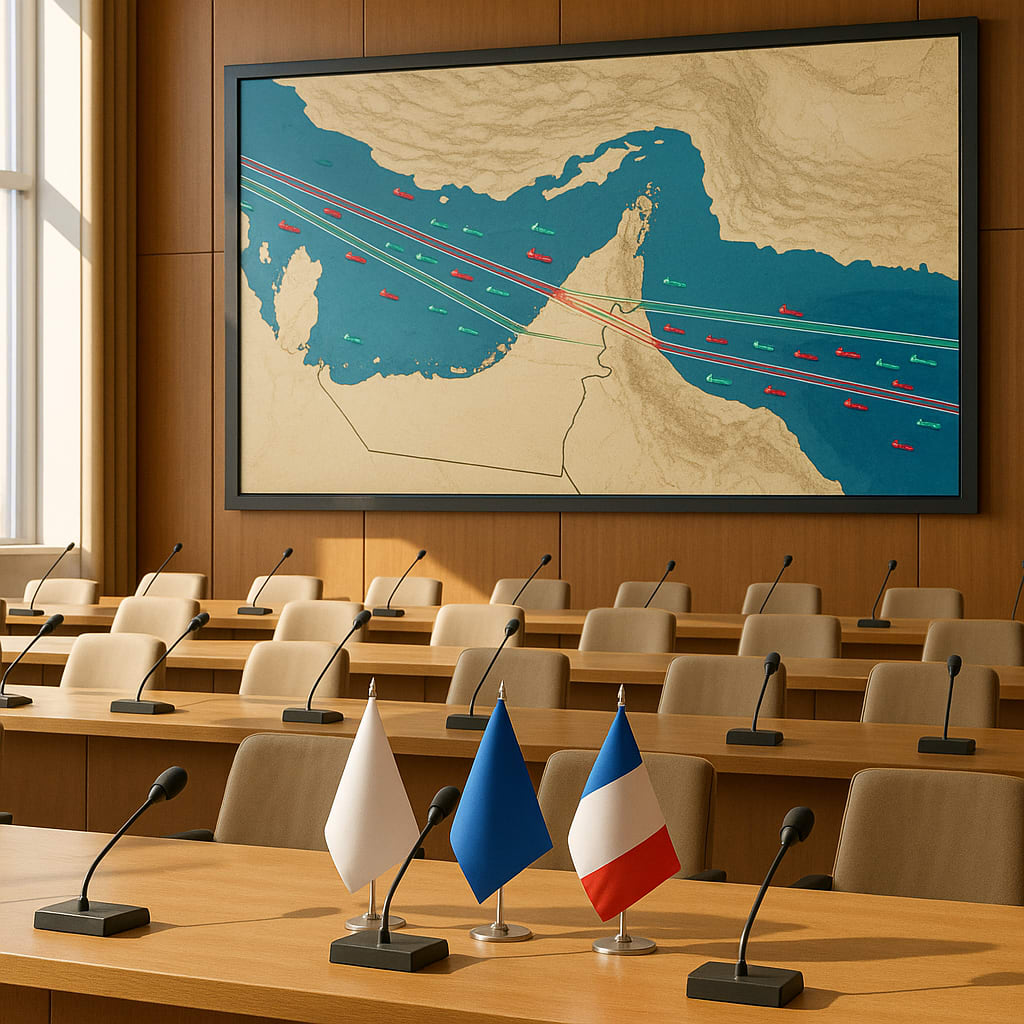
Iran’s Supreme National Security Council outlined conditions to reopen the Strait of Hormuz, including ending a US naval blockade of Iranian ports, lifting sanctions, releasing frozen assets, withdrawing US forces from areas around Iran, and paying compensation for war damages; the IRGC said the strait is now a “theatre of war” and will remain closed until “the enemy accepts all our conditions” (IRNA English; Tehran Times; The Hindu; Middle East Eye; Le Monde; Bangkok Post; The Guardian). Tehran and Muscat said a temporary route plan is in final drafting, assigning Iran and Oman roles over inbound and outbound traffic, respectively (IRNA English; France24; RT). US Vice President JD Vance said Washington is in direct talks and has made progress, while Iran’s foreign minister stated there are no negotiations beyond messages via intermediaries and none will start while a June interim deal is, in Tehran’s view, breached (Middle East Eye; CGTN). A Reuters-sourced account said the US could unblock Iranian ports after transit is restored (TASS). President Trump demanded compensation from Iran after Tehran’s reparations bid (Fox News; RT; Middle East Eye). Oman condemned repeated vessel attacks amid ongoing incidents (The Guardian; RT).
Why It Matters
The episode stresses how a maritime chokepoint central to global energy trade can be repurposed as coercive leverage, testing long-standing freedom-of-navigation norms and the capacity of ad hoc security arrangements to substitute for formal regimes. Iran’s insistence that any reopening embeds limits on US military posture and sanctions, and references to compliance with a June/Islamabad memorandum, elevate chokepoint governance from traffic management to a vehicle for revisiting the broader sanctions-and-deterrence architecture (IRNA English; New York Times). Oman’s mediating role underscores how middle powers can translate geographic proximity into convening authority, even as continued vessel attacks erode risk tolerance for incremental fixes (France24; The Guardian). Analytical coverage reads the standoff as part of a wider shift: Iranian actors believe time and pressure favor Tehran, while Gulf capitals are moving to redesign regional security to constrain Iran’s ability to repeat this playbook (South China Morning Post; Al Jazeera English opinion). For policymakers, sequencing choices—whether to trade narrow maritime access for limited relief or insist on comprehensive linkages—now carry precedential weight.
Diverging Narratives
Process and leverage are framed differently. Washington has highlighted progress and, at times, direct talks and imminent reopening, while Tehran denies formal negotiations and predicates any engagement on rectifying alleged US breaches of a June understanding (Middle East Eye; CGTN; CGTN Aug 5). Iranian media and officials assert moral and legal justification for the closure in response to “aggressive actions,” insisting the strait will not revert to pre-war status, and tying future passage to compliance with a memorandum referenced by both Iranian and US-based reporting (IRNA English; New York Times). By contrast, a Reuters-sourced line suggests a narrow, conditional US step—unblocking ports after Iran restores transit—implying a sequencing model Tehran has publicly rejected as insufficient (TASS/Reuters; Tehran Times).
Political signaling also bifurcates. Tehran’s demand for reparations is mirrored by a new US demand that Iran compensate Americans and protesters, introducing a reciprocal claim likely to complicate any limited maritime arrangement (France24; Fox News; RT; Middle East Eye). Within Iran-focused reporting, hardline voices portray US defeat and institutionalize a “geography of battle,” while other coverage notes President Masoud Pezeshkian calling this the best time for an agreement, exposing tactical differences in tone if not in stated conditions (Tehran Times; The Guardian; ANSA). Meanwhile, analyses diverge on sustainability of Iranian leverage versus emerging Gulf countermeasures, and continued attacks on shipping cast doubt on whether an Oman-brokered corridor can function absent broader de-escalation (Al Jazeera English opinion; RT; The Guardian).
What Happens Next
Three decision points will shape trajectories. First, whether Tehran and Muscat finalize and publicly codify a temporary route with defined inbound/outbound controls; indicators include a joint announcement and clear enforcement modalities, alongside a measurable reduction in attacks that Oman has condemned (IRNA English; France24; The Guardian). Second, sequencing of concessions: a US posture linking port unblocking to restored transit versus Iran’s insistence on meeting all conditions up front; watch for explicit US administrative steps on maritime access or sanctions waivers, and Iranian statements linking reopening to compliance with the June/Islamabad memorandum (TASS/Reuters; IRNA English; New York Times). Third, scope of bargaining: if mirrored compensation demands enter a formal channel or remain political signaling; monitor negotiating agendas cited by principals and whether Washington continues to frame a narrow shipping deal as sufficient for de-escalation or, as some reports suggest, a platform to “declare victory” upon reopening (Fox News; Middle East Eye). The status of direct versus mediated contacts will remain a live constraint on pace and verification (Middle East Eye; CGTN).