
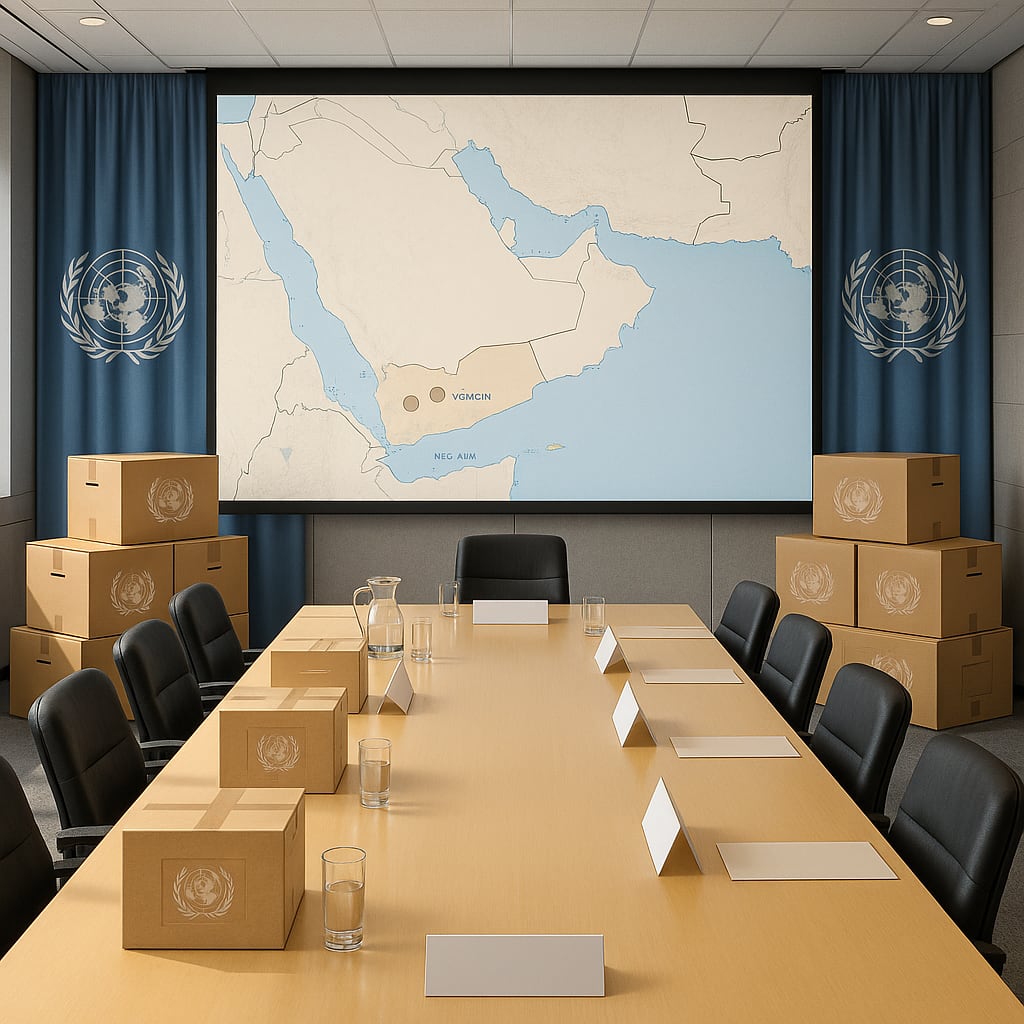
UN warns of major conflict risk in Yemen amid Houthi strikes on Marib and government counterattacks
Narrative Snapshot
Across outlets, the common through line is a sharp warning from the UN’s envoy that Yemen faces its greatest risk of renewed large-scale conflict since the 2022 truce, paired with reports of Houthi missile and drone strikes on Marib and a government military response. Several sources foreground civilian harm from impacts on displacement camps and residential areas, while others stress the military toll and strategic geography. Where they diverge most is in casualty accounting and in how tightly they link the flare-up to broader regional dynamics.
France24, the Times of Israel, and Le Monde emphasize Marib’s strategic and economic weight and, to varying degrees, Saudi stakes. The Times of Israel highlights Riyadh’s description of Marib as a “red line,” while Le Monde places the offensive within the Houthis’ internal political calculus, arguing that wartime mobilization helps push economic grievances to the background in areas they control. By contrast, South China Morning Post, Al Jazeera, and Middle East Eye center the UN warning and the reported civilian casualties, while also noting government counterattacks.
A second axis of contrast is regional framing. The New York Times situates the escalation within a tense regional moment tied to efforts to reopen the Strait of Hormuz. RT explicitly folds the fighting into a narrative of wider Middle East confrontation and disrupted shipping. Politika, meanwhile, highlights Yemeni government messaging aimed at the UN Security Council, presenting implementation of relevant resolutions as the pathway to security.
What Happened
Multiple outlets report that Yemen’s Houthi movement launched ballistic missiles and drones at Marib, striking displacement camps and residential neighborhoods. The government’s SABA agency, cited by Reuters and relayed by Middle East Eye, Al Jazeera, and South China Morning Post, said two civilians were killed and 14 wounded. France24 reports at least 10 killed in new attacks, including eight government soldiers and two civilians, while Middle East Eye (7 August) says “dozens” of government troops were killed in wider Houthi strikes. RT, citing a Houthi spokesman, carries an unverified claim of “hundreds” of casualties among Saudi-backed forces. Yemen’s army said it had responded on several fronts and would answer further targeting of its units, according to SCMP and Toronto Star; Al Jazeera reports government counterattacks amid renewed shelling. The UN envoy, Hans Grundberg, warned of the highest risk of large-scale conflict since the truce. Politika reports the Yemeni government welcomed the UN Security Council’s stance and urged implementation of its resolutions.
Why It Matters
The reporting points to stress on the fragile architecture erected since the 2022 truce, including Saudi-Houthi channels and local deconfliction mechanisms. Attacks on displacement camps and residential areas, reported by Al Jazeera and others, underscore the erosion of civilian protection norms and raise humanitarian and protection concerns that will test UN facilitation and donor response. France24’s and the Times of Israel’s focus on Marib’s oil-rich, strategic position, alongside Riyadh’s “red line” characterization, highlights potential for cross-border repercussions affecting Saudi security calculations.
Politika’s account of the Yemeni government appealing for implementation of UN Security Council resolutions brings institutional levers back into view just as the UN envoy warns of a tipping point. The New York Times’ link to efforts to reopen the Strait of Hormuz, and Toronto Star’s note that the UAE reported an Iranian missile targeting one of its ships, situate Yemen’s flare-up within a volatile regional security environment in which maritime risks, energy flows, and Iran-Saudi dynamics are tightly coupled.
Diverging Narratives
Discrepancies over scale and targets run through the coverage. Government-aligned tallies relayed by SCMP, Al Jazeera, and Middle East Eye’s live update put civilian casualties in Marib at two dead and 14 wounded, while France24 reports at least 10 killed including eight soldiers. Middle East Eye (7 August) cites “dozens” of government troops killed in broader Houthi strikes, and RT amplifies a Houthi spokesman’s claim of “hundreds” of casualties—figures not corroborated by other outlets in this set. The Yemeni health minister accused the Houthis of striking residential areas and displacement camps, per Al Jazeera (7 August), while the Houthis frame their actions as responses to “Saudi military deployments” and a “large military buildup,” according to Middle East Eye (6 August) and RT.
Interpretive frames also vary. The Times of Israel ties the escalation to tensions surrounding war with Iran and underscores Saudi red lines. The New York Times links Yemen’s violence to regionwide uncertainty over the Strait of Hormuz. Le Monde reads the offensive as politically functional for the Houthis domestically. Politika elevates a rules-based frame, citing the Yemeni government’s endorsement of the UN Security Council’s position and calls for enforcing its resolutions. These lenses steer attention either toward humanitarian law, regional geopolitics, or internal political utility.
What Happens Next
Three decision points emerge. First, military signaling inside Yemen: the army says it has responded on multiple fronts and will answer further targeting of its units, according to SCMP, while Al Jazeera reports counterattacks. Analysts should watch for sustained tit-for-tat strike patterns, shifts in front-line deployments in Marib and Hadramawt, and claims of new “Saudi military deployments” that the Houthis have cited as triggers (Middle East Eye, 6 August).
Second, Saudi engagement: Riyadh’s designation of Marib as a “red line” (Times of Israel) is a marker. Indicators include cross-border intercepts, adjustments to air defense postures, or changes in Saudi-Houthi contact channels.
Third, diplomatic traction: the UN envoy’s warning and Yemeni government calls to implement Security Council resolutions (Politika) put multilateral levers in play. Watch for Council statements, any revival of truce mechanisms, and whether regional de-escalation efforts linked to maritime security and the Strait of Hormuz (New York Times; Toronto Star) gain ground, as these would shape the space for re-freezing hostilities.