
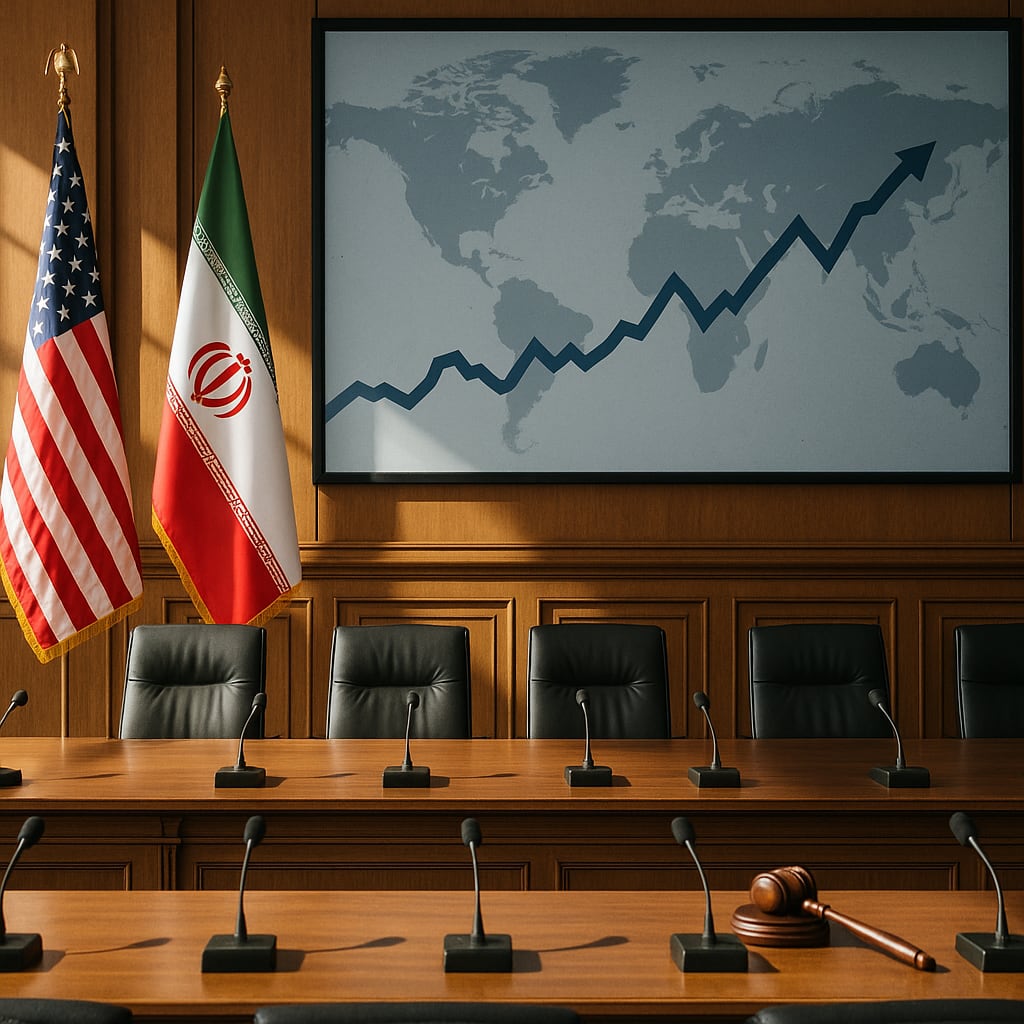
US House again backs curbs on Iran war powers as Senate blocks measure
Narrative Snapshot
Across outlets, there is broad agreement on the basic contours: the House passed, by 214–208, a resolution to halt military action in Iran absent congressional authorization, while the Senate narrowly blocked a similar effort the same day. Multiple sources characterize the House move as largely symbolic given the Senate roadblock and the administration’s claim that such limits are unconstitutional. Several foreign outlets underscore the wider regional backdrop, including renewed fighting and oil price increases.
Where emphasis differs is in framing political dynamics and stakes. Fox News highlights Senate Republicans “falling in line” with Donald Trump despite mounting costs and casualties, while the Toronto Star and the New York Times foreground repeated House rebukes and the political risk for Republicans given public skepticism. Israeli outlets stress bipartisan frustration and the midterm context. Politika in Serbia reads the votes as a signal that support for continuing the war is eroding even if formal constraints have not advanced.
Process and coalition details receive uneven attention. Fox News explains how Democrats forced the House vote through a privileged resolution over GOP leadership’s opposition and names the four recurring Republican defectors. The Guardian and Haaretz center Pramila Jayapal’s floor leadership and critique of the war’s lack of “clear mission” or “end goal,” while Al Jazeera and Middle East Eye situate the votes in the wake of a ceasefire breakdown and renewed hostilities. RT adds granular Senate whip-count color not widely echoed elsewhere, underscoring both cross-party exceptions and absences.
Public opinion is a distinct through line. A Fox News poll reports a majority opposing the war and expecting a long commitment, and the Toronto Star ties GOP support for the war to this headwind. Several outlets explicitly connect congressional maneuvering to rising energy prices and battlefield developments, linking domestic politics to strategic and economic costs.
What Happened
The House of Representatives approved, 214–208, a war powers resolution directing President Donald Trump to halt U.S. military action in Iran absent congressional authorization. The measure was led on the floor by Rep. Pramila Jayapal and was brought up using a privileged resolution that allowed a vote despite House GOP leadership’s opposition. Four Republicans—Warren Davidson, Brian Fitzpatrick, Tom Barrett, and Thomas Massie—joined Democrats, the same quartet that backed a similar House resolution in June. Hours later, the Senate voted 49–47 not to advance a comparable resolution, preserving the administration’s latitude to continue operations. The Trump administration has argued such congressional directives are unconstitutional. The votes unfolded amid renewed fighting following a ceasefire breakdown and rising oil prices tied to escalating conflict in the Middle East. Public polling shows most voters oppose the war and expect a prolonged commitment.
Why It Matters
The episode tests Congress’s capacity to assert its constitutional war powers in practice when one chamber resists and the executive claims unilateral authority. Repeated House votes without Senate concurrence risk normalizing symbolic oversight while leaving operational discretion intact, a pattern several outlets note by calling the measures “largely symbolic.” At the same time, cross-aisle defections, however small, signal potential movement inside the Republican coalition as costs mount, a point emphasized by Politika and reflected in Fox News’ depiction of rising casualties and prices. Internationally, the decisions intersect with alliance politics and regional stability: Israeli coverage highlights bipartisan frustration in Washington amid an intensifying conflict, while The Guardian links congressional pressure to oil market sensitivity. For decision-makers in governments and multilateral bodies, the signal is twofold: legislative skepticism about open-ended operations is persistent, but institutional checks remain contingent on Senate Republicans’ calculations and the executive’s constitutional stance.
Diverging Narratives
Outlets differ on how much weight to assign the House action. The Guardian, Times of Israel, Al Jazeera, and Middle East Eye repeatedly describe the resolution as symbolic given the Senate outcome and the administration’s constitutional objections, whereas the Toronto Star and the New York Times frame it as a continued, tangible rebuke with electoral implications. Fox News presents the Senate as the decisive arena where Republicans “batted down” constraints, underscoring party cohesion despite “rising costs,” while also detailing the House procedural gambit that forced the vote over leadership resistance.
Assessments of intra-Republican dissent vary. Fox News names four House Republicans who have consistently defected; Middle East Eye reports “growing congressional concern, even among Republicans,” in the Senate context but records the motion’s failure. RT adds specifics that Sen. Susan Collins supported the Senate measure, that Sen. John Fetterman opposed it, and that Sens. Rand Paul and Lisa Murkowski—previous backers—missed the vote; other sources do not corroborate these particulars, though Fox News and Middle East Eye concur on the unsuccessful Senate tally.
There is also divergence in the policy frame. Jayapal’s critique that the war lacks a “clear mission, strategy, [or] end goal” is foregrounded by Haaretz and The Hindu, aligning with Al Jazeera’s emphasis on the post-ceasefire escalation. By contrast, Fox News centers executive flexibility and Republican arguments against “handcuffing” the president. Meanwhile, The Guardian ties congressional pushback to market volatility, elevating energy security as a primary stake beyond the constitutional dispute.
What Happens Next
Two decision points dominate. First, whether additional Senate Republicans join future efforts to constrain the war: Middle East Eye’s 49–47 procedural defeat and Fox News’ depiction of GOP unity suggest the threshold is close but unmet. Analysts should watch signals from Republicans who have previously supported war-powers limits or voiced skepticism—such as those named by RT and the public comments Fox News attributes to Sen. Rand Paul—alongside casualty figures and energy price movements highlighted by Fox News and The Guardian.
Second, House Democrats have shown they can repeatedly force votes using privileged resolutions over leadership objections, as Fox News reports. The practical effect remains signaling unless the Senate posture changes; repeated votes, noted by the New York Times and Toronto Star, will test whether small, consistent GOP defections expand under political pressure captured in the Fox News poll. Regionally, Al Jazeera’s and The Guardian’s linkage to renewed fighting and oil spikes means battlefield dynamics may be the proximate driver of congressional positioning as much as institutional prerogatives.