
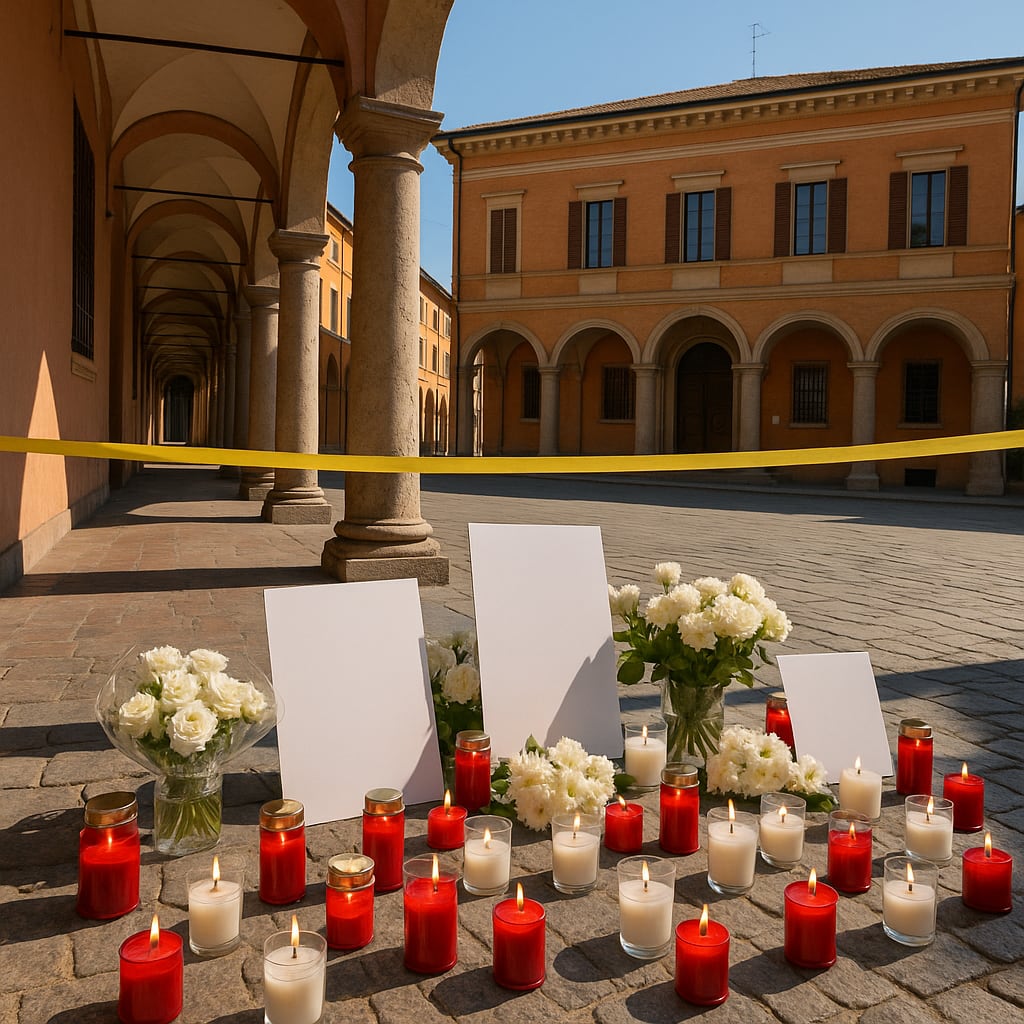
Bologna protests escalate after death of Abderrahim Fakir under police restraint
Narrative Snapshot
Across outlets, coverage converges on two tracks: immediate street unrest and institutional accountability. Domestic wire reporting in Italy emphasizes the scale of disorder in Bologna’s center, with ANSA detailing a municipal vehicle set ablaze, projectiles thrown at police, chairs ripped from outdoor seating areas, and vandalized bike-sharing stands. By contrast, international reports foreground police crowd-control tactics and injury counts, with the Guardian noting the use of teargas and water cannon and the BBC reporting dozens hurt as thousands rallied.
Political and legal framing diverges by outlet. France24 and the Guardian highlight pressure from human rights groups and opposition parties for urgent answers, while Deutsche Welle underscores appeals from local authorities for calm pending an investigation. La Repubblica shifts quickly to process: prosecutors are investigating not only police officers but also health responders present during the restraint, with an autopsy pending and a high-profile legal contest between Gabriele Bordoni (for the officers) and Fabio Anselmo (for Fakir’s family), recalling the Aldrovandi custody-death case two decades earlier. From Buenos Aires, Clarín adds Rome’s positioning: Prime Minister Giorgia Meloni called for responsibilities to be investigated while denouncing violence against police.
International frames also differ. France24 reports campaigners likening the incident to George Floyd’s murder and to tactics used by U.S. immigration authorities under the Trump administration, and Clarín labels Fakir the “Italian George Floyd,” placing the episode in a transatlantic repertoire of lethal restraints. RT offers the most emotive rendering, quoting a protest chant that he was “killed like a dog,” transcribing his cries of “aiuto, aiuto, basta,” and noting, via local media, that police were responding to alleged aggressive behavior and vehicle damage; mainstream European outlets largely avoid emotive language, hewing to institutional responses and verified crowd-control facts. The common policy stakes running through these accounts are restraint standards, medical intervention during arrests, and the legitimacy of protest policing.
What Happened
Abderrahim Fakir, a 42-year-old Moroccan-born entrepreneur who moved to Italy as a child, died in Bologna on Sunday while being restrained face-down by police, an incident widely circulated on video in which he can be heard pleading for help, according to France24 and the Guardian. RT, citing local media, reports officers had been called over alleged aggressive behavior and vehicle damage. Protests drew thousands on Monday, with clashes as police used teargas and water cannon, and the BBC reporting dozens injured. ANSA describes extensive property damage, including a burned municipal car and vandalized bike-share stations. Prosecutors have opened an investigation that includes the officers and health responders on scene; an autopsy will determine cause of death, La Repubblica reports. The officers’ lawyer said they are “saddened and shocked,” while the family is represented by Fabio Anselmo. Meloni called for responsibilities to be investigated while condemning violence, per Clarín. Local officials urged calm during the probe, Deutsche Welle notes.
Why It Matters
The case sits at the intersection of policing standards, medical response in public-order incidents, and the politics of protest. Comparisons drawn by campaigners to prone restraint deaths in the United States have elevated scrutiny on Italian tactics and training, with the Guardian and France24 placing the episode in a wider pattern that tests institutional safeguards. La Repubblica’s reporting that health responders are under investigation alongside police widens the aperture from use of force to inter-agency crisis management, aligning with commentary in the same outlet arguing psychiatric-care-led approaches over coercive control during crises. For Italy’s government, Clarín’s account of Meloni’s stance captures a familiar balance: signal accountability through investigations while maintaining a firm line on public order amid ANSA’s depiction of significant property damage. For European observers and rights monitors, the outcome will speak to the capacity of Italy’s judicial and administrative systems to adjudicate contested police encounters and calibrate protest policing amid rising social tensions.
Diverging Narratives
Key uncertainties are factual and normative. On facts, the cause of death remains undetermined pending autopsy, and La Repubblica underscores scrutiny over why immediate assistance was not rendered, a question raised publicly by the family’s lawyer. RT, citing local media, adds that officers responded to reports of aggressive behavior and damage to a vehicle, a detail that contextualizes the initial intervention but does not resolve proportionality questions surrounding the restraint itself as seen in videos described by France24 and the Guardian.
On framing, domestic and international outlets weight the street aftermath differently. ANSA highlights the intensity of the unrest—arson, vandalism, and assaults on police—whereas the Guardian and BBC prioritize the scale of mobilization, injury tolls, and police deployment of teargas and water cannon. Political stakes are cast through distinct lenses: France24 and the Guardian amplify demands from human rights groups and opposition parties for accountability; Deutsche Welle stresses institutional appeals for calm; Clarín spotlights Meloni’s dual message of investigation and rejection of violence. International analogies shape interpretation as well—France24 and Clarín report comparisons to George Floyd and U.S. immigration enforcement tactics—while La Repubblica anchors the discourse in Italian legal precedent via the Aldrovandi case and in the operational debate over psychiatric versus police-led crisis response.
What Happens Next
Several decision points will determine trajectory. First, forensic results: La Repubblica reports an autopsy is pending and inquiries target both officers and health responders. If prosecutors publicize determinations on cause of death and any procedural breaches, that will set the parameters for potential charges or disciplinary measures; statements from counsel Gabriele Bordoni and Fabio Anselmo will signal legal strategies in either direction. Second, protest management: with the BBC noting dozens injured and the Guardian reporting teargas and water cannon, watch whether local authorities shift tactics or maintain current crowd-control posture; Deutsche Welle’s reporting on appeals for calm indicates an effort to de-escalate. Third, policy response: Clarín notes Meloni’s call to investigate responsibilities; analysts should track whether this yields formal reviews of restraint protocols or crisis-intervention arrangements, particularly in light of La Repubblica’s commentary advocating psychiatric-care-led approaches. Public communication from prosecutors and municipal authorities will be the primary indicators of each path.