
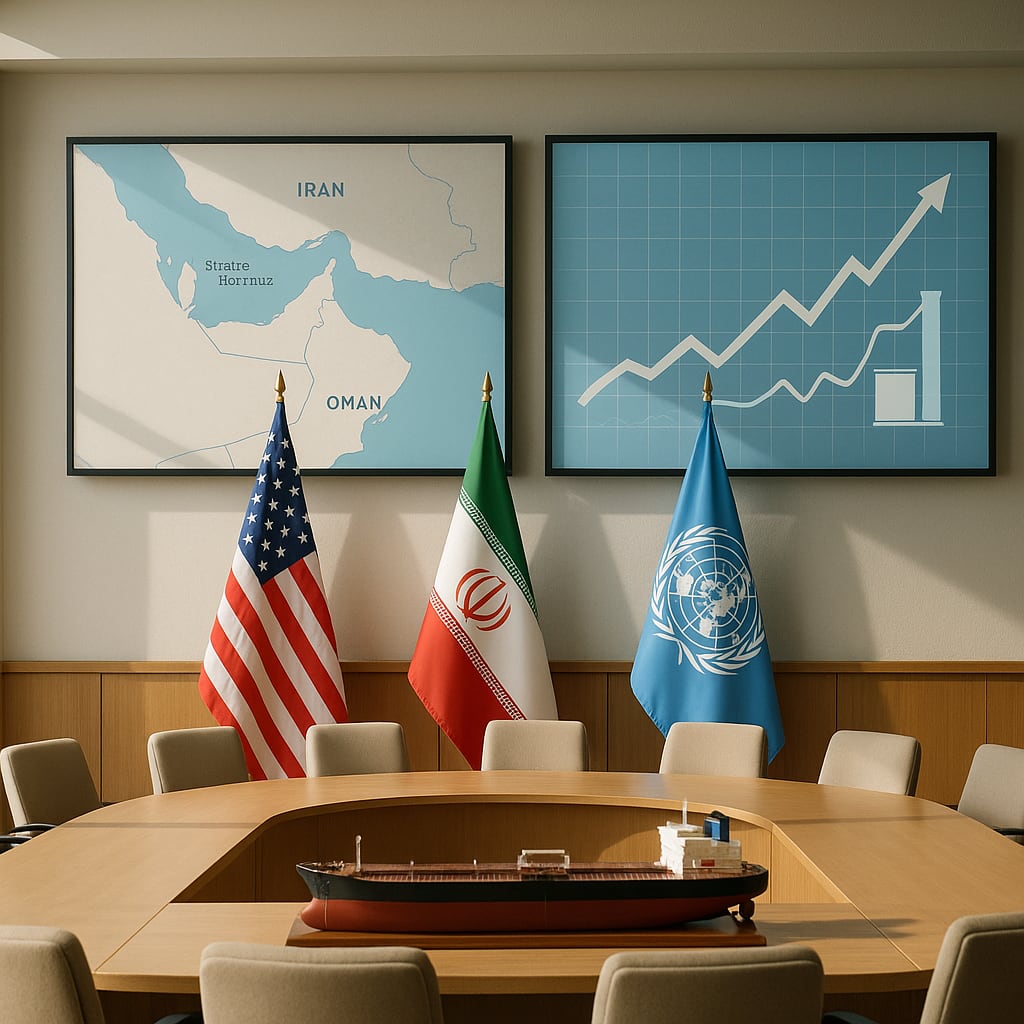
U.S. carries out 13th consecutive night of strikes as Iran widens regional attacks and rejects reported truce
Narrative Snapshot
Across outlets, there is broad agreement that the United States has sustained near-nightly strikes inside Iran with the stated purpose of degrading Tehran’s ability to threaten commercial shipping, while Iran has expanded retaliatory attacks across the Gulf and on U.S. military facilities in Jordan, Kuwait, and Bahrain. U.S. Central Command’s framing appears consistently in Middle East Eye and Haaretz, while Iranian and regional responses are detailed by The Hindu, CBC, and Telesur. Oil market sensitivity and infrastructure risk feature in coverage noting Brent rising above $91 and mutual threats to energy assets and critical nodes.
The diplomatic narrative splits sharply. Secretary of State Marco Rubio told NHK that Iran is “begging” for a deal yet not ready to make one, and emphasized openness to talks alongside continued pressure, a line echoed by Haaretz and Fox News. TASS quoted Rubio stressing denuclearization—not regime change—as the U.S. objective, even as Fox highlighted renewed internal debate in Washington about supporting efforts to topple Iran’s government. Iranian officials, by contrast, told IRNA and Telesur that U.S. “hegemonic” policy, not a lack of mediators, blocks diplomacy and that any agreement requires guarantees of respect.
Questions about efficacy and thresholds are another through line. Politico’s assessment, cited by TASS, that the air campaign is unlikely to be decisive without major escalation aligns with Corriere della Sera’s doubts about the sustainability of U.S. “routine” strike cycles and Al Jazeera’s scrutiny of Iran’s resilience under renewed pressure. Reporting by TASS on the Financial Times’ estimate that degrading Iran’s missile force could take weeks underscores the operational grind. Haaretz and NBC capture the widening target set and rhetoric over energy and civilian infrastructure, while Politika reports on U.S.-Israel coordination for intensified strikes. Japan Times adds a distinct angle, noting U.S. questions about a possible Russian role in Iran’s strikes on sensitive CIA-linked sites. An opinion in Middle East Eye frames the risk as a Vietnam-style quagmire unless course corrections occur.
What Happened
Following the collapse of a ceasefire, the U.S. resumed strikes inside Iran, completing successive waves described as the eighth through thirteenth nights, with Central Command citing the goal of degrading Iran’s capability to threaten shipping in the Strait of Hormuz (Middle East Eye; Haaretz; Telesur). Iran expanded attacks across the Gulf, claiming strikes on U.S.-linked targets in Kuwait, Bahrain, and Jordan, and asserting it hit U.S. aircraft at Jordan’s Aqaba; the IRGC called attacks on U.S. bases in Jordan a “legal, religious and logical right” (The Hindu; Telesur). Japan Times reported U.S. concerns over possible Russian assistance tied to strikes on CIA facilities. Rubio said the U.S. remains open to talks but warned of consequences, adding in interviews that Iran is “begging” for a deal while not ready to make one, and that Washington seeks denuclearization, not regime change (Fox News; NHK; TASS; Al Jazeera). Tehran rejected a reported U.S. truce proposal and criticized U.S. “hegemonic” policy (Haaretz; IRNA). President Trump threatened a “massive attack,” even as he later said talks were continuing and Iran would “love to make a deal” (NBC; Haaretz).
Why It Matters
The strikes and counterstrikes are testing the security architecture around two vital chokepoints—Hormuz and, by extension of Iran’s “second front,” Red Sea shipping—raising immediate risks for global energy supply and maritime insurance, as reflected in Brent’s climb above $91 (NBC; The Hindu). The public threat-making against energy assets, power plants, bridges, and other civilian infrastructure signals erosion of long-standing restraint norms and complicates crisis management for regional governments and commercial operators (Haaretz; The Hindu). Operationally, assessments that an air campaign alone may not be decisive, and could take weeks even to degrade missile forces, sharpen choices about escalation ladders and coalition management (TASS citing Politico and FT; Corriere della Sera). Diplomatically, the juxtaposition of Washington’s stated openness to talks with debate over regime change, and Tehran’s insistence on guarantees and rejection of intermediary-led fixes, exposes the limits of ad hoc mediation and the need for enforceable arrangements if any de-escalation is to stick (Fox News; TASS; IRNA; Al Jazeera opinion).
Diverging Narratives
On negotiating intent, Rubio’s claim that Iran is “begging” for a deal yet not ready contrasts with Foreign Minister Abbas Araghchi’s portrayal of Washington’s “irrational” policy as the core obstacle and demand for guarantees of respect, echoed by IRNA and Telesur (NHK; Al Jazeera; IRNA; Telesur). U.S. objectives are framed differently across outlets: TASS quotes Rubio emphasizing denuclearization and force degradation, while Fox underscores reported internal debate about reviving regime-change strategies and support to armed opposition groups. Legitimacy and targeting are contested: U.S. statements focus on maritime security and punishing IRGC forces (Middle East Eye), whereas Iranian actors defend strikes on U.S. bases as lawful retaliation and accuse Washington of normalizing attacks on civilian infrastructure (Telesur; The Hindu; Haaretz). Effectiveness is also in dispute. Politico’s view, carried by TASS, that the U.S. air campaign is “running out of steam” absent escalation, and the FT estimate of a protracted effort to suppress missiles, sit alongside Corriere’s skepticism about staying power and Al Jazeera’s examination of Iran’s capacity to absorb pressure. Japan Times introduces uncertainty about external enablers by flagging U.S. questions regarding potential Russian support to Iran’s targeting.
What Happens Next
Three decision points are explicit in the reporting. First is whether any ceasefire framework can gain traction: Haaretz says Tehran rejected a U.S. proposal that left Hormuz unresolved, while Rubio maintains talks remain possible; signals to watch include public adjustments to U.S. terms on shipping and any shift in Iran’s demand for guarantees (Haaretz; Fox News; IRNA). Second is campaign scope. Politika reports U.S. notice to Israel of intensified strikes; TASS cites Politico and FT that air power alone may underperform and that missile suppression could take weeks—indicators include changes in U.S. force posture, target sets, and allied consultations (Politika; TASS). Third is regionalization. NBC describes Iran opening a “second front” on the world economy; Fox alleges IRGC flights to Yemen; Corriere tracks attacks on U.S. logistics and potential Red Sea spillover—watch for strike patterns on Gulf infrastructure and shipping lanes, and outcomes of the reported Lavrov–Rubio meeting on regional crisis channels (NBC; Fox News; Corriere della Sera; Telesur).