
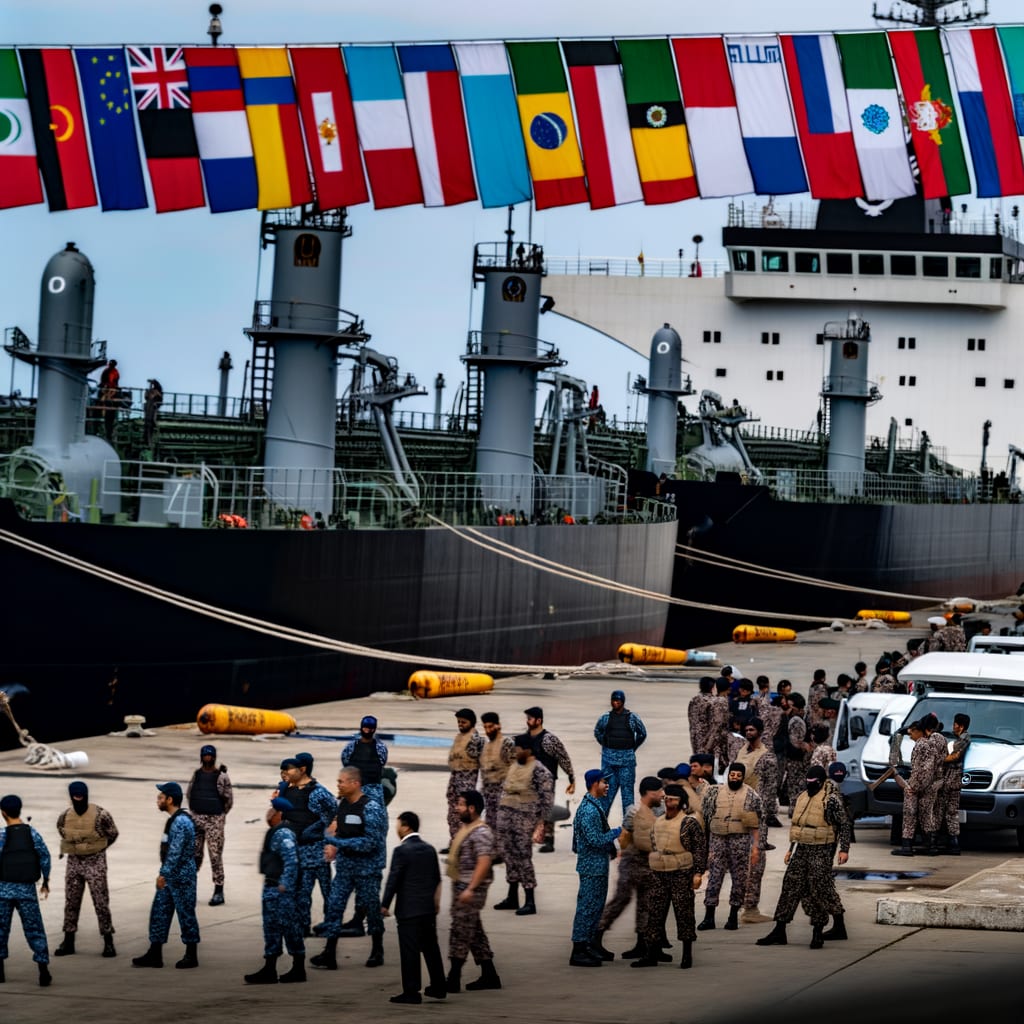
US Seizes Venezuelan-Linked Tanker Amidst Heightened Sanctions
In a significant move, US military forces have seized a Panamanian-flagged oil tanker in the Indian Ocean, suspected to be linked with Venezuela's shadow fleet. This operation was part of what appears to be an escalating crackdown on illicit oil exports by sanctioned countries, including Venezuela and Iran.
Background and Context
The seized vessel was reportedly transporting heavy crude oil intended for China and traced by the US forces from the Caribbean Sea. This move comes amidst the US Department of the Treasury's issuance of a general license authorizing the provision of American goods, technology, and services for the exploration, development, or production of petroleum and gas in Venezuela. However, the US license prohibits deals involving persons from Russia, Iran, DPRK, Cuba, and the People’s Republic of China.
Key Developments
Following the US raid to capture then-president Nicolas Maduro in January, several tankers fled the Venezuelan coast, including the one seized in the Indian Ocean. It's part of a shadow fleet of falsely flagged tankers Venezuela had been relying on to smuggle crude into global supply chains, due to US sanctions on its oil.
Simultaneously, India's Coast Guard seized three oil tankers linked to Iran’s shadow fleet in the Arabian Sea. This interception comes after new US measures targeting Tehran's oil trade, indicating a coordinated international effort against oil-smuggling networks.
Implications and Reactions
The seizure of these oil tankers has brought forth the question of what governments can do when countries circumvent or flout the rules to export oil. The incident also highlights the continued tension between the US and countries like Venezuela and Iran, which have faced economic sanctions.
The US's latest trade deal with India, involving a reduction in import tariffs, may be linked to India halting its intake of Russian crude oil. This move could potentially disrupt India's longstanding defense ties with Russia.
China, which had invested heavily in Venezuela’s political and economic survival, faces immediate questions about the limits of its global reach and the evolving rules of great-power competition in an increasingly multipolar world.
The UK is also threatening to seize a Russia-linked shadow fleet tanker, potentially opening a new front against Moscow, as Russia’s oil revenues tumble.
Conclusion
The increasing incidence of seizing oil tankers in international waters highlights the ongoing geopolitical challenges associated with enforcing sanctions and maintaining global economic stability. With the US taking the lead in these operations, the global community awaits the next course of action in this high-stakes game of international diplomacy and economic powerplay.