
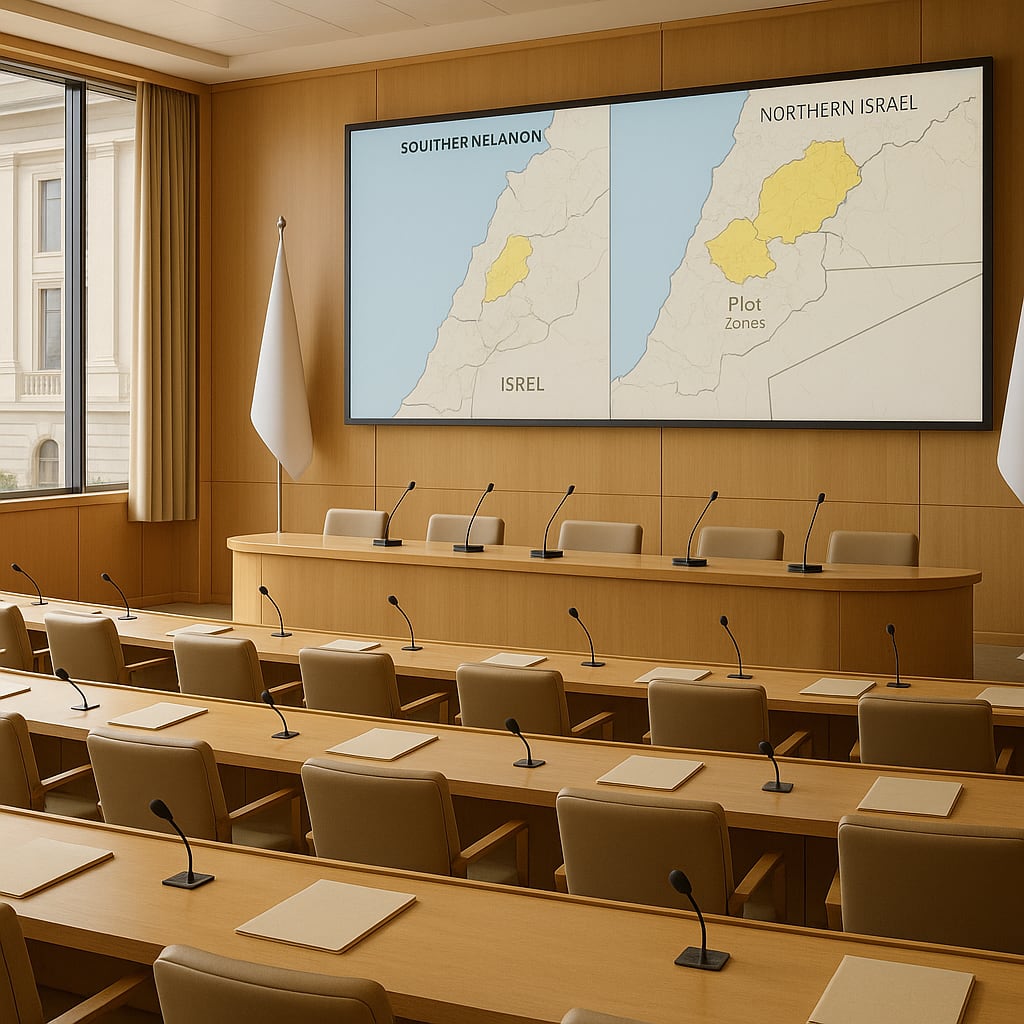
Rome talks advance Israel-Lebanon ‘pilot zone’ pullout plan; U.S. calls talks productive as timeline, disarmament terms remain contested
Narrative Snapshot
Across outlets, there is broad alignment that the Rome discussions are centered on implementing the June 26 framework via “pilot zones” where the Israel Defense Forces would withdraw and the Lebanese Armed Forces would assume control. U.S. interlocutors characterize the first day as productive and set to continue, while Israeli and Lebanese reporting converges on near-term technical steps for two initial areas in southern Lebanon. Lebanese and regional outlets emphasize Beirut’s push for tangible movement on withdrawal, coupled with military readiness to take over areas vacated by Israeli forces.
Coverage diverges on sequencing and conditions. A Lebanese deputy premier says the framework lacks any timeline for Israeli withdrawal, contrasting with Israeli positions tying a full pullout to Hezbollah’s disarmament. Israeli officials are portrayed as both signaling readiness to advance on two pilot zones and insisting that forces will remain until Hezbollah disarms. Reporting in North American and Israeli outlets underscores the U.S.-brokered deal’s linkage between withdrawal and disarmament, and notes Jerusalem’s misgivings about rapid implementation.
Israeli media foreground security rationales for caution. The exposure of a fortified Hezbollah tunnel complex under Beaufort and an alleged high-level spy arrest in Lebanon are cited as reinforcing Israeli threat assessments. By contrast, multiple outlets report U.S. pressure shaping the military tempo, including a pause on “sensitive operations” and the deployment of a CENTCOM team to Beirut to help with implementation—signals of active American management of the file.
For Lebanon’s domestic landscape, sources point to both official backing and societal strain. The president publicly defends negotiating amid ongoing attacks, while reporting from Toronto and New York highlights how a disarmament prerequisite is polarizing Lebanese politics and how displacement and fear of permanent loss are reshaping the south. The stakes in the pilot zones are therefore simultaneously technical, political, and humanitarian.
What Happened
The sixth round of U.S.-mediated Israel-Lebanon talks opened in Rome, with all sides describing constructive, ongoing discussions focused on implementing a framework agreed June 26. The plan envisions Israel’s gradual withdrawal from parts of southern Lebanon through “pilot zones,” with the Lebanese Armed Forces assuming control. Lebanese officials say their army is prepared to take over localities from which the Israeli military would withdraw and seek early movement on these zones. The U.S. State Department called the Rome talks productive, and a U.S. military/CENTCOM delegation met the Lebanese army in Beirut days earlier to work through implementation. Israeli officials signaled commitment to withdrawing from two pilot zones, even as Jerusalem retained misgivings and reported pausing “sensitive operations” under U.S. pressure. Parallel reporting noted Israeli assertions that forces will remain until Hezbollah disarms, and ongoing security incidents and discoveries in the south.
Why It Matters
The pilot zones are a real-time test of whether a state-to-state framework can recalibrate security control in southern Lebanon in the presence of a powerful nonstate actor. Several outlets report that the broader deal links a full Israeli withdrawal to Hezbollah’s disarmament, while the pilot areas are designed to assess whether the Lebanese army can enforce that outcome locally. U.S. sponsorship and pressure—signaled by on-the-ground military engagement and diplomatic messaging—are central to pacing and sequencing, reflecting Washington’s leverage over both parties. Israeli media stress the operational threat picture to justify caution, while Lebanese and international coverage highlight the domestic political risks of pushing disarmament, including fears of internal conflict. The success or failure of the pilots will set precedents for subsequent withdrawals, the durability of cross-border arrangements, and the credibility of negotiated enforcement mechanisms in contested spaces.
Diverging Narratives
The key divergence concerns sequencing and conditionality. Lebanese officials argue the framework sets no timeline for Israeli withdrawal, implying that Washington’s current role is more sponsor than neutral mediator. Israeli accounts, by contrast, repeatedly tie any broader pullout to Hezbollah’s disarmament, with a senior minister asserting that troops will remain until that condition is met. Coverage also splits between momentum and caution: some outlets report Israeli commitment to two pilot-zone withdrawals and a U.S.-registered “productive” atmosphere, while others emphasize Jerusalem’s misgivings and the absence of agreed timetables.
Another fault line is how security realities are framed. Israeli outlets showcase newly uncovered Hezbollah fortifications beneath Beaufort and report on a high-level espionage arrest in Lebanon, reinforcing arguments for a measured or prolonged posture; analysis pieces suggest the army is preparing for a longer stay in harsh conditions. Meanwhile, multiple sources describe U.S. pressure altering Israeli operational behavior and CENTCOM’s hands-on role in implementation. Domestic Lebanese narratives vary: the president defends negotiations under fire, yet reporting highlights how a disarmament prerequisite for full withdrawal is deepening divisions and raising fears of internal violence. Across analysis, the pilot zones are cast as the hinge: their outcome is presented as likely to determine whether the broader framework advances or stalls.
What Happens Next
Three decision points will shape the trajectory. First is near-term implementation in the two pilot zones: watch for public orders or verifiable movement on IDF drawdowns, coordinated LAF deployments into designated localities, and U.S. readouts that confirm sequencing. Second is enforcement inside those zones: indicators include LAF actions against armed infrastructure, any reported frictions with Hezbollah, and whether authorities publicize seizures or demobilizations—tests that several sources say will determine the broader deal’s viability. Third is the role of U.S. pressure and mediation: signals include continued pauses in “sensitive operations,” CENTCOM’s presence and tasking in Beirut, and high-level messaging such as reports that President Trump urged Israeli withdrawals from Syria and Lebanon. Spoilers remain possible; security incidents like clandestine infrastructure discoveries or espionage cases, especially in or near pilot areas, could harden positions and affect pacing.