
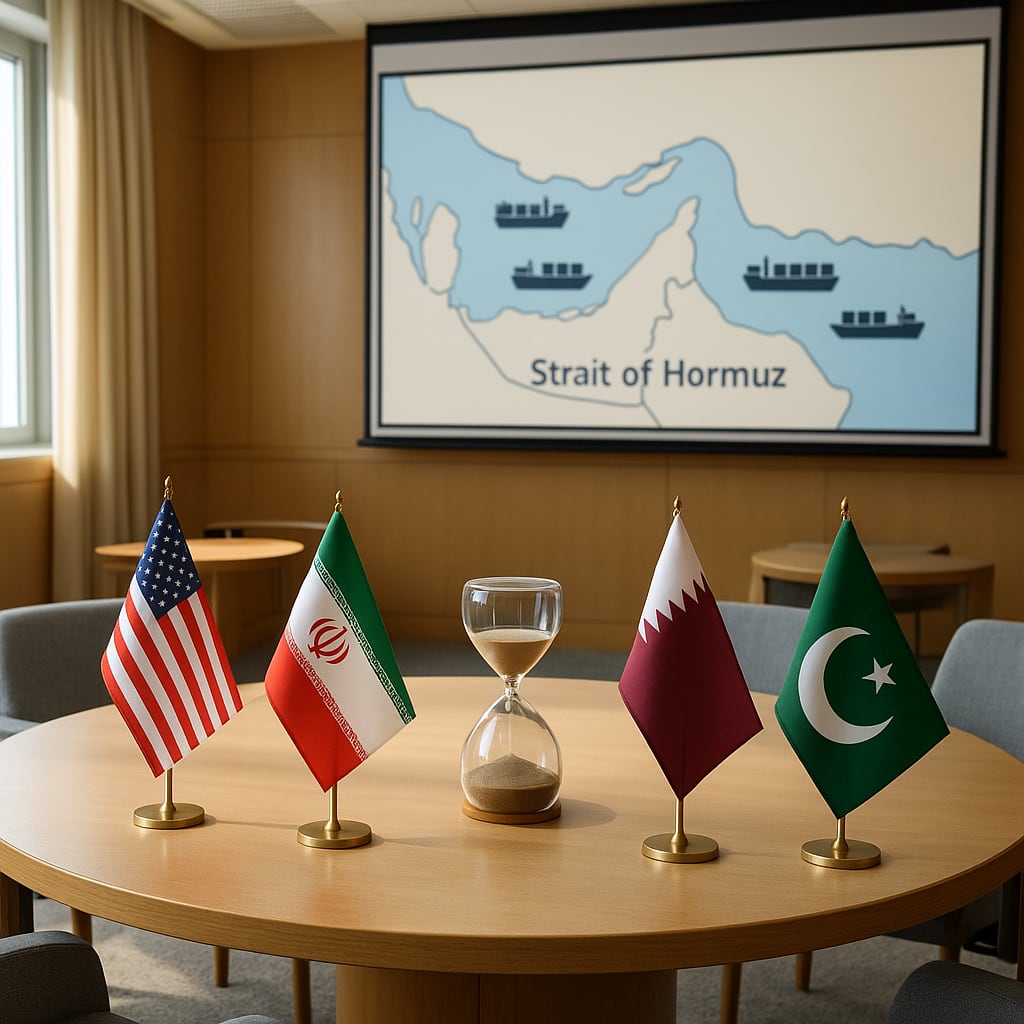
US and Iran enter 60-day talks as ceasefires and oil shipping disruptions test a fragile framework
Narrative Snapshot
- Convergence: Multiple outlets describe a narrow, conditional opening for diplomacy alongside persistent implementation risks—especially linkage to a Lebanon ceasefire and the Strait of Hormuz (NYT; Al Jazeera, 20 and 24 Jun; Middle East Eye, 19 Jun).
- Divergence: Some analysis frames Iran as strengthened by the war (TASS quoting Wendy Sherman; RT interview with Mohammad Marandi; The Hindu live), while others stress fragility, domestic strain, and unresolved nuclear and enforcement details (NYT; DW; Fox News).
- Salience shifts: Regional and energy chokepoint dynamics dominate Al Jazeera and RT coverage (Hormuz, Lebanon), while European outlets foreground humanitarian and economic precarity inside Iran (DW; Corriere della Sera). US outlets emphasize political ownership and costs (Fox News).
- Stakes: Whether ceasefire maintenance, oil flows, and verifiable nuclear steps can be synchronized under a contested 60-day clock (Fox News; RT, 21 Jun; TASS, 25 Jun).
What Happened
Washington and Tehran signed a memorandum opening a 60-day window to translate broad commitments into enforceable terms, without resolving core nuclear disputes (Fox News, 22 Jun; NYT, 23 Jun). Talks clustered in Switzerland with Qatar and Pakistan as facilitators; Vice President J.D. Vance fronted the US effort (SCMP, 21 Jun; RT, 22 Jun). The framework is tied to regional calm: Israel and Hezbollah agreed a ceasefire, but incidents in Lebanon subsequently strained it (Middle East Eye, 19 Jun; RT, 24 Jun). The Strait of Hormuz remains disrupted despite pledges to reopen; ship tracking showed transits falling after Iran declared the waterway shut (RT, 21 Jun; Al Jazeera, 22 Jun). DW reports the US has temporarily allowed Iranian oil exports and indicated “billions” in relief, even as Iran fears new protests amid a shattered economy (DW, 24 Jun). Domestically, the US faces an $80B supplemental war cost request (Fox News, 23 Jun).
Why It Matters
This phase tests whether coercion and sanctions can be converted into a verifiable political bargain. The framework sits atop interlocking constraints: a ceasefire on the Israel–Hezbollah front that Iran links to talks (Middle East Eye, 19 Jun; RT, 24 Jun), energy chokepoint risks in Hormuz (Al Jazeera, 22 Jun; RT, 21 Jun), and an Iranian economy near breaking point that could destabilize negotiations if relief lags (DW, 24 Jun; Corriere della Sera, 23 Jun). The US must square Gulf security assurances with any concessions to Tehran (The Hindu, 25 Jun) while navigating domestic scrutiny over cost and strategy (Fox News, 22–23 Jun; SCMP, 24 Jun). Claims of Iranian resilience and legal wins on frozen assets, amplified by Russian outlets, underscore broader challenges to the sanctions architecture (TASS, 24 Jun). For multilateral bodies and energy markets, synchronized de-escalation would reduce immediate risk; slippage on any strand could reimpose systemic volatility.
Diverging Narratives
- Balance of advantage: TASS quoted former US negotiator Wendy Sherman saying Iran had shown it could not be broken by force (TASS, 24 Jun). RT’s interview with Mohammad Marandi framed the outcome as a “decisive victory” for Tehran and deepened ties with Russia (RT, 24 Jun). The Hindu’s live coverage described Iran as emboldened, calling the initial deal “a declaration of America’s defeat” (The Hindu, 25 Jun). By contrast, the NYT and Al Jazeera emphasize cautious openings overshadowed by pitfalls and internal disputes (NYT, 23 Jun; Al Jazeera, 24 Jun).
- Costs and ownership: Fox News portrays Vance as the public face of a fragile framework and highlights an $80B war price tag, more than double earlier figures (Fox News, 22–23 Jun). SCMP’s opinion column criticizes the war’s rationale and presidential decision-making (SCMP, 24 Jun), while RT reports Trump’s denial that the war showed limits to US power (RT, 19 Jun).
- Implementation gaps: RT cites “immediate reopening” rhetoric for Hormuz under the memorandum (RT, 21 Jun), but Al Jazeera documents stalled shipping (Al Jazeera, 22 Jun), and The Hindu notes Tehran vows not to relinquish control of the strait (The Hindu, 25 Jun). On the regional track, Middle East Eye reported an Israel–Hezbollah ceasefire (19 Jun), yet RT later reported fatalities in Lebanon, underscoring fragility (RT, 24 Jun).
- Domestic realities: DW depicts a shattered Iranian economy with protest risk despite provisional oil export relief (DW, 24 Jun). Corriere relays citizen fears that funds will reach militias rather than households (Corriere della Sera, 23 Jun), contrasting with Russian coverage praising Iran’s purported legal success over frozen assets (TASS, 24 Jun).
What Happens Next
- Converting the MOU: The 60-day window must yield enforceable terms on nuclear constraints, sanctions relief, and maritime guarantees (Fox News, 22 Jun; RT, 21 Jun). Watch for resumed Swiss sessions, mediator shuttling (Qatar/Pakistan), and any joint text or verification annexes (SCMP, 21 Jun; RT, 22 Jun).
- Lebanon ceasefire durability: Iran has linked talks to calm on the Israel–Hezbollah front (RT, 24 Jun). Sustained quiet would enable technical progress; renewed strikes could pause or derail sessions (Middle East Eye, 19 Jun; Al Jazeera, 20 Jun). Indicators: cross-border incidents, military communiqués, and mediator statements.
- Hormuz normalization: The memorandum envisions safe passage arrangements; current shipping remains curtailed (RT, 21 Jun; Al Jazeera, 22 Jun). Indicators: AIS traffic trends, insurer guidance, and port access notices.
- Economic levers: DW reports temporary US allowance for Iranian oil exports and indicated “billions” in relief; US domestic politics around an $80B supplemental could shape timing and scope of security and diplomatic moves (DW, 24 Jun; Fox News, 23 Jun). Indicators: Treasury licensing, cargo manifests, and congressional action.
- Reversion risk: A TASS-cited expert warns the sides could revert to the pre-deal status quo within 60 days if benchmarks slip (TASS, 25 Jun). Watch official timelines and any slip-page in scheduled deliverables.