
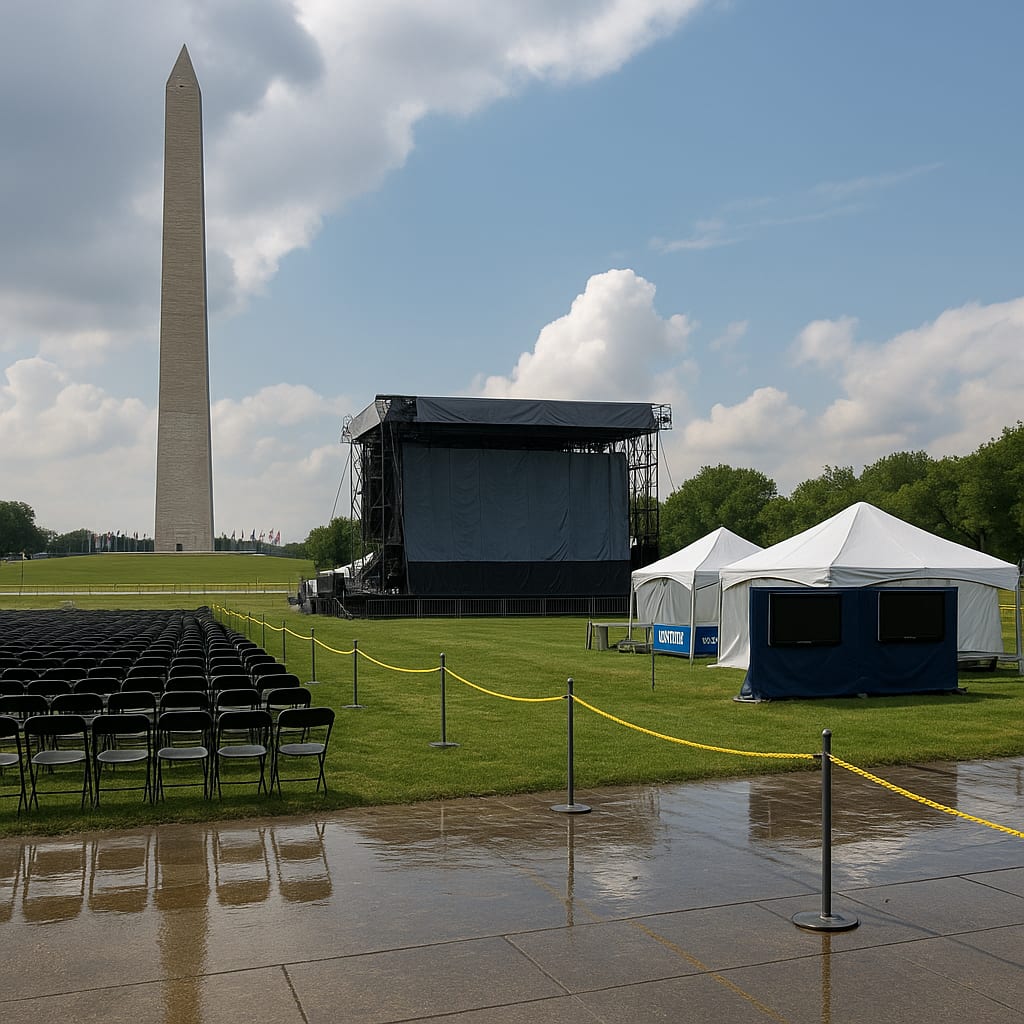
Storms and Extreme Heat Disrupt US 250th Events in Washington; National Mall Evacuated Ahead of Trump Address
Narrative Snapshot
- Broad agreement that weather, not security or politics, drove the disruption: outlets from CBC, SCMP, DW, and the New York Times highlight a storm risk following hours of extreme heat.
- Timelines diverge on the speech’s status. Le Monde reported an indefinite postponement when the Mall was cleared; Corriere della Sera later reported the site reopened and Donald Trump spoke around 11 p.m. local time.
- Emphases split between public-safety management and political spectacle. The Guardian centers the extreme heat and a separate parade cancelation; DW and RT stress plans for fireworks and flyovers, with RT highlighting “chaotic” evacuation scenes via videos.
- Several outlets foreground Trump’s stated intent to proceed (The Hindu, ANSA, Al Jazeera), while the New York Times and CBC/SCMP focus on evacuation orders and sheltering guidance, noting some attendees did not comply.
What Happened
An extreme heat warning preceded Washington’s July 4 events, prompting cancellation of the National Park Service parade (The Guardian) and leaving thousands queueing for hours in severe heat to access the National Mall (New York Times). As thunderstorms approached, authorities ordered an evacuation of the Mall on Saturday evening; attendees were directed to nearby Smithsonian museums and federal buildings (CBC, SCMP, DW). Organizers said Freedom 250 would provide updates on programming and reopening (SCMP). Some people remained near the stage despite warnings (New York Times; RT’s videos). While Le Monde initially reported the speech was postponed indefinitely amid the evacuation, Italian coverage later said the Mall reopened and Trump delivered remarks at the Lincoln Memorial around 11 p.m. local time (Corriere della Sera). Plans had included a major fireworks display and military flyovers (DW).
Why It Matters
The episode underscores how compound weather hazards—extreme heat followed by severe storms—are now central constraints on mass political ceremonies and public-space management. The National Park Service’s preemptive parade cancelation (The Guardian), the hours-long heat exposure reported at Mall entry points (New York Times), and the subsequent evacuation to museums and federal buildings (CBC, SCMP) illustrate the operational burden on federal stewards of the National Mall and adjacent institutions. For decision-makers, this is a live test of risk thresholds, crowd communications, and interagency coordination for semiquincentennial programming. Internationally, the optics of delayed or fragmented commemorations intersect with efforts to stage large-scale, security-sensitive displays (DW, RT) while preserving public safety. The event highlights a policy need to align event timelines, shelter capacity, and rapid-reentry protocols with National Weather Service alerts and evolving climate risk.
Diverging Narratives
Le Monde’s report of a speech postponed “sine die” contrasted with Corriere della Sera’s account that the Mall reopened and Trump spoke at 11 p.m., a discrepancy likely reflecting reporting at different moments in a fluid situation. Outlet framing varied: RT emphasized “chaotic” evacuation footage and organizers’ billing of “one of the largest patriotic displays,” while DW noted planned fireworks and military flyovers without focusing on disorder. The Guardian contextualized the day’s disruptions within extreme heat that had already forced the parade’s cancellation, placing climate risk at the center. Several outlets focused on Trump’s resolve to proceed—The Hindu, ANSA, and Al Jazeera reported his pledge to deliver remarks despite the weather—while CBC, SCMP, and the New York Times concentrated on evacuation orders, sheltering guidance, and partial noncompliance. The New York Times’ account of attendees refusing to leave adds a public-safety and communications dimension absent from more programmatic summaries.
What Happens Next
- Reopening and program resumption: Organizers said Freedom 250 would issue updates on programming and doors (SCMP). Analysts should watch official channels for confirmation of reentry procedures, any revised schedules, and guidance for remaining commemorations.
- Safety protocols under heat and storm alerts: The NPS’ earlier parade cancellation under an extreme heat warning (The Guardian) and the storm-driven evacuation (CBC, SCMP, DW) set reference points for future thresholds. Monitor NWS advisories and NPS event guidance for adjustments to timing, shade/water provisions, or shelter integration.
- Evacuation compliance and communications: Reports that some attendees stayed despite orders (New York Times; RT video) point to potential review of messaging and enforcement. Look for organizer or agency statements on after-action assessments and any changes to signage, alerts, or venue ingress/egress plans.
- Spectacle components: With fireworks and flyovers part of the planned program (DW), future go/no-go decisions will hinge on updated weather windows and venue status; watch for explicit confirmations rather than assumptions.