
Lead
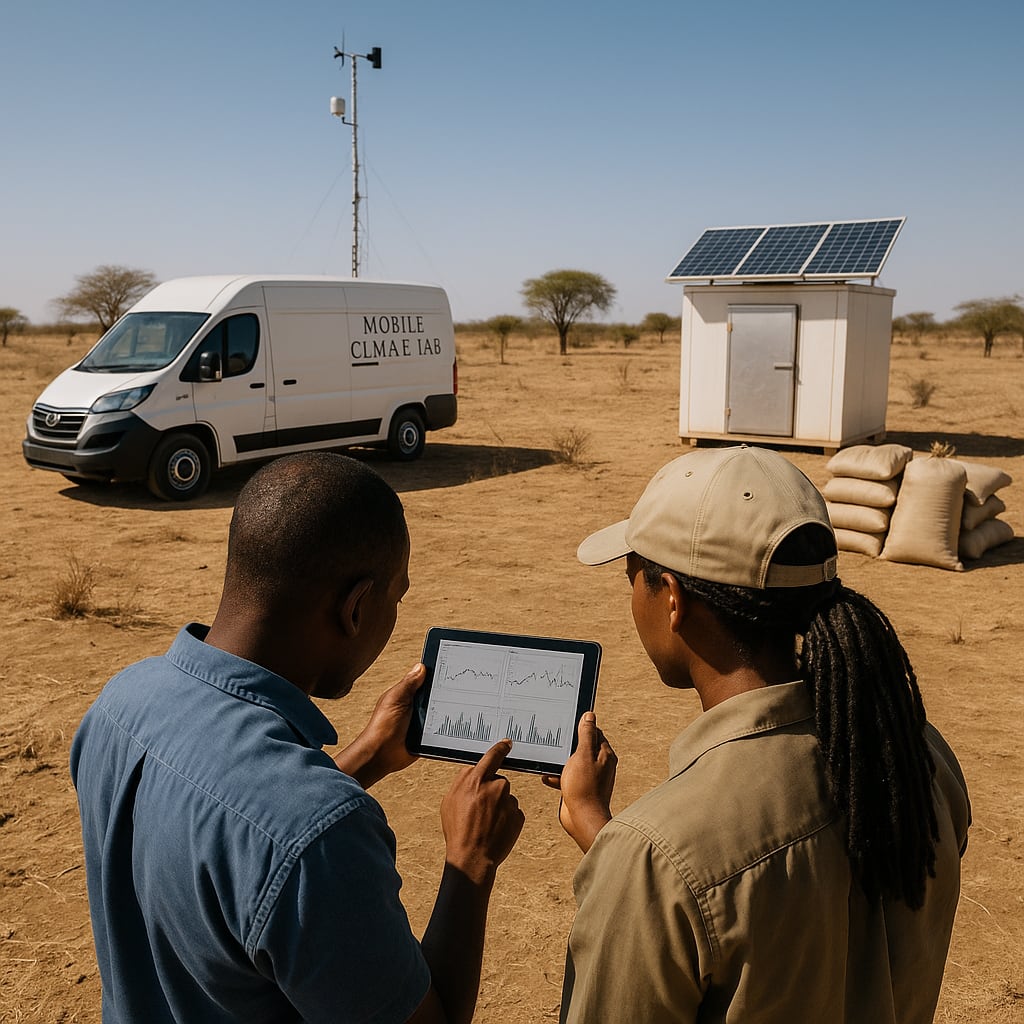
From France’s “historic” late-May heat to mounting pressure on Kenya’s farms, the past week’s coverage from Europe, East Africa, Israel and Japan converges on a single theme: climate stress is no longer an abstract projection but a lived, measurable force reshaping politics, markets and public trust. In Europe, heat and drought are being discussed not only as meteorological extremes but as ecological emergencies—while a parallel battle plays out online over whether climate change is even real. In Kenya, the climate story is not framed through temperature records but through food security alarms, fertilizer queues, and a race to modernize agriculture—from cold storage for avocados to debates over genetically modified crops and a push toward drought-tolerant “small grains.” Hovering above these national stories is a more technical development with global implications: an Israeli-built mobile climate laboratory sent to East Africa to collect measurements that researchers say are missing from global datasets.
What Happened
Several developments unfolded nearly simultaneously across regions, each reflecting a different front in the climate-and-food system.
In East Africa, a new measurement effort began. An Israeli research team built a mobile monitoring tower—essentially a roving climate lab equipped with sensors—designed to quantify how land-use change alters local climate conditions. The project’s stated purpose is to fill gaps in global climate data by capturing on-the-ground measurements in areas that are under-sampled by existing monitoring networks. The deployment is described as beginning in Kenya and expanding across East Africa, with the equipment trucked between sites to measure conditions over different landscapes.
In Kenya, climate risks were presented through the lens of agriculture and supply chains. Separate reporting threads pointed to a country under strain from erratic rainfall, prolonged dry spells and rising temperatures—conditions associated with declining farm productivity and heightened food-security concerns. The climate narrative was anchored not in abstract models but in farm-level realities: unreliable seasons, stressed harvests, and a sense that the agricultural calendar is becoming harder to predict.
Against that backdrop, Kenyan coverage also highlighted adaptation and friction. One set of stories focused on pragmatic solutions in high-value horticulture: cold storage for avocados is being used to extend shelf life, reduce spoilage and improve quality, with the promise of higher incomes for farmers. Another pointed to a different adaptation path—encouraging climate-resilient small grains as alternatives to a heavy reliance on staple “large grains” such as maize and wheat.
At the same time, Kenyan reporting showed how climate stress intersects with governance and inputs. Maize farmers in Eldoret protested at a National Cereals and Produce Board depot over shortages of top-dressing fertilizer, accusing the government of failing to supply it. The fertilizer dispute is a reminder that in many food systems, vulnerability is not only about rainfall and heat but also about logistics, procurement, pricing, and trust in state distribution.
In Europe, the heat narrative widened into ecology and information politics. Coverage from France described an exceptional late-May heat episode and reported a resurgence of climate-skeptical content on social media and in some media spaces, suggesting that extreme weather events now generate not only scientific commentary and public concern but also intensified pushback. Parallel international coverage examined the biological consequences of heat and drought on forests, describing how trees across parts of Europe adopt “drastic” survival strategies under stress—sometimes at the cost of long-term health or survival—illustrating the compounding ecological impacts of repeated heat and water deficits.
Why It Matters
Taken together, these accounts show climate change operating as a systems issue: measurement, messaging, markets and food security are increasingly intertwined.
First, the data problem is geopolitical. The push to take sophisticated measurement equipment into East Africa underscores a widely recognized gap in where climate data is collected. Global climate assessments rely heavily on monitoring networks that are denser in wealthier regions; this imbalance can affect how confidently scientists can describe local feedbacks between land use, moisture, heat and carbon exchange in under-instrumented areas. If the roving lab succeeds in producing reliable field measurements over different land types, it could strengthen climate models and inform more locally tailored adaptation strategies—especially where land-use change (such as agricultural expansion, deforestation, or shifting grazing patterns) interacts with regional climate.
Second, Kenya’s food-security debate is being shaped by both climate stress and policy choices. Erratic rainfall and rising temperatures are presented as steadily undermining agricultural productivity, but the stories also point to tools that can cushion impacts—post-harvest cold chains, crop diversification, and biotech—while highlighting how quickly gains can be offset by constraints like fertilizer shortages. In other words: adaptation is not a single technology; it is an enabling environment that includes inputs, infrastructure, credible regulation and farmer access.
Third, Europe’s experience shows how extreme weather now triggers an information contest. The French heat episode is described as “historic” and “exceptional,” but coverage also emphasizes how rapidly climate-skeptical narratives can surge during such moments, competing with scientific explanations. That matters beyond France: public acceptance affects policy durability, and policy durability affects emissions trajectories and adaptation funding. Meanwhile, the reporting on trees under heat stress adds a crucial point: climate impacts are not limited to human systems. Forest health influences carbon storage, biodiversity, wildfire risk and water cycles, making ecological stress a societal issue even before it becomes a direct economic shock.
Diverging Narratives
Across outlets and countries, the same broad phenomenon—climate change and its consequences—is framed through markedly different priorities.
Emphasis: solutions vs. stress vs. controversy.
Kenyan coverage leans heavily into the practicalities of farming under pressure: post-harvest losses, income stability, input shortages and crop choice. The tone is often problem-solving—cold storage as a route to profit, small grains as resilience—while also documenting moments of confrontation when state systems fail to deliver essentials like fertilizer.
European coverage, by contrast, foregrounds the extremity of the weather and its ecological footprint, then pivots to the societal layer: how people interpret, argue over, or deny the meaning of heat records. The forest-focused reporting frames climate change as a biological stress test playing out across landscapes, while the French coverage treats the heat as both a meteorological event and a catalyst for polarization.
The Israeli-linked deployment is framed primarily as a scientific infrastructure story: a bid to improve measurement in places global networks underserve. Compared with Kenya’s emphasis on livelihood impacts, it presents climate as a quantifiable system with missing variables. Compared with Europe’s emphasis on public debate and visible extremes, it focuses on instrumentation and baseline knowledge.
Downplayed elements: politics in science stories; ecology in farm stories.
Where the mobile lab is portrayed as a technical intervention, the political questions—who owns the data, who sets research priorities, how findings translate into policy—are not centered. Conversely, in Kenya’s farm-centered reporting, broader ecosystem impacts (such as landscape-level changes affecting water cycles or biodiversity) are less prominent than immediate food-security and income concerns. European reporting on forests and heat stresses ecology and public discourse, while the supply-chain mechanics that dominate Kenyan coverage are less visible.
Disputed terrain: not the temperature, but the meaning.
A key divergence is less about contested measurements and more about contested interpretation. In France, the heat wave is accompanied by a surge in climate-skeptical expression, indicating a dispute over causality, risk, or policy implications even when an extreme event is widely recognized. In Kenya, disagreement emerges more through accountability—farmers blaming government systems for input shortfalls—than through denial of climate stress itself. The GMO discussion reflects a different kind of contest: not whether food security is threatened, but which tools are acceptable and how safety and approvals should be understood. The framing there emphasizes process and evaluation, suggesting an effort to build confidence in regulatory pathways amid a politically sensitive topic.
Current Situation
The immediate picture is one of simultaneous response and strain.
In East Africa, the roving climate lab has begun work in Kenya as part of a broader plan to collect field measurements across the region, aiming to improve understanding of how land-use change affects local climate dynamics. The significance of this effort will depend on sustained access to sites, continuity of measurements, and whether findings are integrated into regional planning and global datasets.
In Kenya, agricultural adaptation is moving on multiple tracks at once: value-chain upgrades like cold storage are being presented as already improving outcomes for avocado farmers, while advocacy for climate-resilient grains reflects longer-term shifts in what is grown and eaten. Yet the fertilizer protests in Eldoret show the near-term vulnerability of staple production to supply disruptions and policy implementation failures. Food-security concerns, framed around erratic rainfall and rising temperatures, remain immediate rather than hypothetical.
In Europe, the late-May heat has intensified attention to climate impacts on ecosystems, with forests portrayed as under severe physiological pressure. At the same time, the information environment is described as increasingly contested, with climate-skeptical messaging rising alongside scientific characterizations of the heat as exceptional. The outlook, as presented, is not only about temperatures in the coming weeks but about whether societies can sustain coherent responses when extreme weather is accompanied by political and informational backlash.
Across these regions, the shared takeaway is stark: climate change is being experienced not as a single “event” but as a cascade—measured in sensors and field towers, felt in depots and orchards, and argued over in media feeds and public life.