
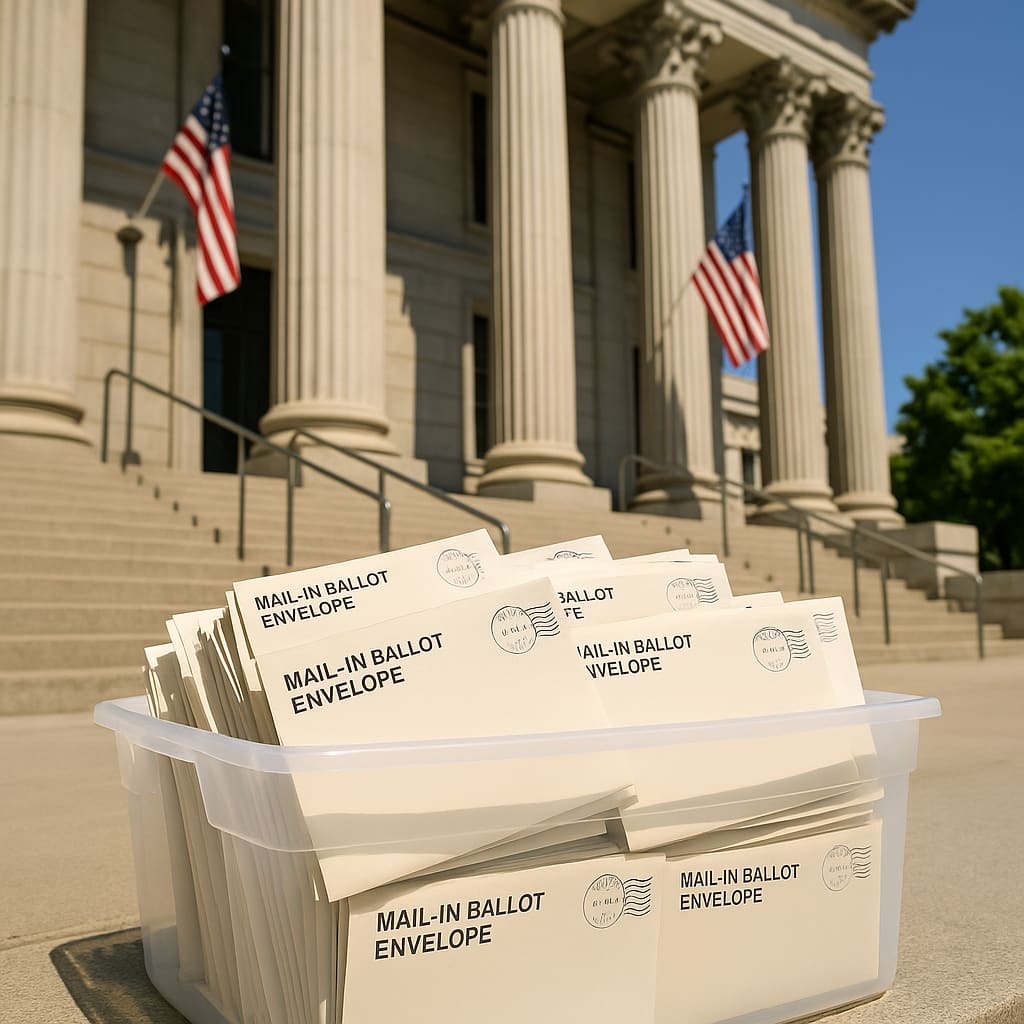
Supreme Court upholds states’ post–Election Day mail-ballot grace periods in 5–4 ruling
Narrative Snapshot
- Scope and beneficiaries: Outlets quantify impact differently—“more than a dozen states” (Guardian) versus 18 states (New York Times)—but agree the ruling preserves existing grace-period laws rather than creating new ones.
- Framing and stakes: CBC and the New York Times emphasize legal validation and administrative relief; RT foregrounds midterm stakes and describes a narrow 5–4 split; Al Jazeera situates the decision within a broader day of losses for President Trump.
- Judicial cleavage: Fox News centers Justice Alito’s dissent warning of legitimacy risks and “voter fraud” concerns, while multiple outlets note Justice Amy Coney Barrett authored the majority despite Trump’s backing of the challengers.
- Broader term context: The Guardian contrasts this outcome with an earlier-term ruling allowing Louisiana to effectively dismantle Voting Rights Act protections, underscoring uneven cross-currents in the Court’s election-law jurisprudence.
What Happened
The Supreme Court upheld Mississippi’s law permitting mail ballots postmarked by Election Day to be counted if received within five days, rejecting a Republican National Committee challenge backed by President Donald Trump (RT; Guardian). The case, identified by Fox News as Watson v. RNC, was decided 5–4, with Justice Amy Coney Barrett writing for the majority that federal “election-day statutes require the electorate’s choice to be made on Election Day,” which is satisfied when Election Day is the deadline to vote (RT; Fox News). Justice Samuel Alito dissented, warning that counting late-arriving ballots could erode public confidence and spawn complex election-law disputes (Fox News). The ruling confirms the legality of similar grace periods across the country—affecting 18 states, according to the New York Times, and “more than a dozen,” per the Guardian—and arrives ahead of the 2026 midterms (NYT; Guardian; RT; CBC).
Why It Matters
The decision stabilizes state election-administration regimes that rely on postmark-based grace periods, clarifying that federal election-day statutes do not bar counting ballots received after Election Day if voting itself still closes on that date (RT; Fox News). For election officials, the New York Times describes “relief” in at least 18 states that can retain established timelines without emergency changes. Politically, the ruling is the latest legal setback for President Trump’s push to tighten mail-voting rules (NYT; CBC), and it lands just before midterms that RT notes will determine whether Republicans retain control of Congress. Institutionally, the outcome signals that this Court—while earlier this term allowed Louisiana to effectively dismantle elements of Voting Rights Act protections (Guardian)—is not uniformly aligned with national Republican efforts on election rules, complicating the strategic calculus for party litigants and state legislatures.
Diverging Narratives
Fox News amplifies Justice Alito’s dissent, framing the ruling as an “invitation to ‘voter fraud’ risks” and a threat to perceived electoral legitimacy, quoting his warning that the holding “risks further undermining Americans’ confidence in election integrity.” CBC, the New York Times, and the Guardian emphasize legal continuity and administrative workability, highlighting that state laws permitting late-arriving ballots remain valid and that the decision affects a broad set of states (CBC; NYT; Guardian). RT characterizes the ruling as a narrow 5–4 loss for a Trump-backed effort and ties it to immediate electoral stakes in the 2026 midterms. Al Jazeera contextualizes the opinion within a day of Supreme Court outcomes that it describes as a 3–1 defeat for Trump across multiple cases. There is also a difference in quantifying reach—18 states (NYT) versus “more than a dozen” (Guardian)—and in emphasis on jurisprudential consistency: the Guardian juxtaposes this ruling with the Court’s earlier-term stance on Louisiana and the Voting Rights Act.
What Happens Next
- State administration: With the ruling conferring what the New York Times calls “relief” to 18 states, watch for election officials to proceed under existing grace-period rules and to communicate postmark and receipt guidance ahead of the 2026 midterms (NYT; CBC; RT).
- Legislative responses: Fox News reports at least one Republican senator already backs requiring ballots to be received by Election Day and publicly pushed back after Trump criticized him; monitor whether similar receipt-deadline bills are introduced at state or federal levels, and whether party leadership aligns with that approach (Fox News).
- Litigation and messaging: Given Justice Alito’s warnings about legitimacy and fraud risks (Fox News) and Trump’s strong criticism of the ruling (Fox News), observe party and campaign rhetoric around late-arriving ballots and any targeted challenges to state implementation within the ruling’s bounds.
- Electoral timelines: RT underscores that the decision precedes midterms determining congressional control; analysts should track how close-race counting and reporting schedules in grace-period states shape postelection narratives and certification pacing (RT).